Boemer F, Fasquelle C, d'Otreppe S, Josse C, Dideberg V, Segers K, Guissard V, Capraro V, Debray F G, Bours V
Biochemical Genetics Lab, Department of Human Genetics, CHU Sart-Tilman, University of Liège, Liège, Belgium.
Human Genetics Unit, GIGA, University of Liège, Liège, Belgium.
Sci Rep. 2017 Dec 15;7(1):17641. doi: 10.1038/s41598-017-18038-x.
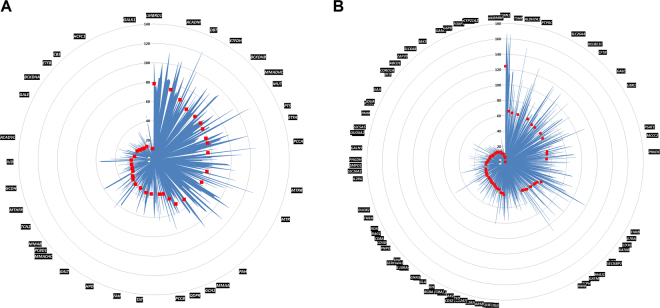
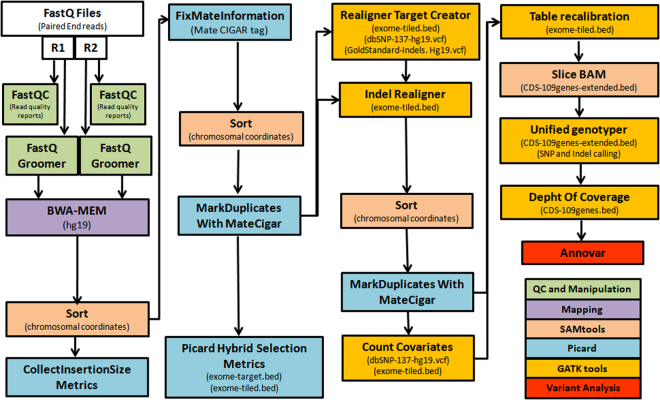
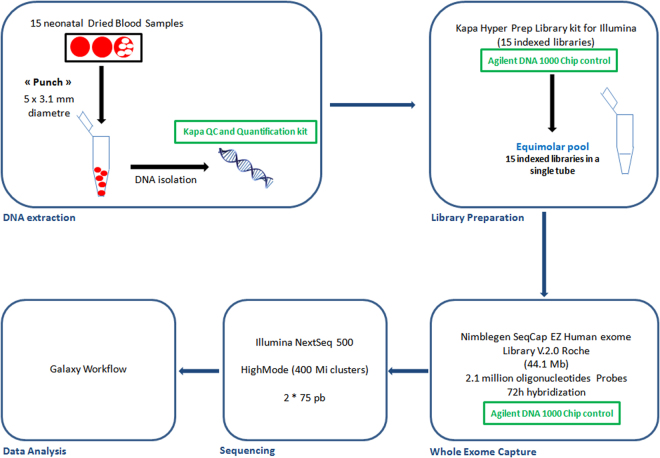
The range of applications performed on dried blood spots (DBS) widely broadened during the past decades to now include next-generation sequencing (NGS). Previous publications provided a general overview of NGS capacities on DBS-extracted DNA but did not focus on the identification of specific disorders. We thus aimed to demonstrate that NGS was reliable for detecting pathogenic mutations on genomic material extracted from DBS. Assuming the future implementation of NGS technologies into newborn screening (NBS), we conducted a pilot study on fifteen patients with inherited metabolic disorders. Blood was collected from DBS. Whole-exome sequencing was performed, and sequences were analyzed with a specific focus on genes related to NBS. Results were compared to the known pathogenic mutations previously identified by Sanger sequencing. Causal mutations were readily characterized, and multiple polymorphisms have been identified. According to variant database prediction, an unexplained homozygote pathogenic mutation, unrelated to patient's disorder, was also found in one sample. While amount and quality of DBS-extracted DNA are adequate to identify causal mutations by NGS, bioinformatics analysis revealed critical drawbacks: coverage fluctuations between regions, difficulties in identifying insertions/deletions, and inconsistent reliability of database-referenced variants. Nevertheless, results of this study lead us to consider future perspectives regarding "next-generation" NBS.
在过去几十年中,干血斑(DBS)的应用范围大幅拓宽,如今已涵盖下一代测序(NGS)。以往的出版物对从DBS提取的DNA进行NGS的能力作了总体概述,但未聚焦于特定疾病的鉴定。因此,我们旨在证明NGS对于检测从DBS提取的基因组材料中的致病突变是可靠的。鉴于未来将NGS技术应用于新生儿筛查(NBS),我们对15例遗传性代谢疾病患者进行了一项试点研究。从DBS采集血液。进行全外显子组测序,并特别针对与NBS相关的基因对序列进行分析。将结果与先前通过桑格测序鉴定的已知致病突变进行比较。因果突变易于表征,并且已鉴定出多个多态性。根据变异数据库预测,在一个样本中还发现了一个与患者疾病无关的无法解释的纯合子致病突变。虽然从DBS提取的DNA的数量和质量足以通过NGS鉴定因果突变,但生物信息学分析揭示了关键缺陷:区域间覆盖波动、难以识别插入/缺失以及数据库参考变异的可靠性不一致。尽管如此,本研究结果促使我们考虑“下一代”NBS的未来前景。