Division of Cardiology, Robert-Bosch-Medical Center Stuttgart, Auerbachstrasse 110, 70376, Stuttgart, Germany.
Department of Cardiology and Cardiovascular Diseases, University Hospital Tübingen, Tübingen, Germany.
J Cardiovasc Magn Reson. 2017 Dec 18;19(1):103. doi: 10.1186/s12968-017-0412-0.
Adenosine stress cardiovascular magnetic resonance (CMR) can detect significant coronary artery stenoses with high diagnostic accuracy. Caffeine is a nonselective competitive inhibitor of adenosine2A-receptors, which might hamper the vasodilator effect of adenosine stress, potentially yielding false-negative results. Much controversy exists about the influence of caffeine on adenosine myocardial perfusion imaging. Our study sought to investigate the effects of caffeine on ischemia detection in patients with suspected or known coronary artery disease (CAD) undergoing adenosine stress CMR.
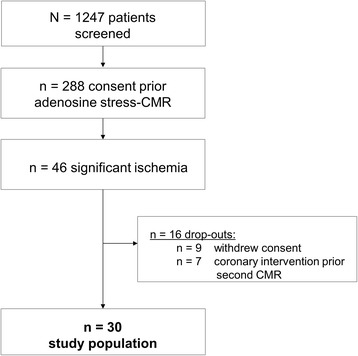
Thirty patients with evidence of myocardial ischemia on caffeine-naïve adenosine stress CMR were prospectively enrolled and underwent repeat adenosine stress CMR after intake of 200 mg caffeine. Both CMR exams were then compared for evaluation of ischemic burden.
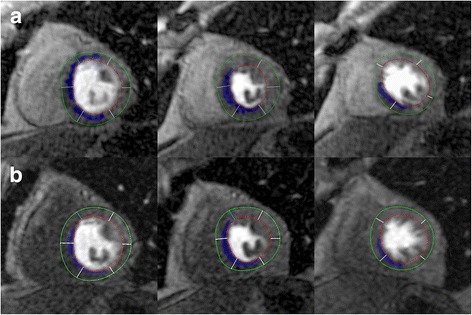
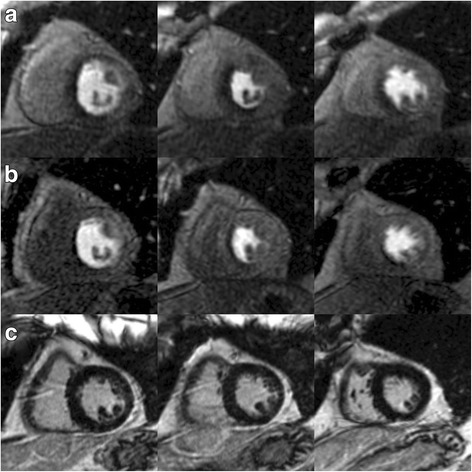
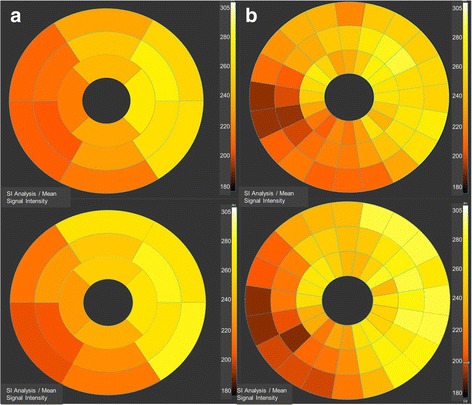
Despite intake of caffeine, no conversion of a positive to a negative stress study occurred on a per patient basis. Although we found significant lower ischemic burden in CMR exams with caffeine compared to caffeine-naïve CMR exams, absolute differences varied only slightly (1 segment based on a 16-segment model, 3 segments on a 60-segment model, and 1 ml in total ischemic myocardial volume, p < 0.001 each). Moreover, no relevant ischemia (≥2 segments in a 16-segment model) was missed by prior ingestion of caffeine.
Although differences were small and no relevant myocardial ischemia had been missed, prior consumption of caffeine led to significant reduction of ischemic burden, and might lower the high diagnostic and prognostic value of adenosine stress CMR. Therefore, we suggest that patients should still refrain from caffeine prior adenosine stress CMR tests.
腺苷负荷心脏磁共振(CMR)可检测出具有高诊断准确性的显著冠状动脉狭窄。咖啡因是一种非选择性的腺苷 A2A 受体竞争性抑制剂,可能会阻碍腺苷的血管扩张作用,从而导致假阴性结果。关于咖啡因对腺苷心肌灌注成像的影响存在很多争议。我们的研究旨在探讨咖啡因对疑似或已知冠心病(CAD)患者腺苷负荷 CMR 中缺血检测的影响。
前瞻性纳入 30 例在咖啡因初次负荷腺苷 CMR 中存在心肌缺血证据的患者,在摄入 200mg 咖啡因后,再次进行腺苷负荷 CMR。然后比较两次 CMR 检查评估缺血负荷。
尽管摄入了咖啡因,但在每位患者的基础上,没有从阳性应激研究转变为阴性应激研究。尽管我们发现,与咖啡因初次负荷 CMR 相比,咖啡因负荷 CMR 检查的缺血负荷显著降低,但绝对差异仅略有不同(16 节段模型为 1 节段,60 节段模型为 3 节段,总缺血心肌容积为 1ml,p<0.001 各)。此外,咖啡因摄入前并未遗漏任何相关的缺血(16 节段模型中≥2 个节段)。
尽管差异较小,且没有遗漏任何相关的心肌缺血,但咖啡因的预先摄入导致缺血负荷显著降低,并可能降低腺苷负荷 CMR 的高诊断和预后价值。因此,我们建议患者在进行腺苷负荷 CMR 检查前仍应避免摄入咖啡因。