He Wenxi, Xu Yanjiao, Zhang Chengliang, Lu Jingli, Li Juan, Xiang Dong, Yang Jinyu, Chang Mujun, Liu Dong
Department of Pharmacy, Tongji Hospital, Tongji Medical College, Huazhong University of Science and Technology, Wuhan, Hubei, China.
Department of Pharmacy, The First Affiliated Hospital of Zhengzhou University, Zhengzhou, Henan, China.
Drug Des Devel Ther. 2017 Dec 5;11:3449-3460. doi: 10.2147/DDDT.S150187. eCollection 2017.
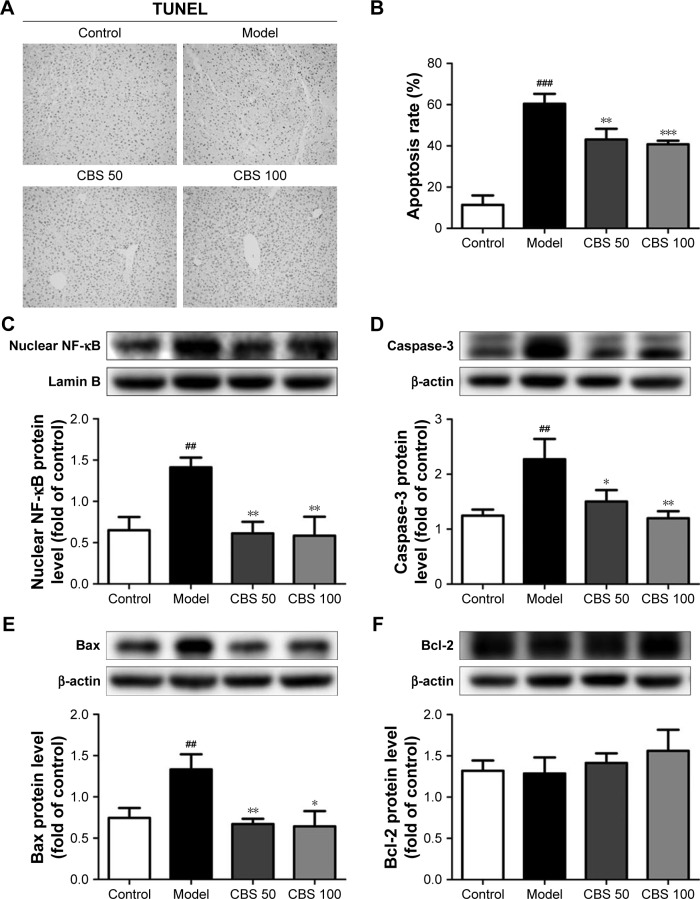
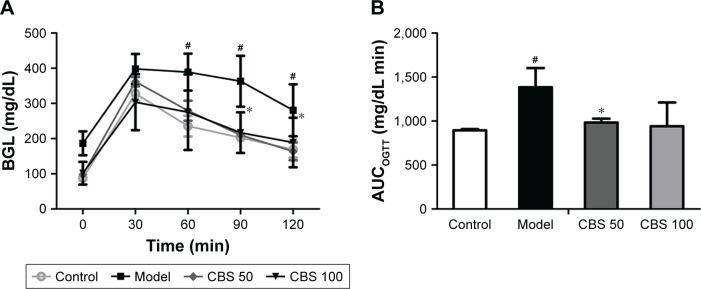
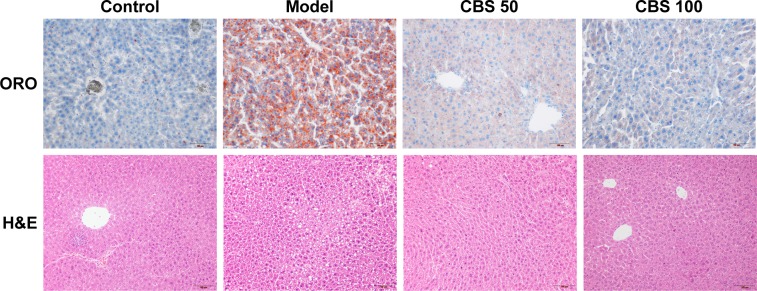
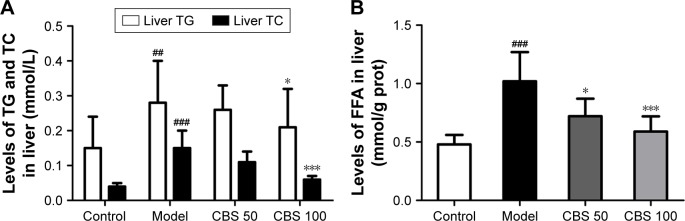
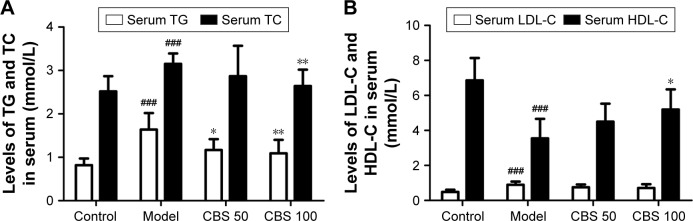
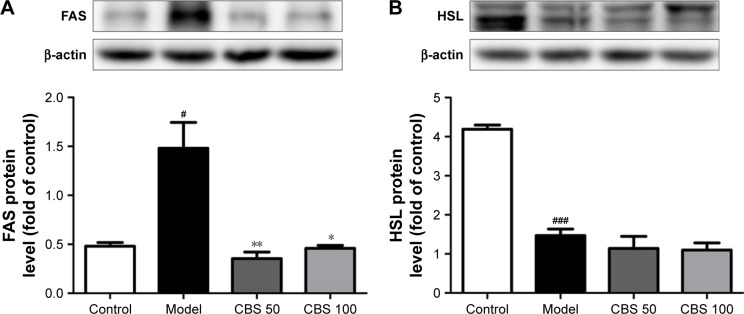
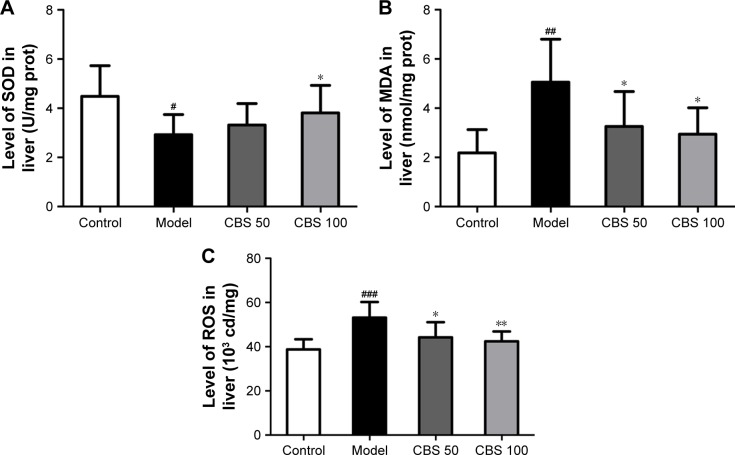
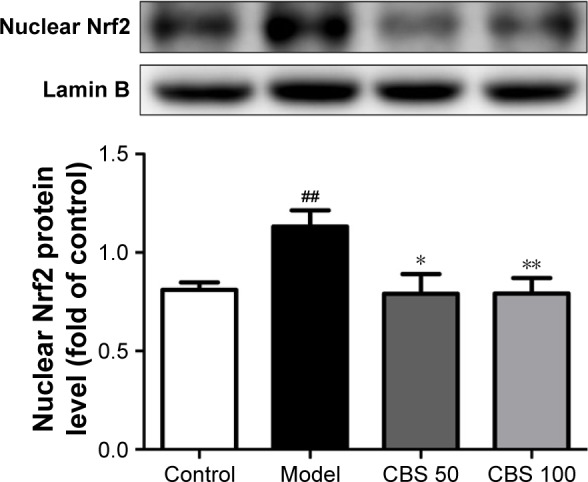
Calculus bovis (CB, niu-huang) is a high-class therapeutic drug that is often used in traditional Chinese medicine. CB helps to eliminate heat and toxic components, and prevents the accumulation of phlegm and blood stasis in the liver. In Asian countries, CB Sativus (CBS), an ideal substitute for natural CB, is presently extensively used for long-term treatment of chronic liver diseases. The present study aimed to evaluate the effects and potential mechanism(s) of action of CBS on mice with fructose-induced nonalcoholic fatty liver disease (NAFLD). The NAFLD model was established in C57BL/6 mice by exclusively feeding fluids containing 30% fructose for 8 consecutive weeks. After these 8 weeks, mice were given CBS (50 mg/kg/day or 100 mg/kg/day) for 2 consecutive weeks. Treatment with CBS reversed the fructose-induced impaired glucose tolerance. Compared with the model group, in which mice received 8 weeks of high-fructose diet and 2 weeks of 0.5% sodium carboxymethyl cellulose, CBS treatment significantly decreased the levels of fasting serum glucose, fasting insulin, triglyceride, and total cholesterol, and increased levels of high-density lipoprotein-cholesterol. CBS treatment also significantly decreased the levels of triglyceride, total cholesterol, and free fatty acid in the liver. The activity of superoxide dismutase in the liver was increased after treatment with CBS, however, levels of malondialdehyde and reactive oxygen species decreased. Histopathological examination showed that liver steatosis and injury were significantly reduced in CBS-treated mice. The expression of fatty acid synthase, nuclear factor kappa-light-chain-enhancer of activated B cells, Cysteinyl aspartate-specific proteinase-3, and synonyms B-cell leukemia/lymphoma-2 gene-associated X protein were downregulated after treatment with CBS, whereas the expression of nuclear factor erythroid-2-related factor 2 was upregulated. In conclusion, CBS treatment exerted therapeutic effects in the liver of mice with NAFLD, which may be associated with amelioration of metabolic disorders, enhanced antioxidant effects, and alleviation of apoptosis.
牛黄是一种常用于传统中药的高级治疗药物。牛黄有助于清除体内的热邪和有毒成分,并防止肝脏中痰瘀的积聚。在亚洲国家,人工牛黄(CBS)作为天然牛黄的理想替代品,目前被广泛用于慢性肝病的长期治疗。本研究旨在评估人工牛黄对果糖诱导的非酒精性脂肪性肝病(NAFLD)小鼠的作用效果及其潜在作用机制。通过连续8周仅喂食含30%果糖的液体,在C57BL/6小鼠中建立NAFLD模型。8周后,给小鼠连续2周给予人工牛黄(50mg/kg/天或100mg/kg/天)。人工牛黄治疗可逆转果糖诱导的葡萄糖耐量受损。与接受8周高果糖饮食和2周0.5%羧甲基纤维素钠的模型组相比,人工牛黄治疗显著降低了空腹血清葡萄糖、空腹胰岛素、甘油三酯和总胆固醇水平,并提高了高密度脂蛋白胆固醇水平。人工牛黄治疗还显著降低了肝脏中甘油三酯、总胆固醇和游离脂肪酸的水平。人工牛黄治疗后肝脏中超氧化物歧化酶的活性增加,然而,丙二醛和活性氧的水平降低。组织病理学检查显示,人工牛黄治疗的小鼠肝脏脂肪变性和损伤明显减轻。人工牛黄治疗后,脂肪酸合酶、活化B细胞核因子κB轻链增强子、半胱天冬酶-3及同源物B细胞淋巴瘤-2基因相关X蛋白的表达下调,而核因子红细胞2相关因子2的表达上调。总之,人工牛黄治疗对NAFLD小鼠肝脏具有治疗作用,这可能与改善代谢紊乱、增强抗氧化作用及减轻细胞凋亡有关。