Paz Rios Luis H, Fuentes Harry E, Oramas Diana M, Andrade Xavier A, Al-Ogaili Ahmed, Iskander Mina, Iskander Fady, Iskandar Amir Nagui Abdalla, Kowacz Wictoria, Iwanski Adam, Acob Christine, Diaz Quintero Luis, Salazar-Adum Juan Pablo, Tafur Alfonso, Caprini Joseph A
1 Department of Internal Medicine, John H. Stroger Jr, Hospital of Cook County, Chicago, IL, USA.
2 Department of Pathology, University of Illinois at Chicago, Chicago, IL, USA.
Clin Appl Thromb Hemost. 2018 Apr;24(3):502-512. doi: 10.1177/1076029617746505. Epub 2017 Dec 19.
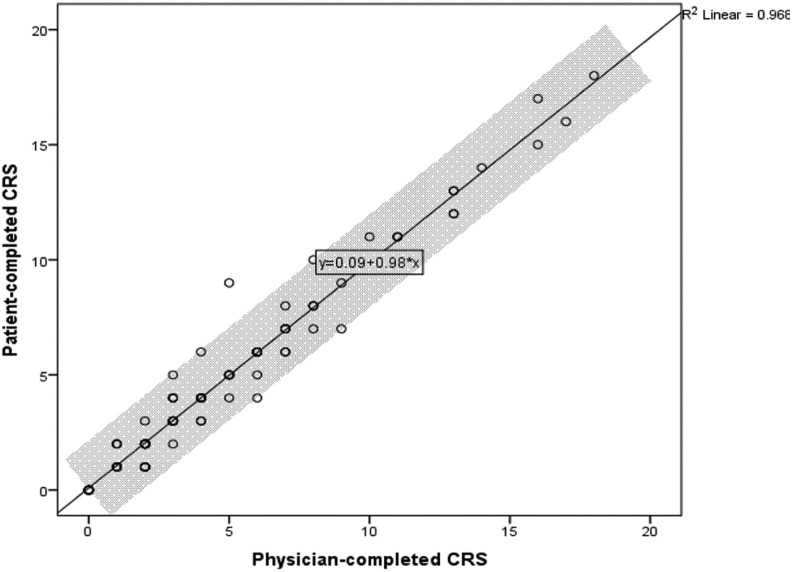
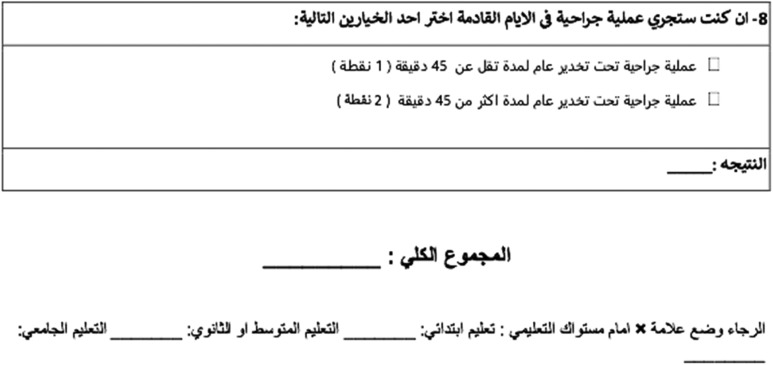
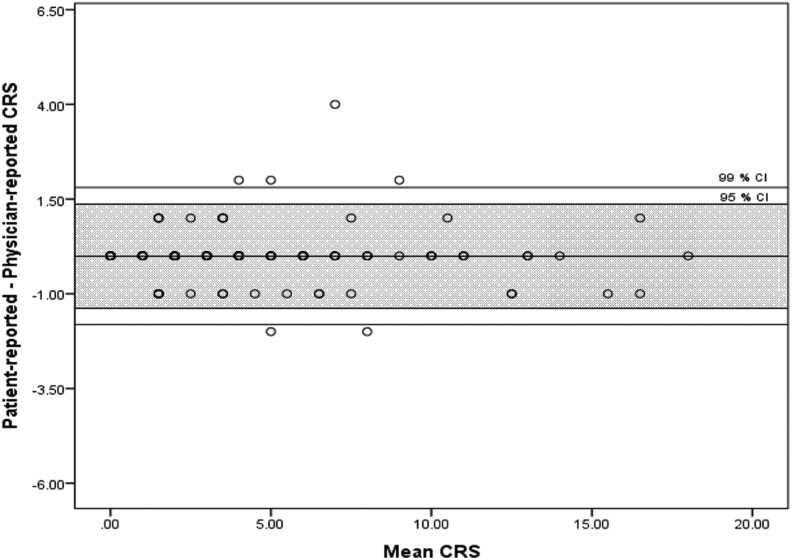
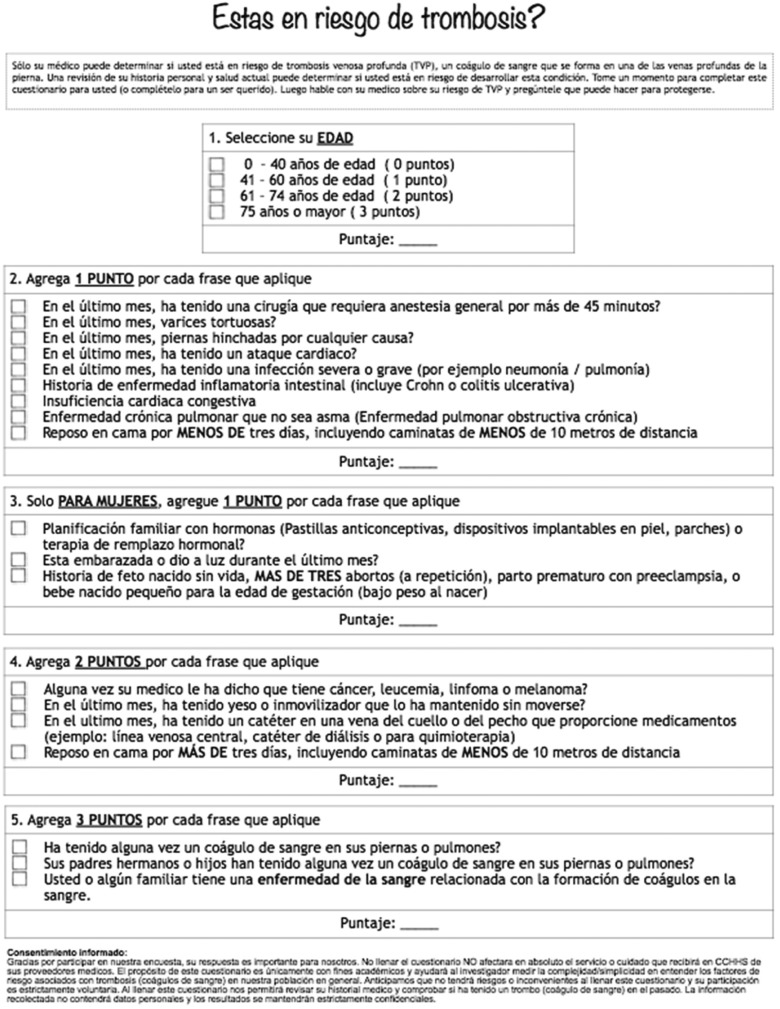
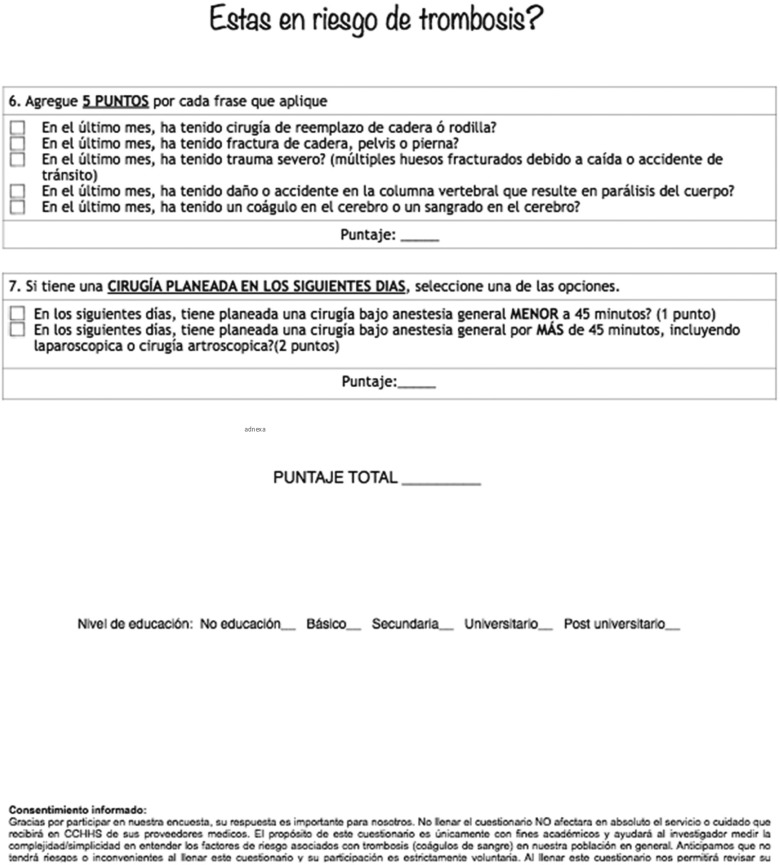
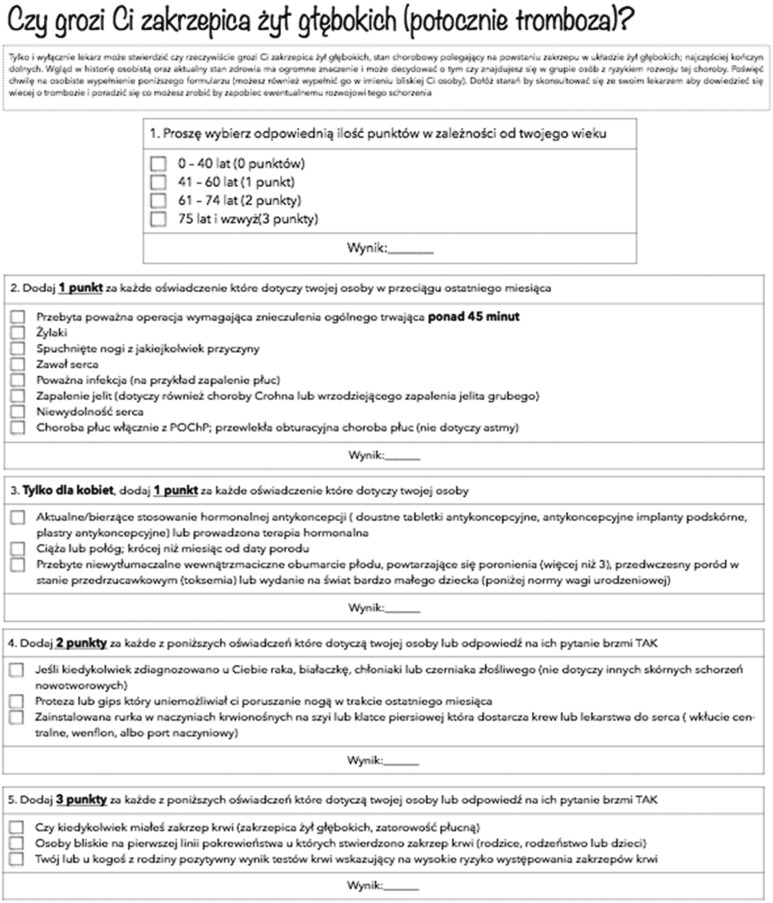
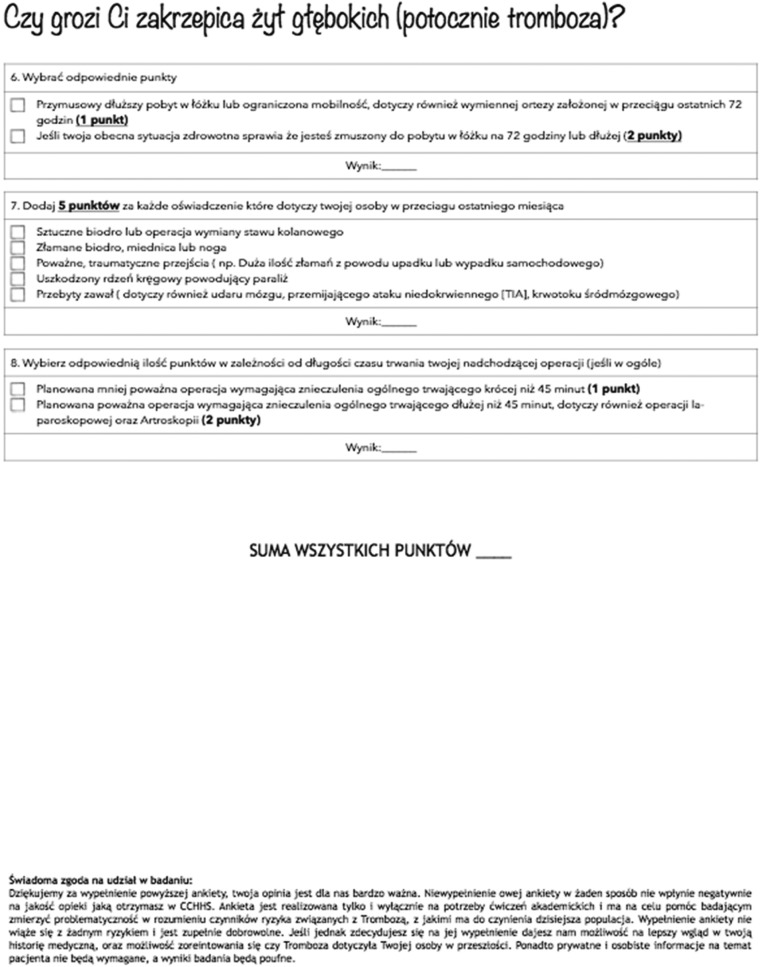
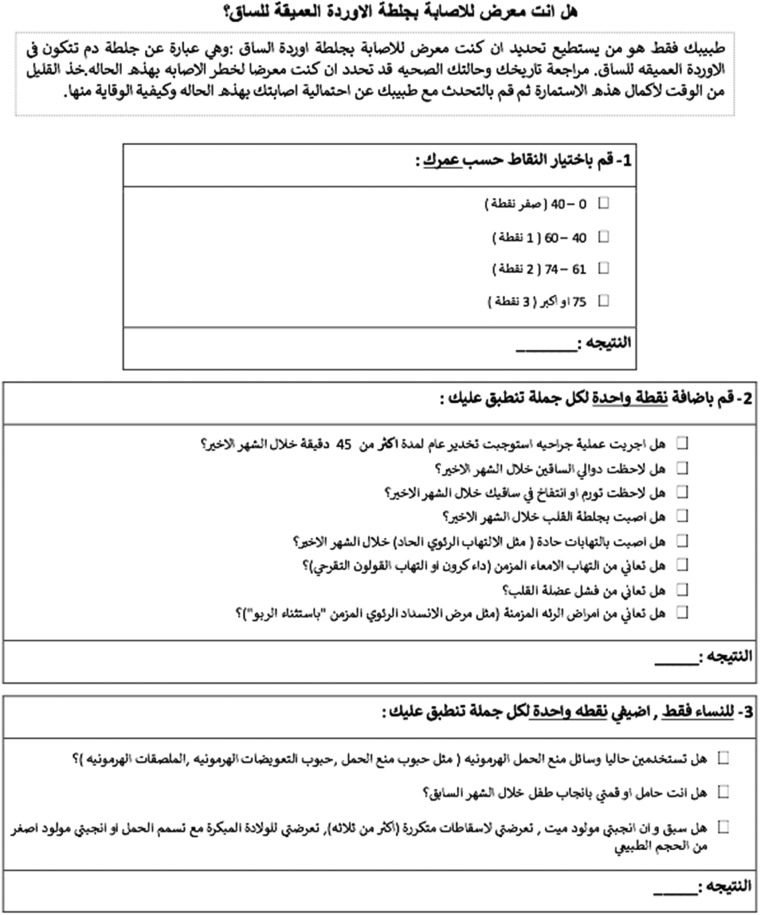
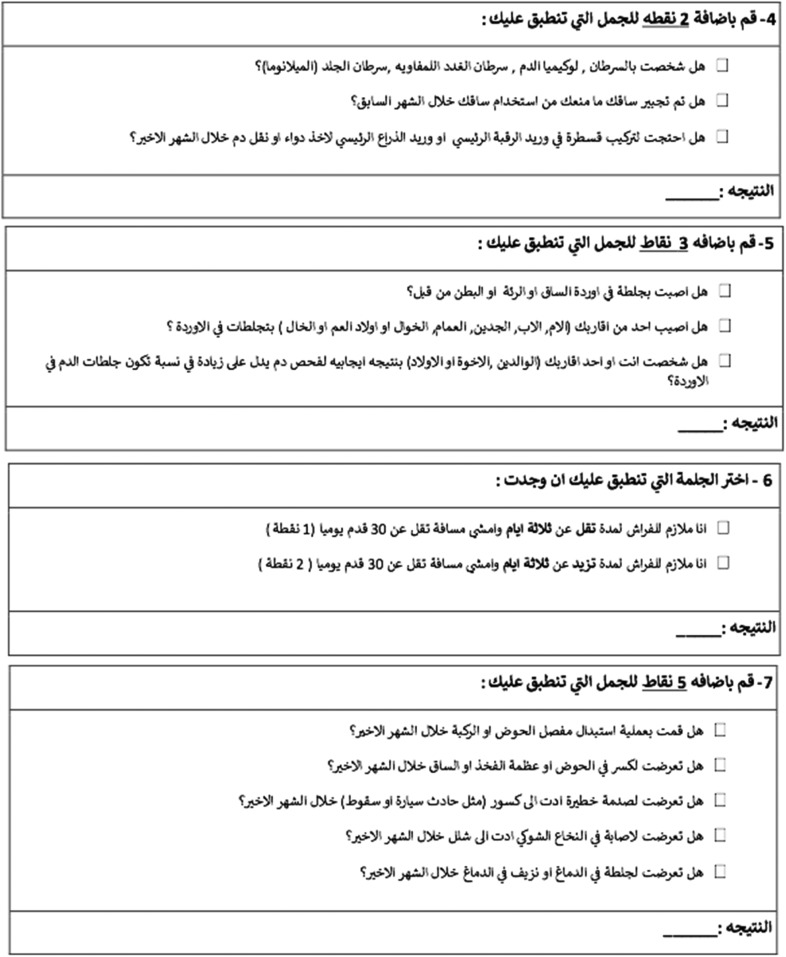
Targeted prophylaxis for venous thromboembolism (VTE) using the Caprini risk score (CRS) is effective reducing postoperative VTE. Despite its availability as preventive strategy, risk scoring remains underutilized. Critics to the CRS contend the time it takes to complete, and its limitation to English language. Aim is to create and validate patient-completed CRS tools for Spanish, Arabic, and Polish speakers. We translated the first patient-completed CRS to Spanish, Arabic, and Polish. We conducted a pilot study followed by the validation study. Using PASS version 11, we determined that a sample size of 37 achieved a power of 80%, to detect a difference of 0.1 between the null hypothesis correlation of 0.5 and the alternative hypothesis correlation of 0.7 using a 2-sided hypothesis test, significance level of .05. We tabulated and categorized scores using SPSS version 23 to estimate κ, linear correlation, and Bland Altman test. κ value >0.8 was defined as "almost perfect agreement." From 129 recruited patients, 50 (39%) spoke Spanish, 40 (31%) spoke Arabic, and 39 (30%) spoke Polish; average age 51 (16.69) years, 58 (45%) were men, with less than college education (67%). Mean (standard deviation) CRS was 5 (3.90), the majority (63%) above moderate VTE risk. We report excellent agreement comparing physician and patient results (κ = 0.93) and high correlation 0.97 ( P < .01) for the overall score. Bland Altman did not show trend for extreme values. We created and validated the first Spanish, Arabic, and Polish versions of the patient-completed CRS, with excellent correlation and agreement when compared to CRS-trained physician-completed form. Based on these results, the physician needs to calculate the body mass index. Completing the form was not time-consuming.
使用Caprini风险评分(CRS)进行静脉血栓栓塞(VTE)的针对性预防可有效降低术后VTE。尽管它作为一种预防策略已可用,但风险评分仍未得到充分利用。对CRS的批评者认为其完成所需时间以及仅限于英语的局限性。目的是为讲西班牙语、阿拉伯语和波兰语的患者创建并验证患者自行填写的CRS工具。我们将首个患者自行填写的CRS翻译成西班牙语、阿拉伯语和波兰语。我们先进行了一项试点研究,随后进行了验证研究。使用PASS 11版本,我们确定样本量为37时功效达到80%,在双侧假设检验中,显著性水平为0.05,以检测原假设相关性0.5与备择假设相关性0.7之间0.1的差异。我们使用SPSS 23版本对分数进行列表和分类,以估计κ值、线性相关性和Bland Altman检验。κ值>0.8被定义为“几乎完全一致”。在129名招募的患者中,50名(39%)讲西班牙语,40名(31%)讲阿拉伯语,39名(30%)讲波兰语;平均年龄51(16.69)岁,58名(45%)为男性,大学以下学历者占67%。平均(标准差)CRS为5(3.90),大多数(63%)高于中度VTE风险。我们报告医生和患者结果比较具有极好的一致性(κ = 0.93),总体评分的相关性较高,为0.97(P < 0.01)。Bland Altman检验未显示极端值的趋势。我们创建并验证了首个患者自行填写的西班牙语、阿拉伯语和波兰语版本的CRS,与经过CRS培训的医生填写的表格相比,具有极好的相关性和一致性。基于这些结果,医生需要计算体重指数。填写表格并不耗时。