College of Life Science, Zhejiang University, Hangzhou, Zhejiang Province, China.
Ocean College, Zhejiang University, Zhoushan, Zhejiang Province, China
mBio. 2017 Dec 19;8(6):e02099-17. doi: 10.1128/mBio.02099-17.
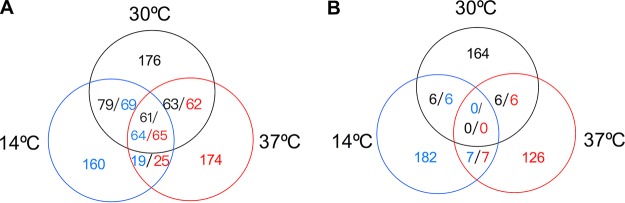
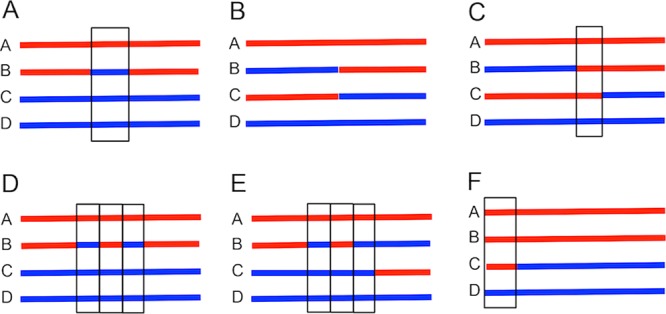
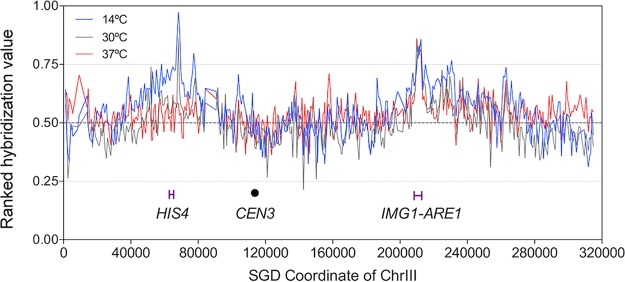
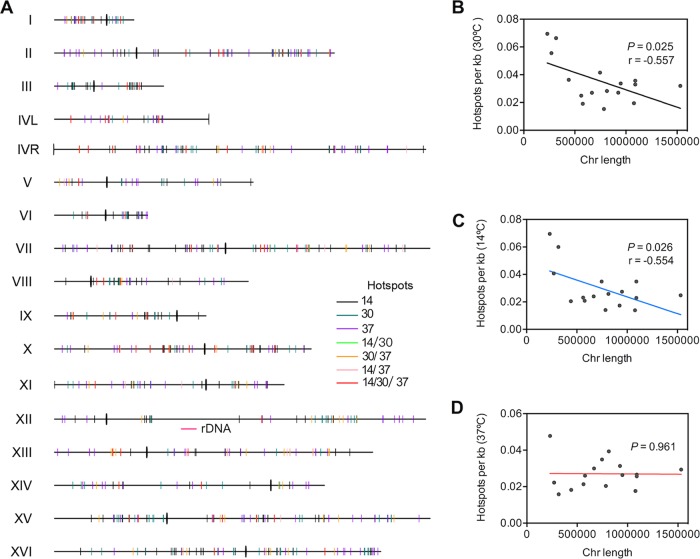
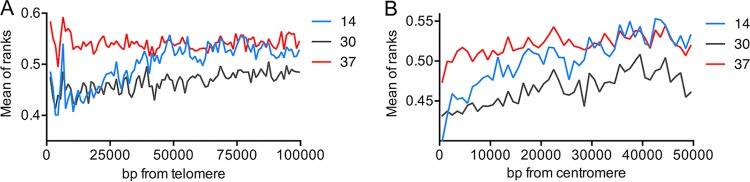
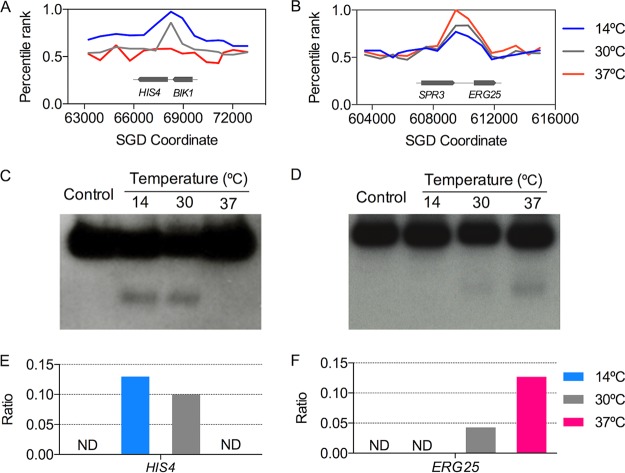
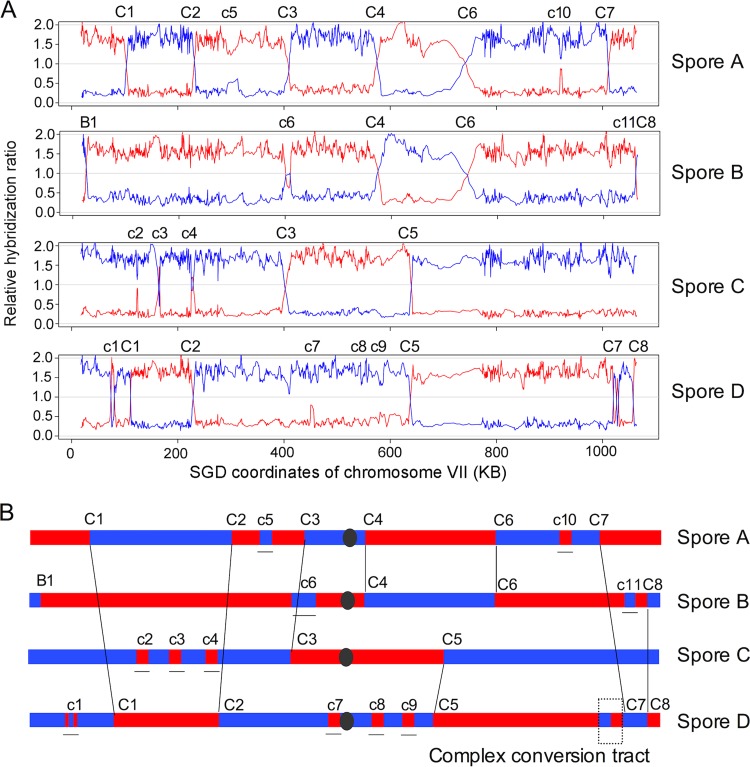
Although meiosis in warm-blooded organisms takes place in a narrow temperature range, meiosis in many organisms occurs over a wide variety of temperatures. We analyzed the properties of meiosis in the yeast in cells sporulated at 14°C, 30°C, or 37°C. Using comparative-genomic-hybridization microarrays, we examined the distribution of Spo11-generated meiosis-specific double-stranded DNA breaks throughout the genome. Although there were between 300 and 400 regions of the genome with high levels of recombination (hot spots) observed at each temperature, only about 20% of these hot spots were found to have occurred independently of the temperature. In , regions near the telomeres and centromeres tend to have low levels of meiotic recombination. This tendency was observed in cells sporulated at 14°C and 30°C, but not at 37°C. Thus, the temperature of sporulation in yeast affects some global property of chromosome structure relevant to meiotic recombination. Using single-nucleotide polymorphism (SNP)-specific whole-genome microarrays, we also examined crossovers and their associated gene conversion events as well as gene conversion events that were unassociated with crossovers in all four spores of tetrads obtained by sporulation of diploids at 14°C, 30°C, or 37°C. Although tetrads from cells sporulated at 30°C had slightly (20%) more crossovers than those derived from cells sporulated at the other two temperatures, spore viability was good at all three temperatures. Thus, despite temperature-induced variation in the genetic maps, yeast cells produce viable haploid products at a wide variety of sporulation temperatures. In the yeast , recombination is usually studied in cells that undergo meiosis at 25°C or 30°C. In a genome-wide analysis, we showed that the locations of genomic regions with high and low levels of meiotic recombination (hot spots and cold spots, respectively) differed dramatically in cells sporulated at 14°C, 30°C, and 37°C. Thus, in yeast, and likely in other non-warm-blooded organisms, genetic maps are strongly affected by the environment.
虽然热血动物的减数分裂发生在一个狭窄的温度范围内,但许多生物体的减数分裂发生在广泛的温度范围内。我们分析了在 14°C、30°C 或 37°C 条件下孢子形成的酵母细胞中的减数分裂特性。使用比较基因组杂交微阵列,我们检查了 Spo11 产生的减数分裂特异性双链 DNA 断裂在整个基因组中的分布。尽管在每个温度下都观察到 300 到 400 个基因组区域具有高水平的重组(热点),但只有大约 20%的热点是独立于温度发生的。在酵母中,靠近端粒和着丝粒的区域往往具有低水平的减数分裂重组。在 14°C 和 30°C 条件下孢子形成的细胞中观察到这种趋势,但在 37°C 条件下则没有。因此,酵母的孢子形成温度会影响与减数分裂重组相关的一些染色体结构的全局性质。使用单核苷酸多态性 (SNP)-特异性全基因组微阵列,我们还检查了交叉及其相关的基因转换事件,以及在 14°C、30°C 或 37°C 条件下通过二倍体孢子形成获得的四分体的所有四个孢子中与交叉无关的基因转换事件。尽管在 30°C 条件下孢子形成的四分体比在其他两种温度下获得的四分体具有略高(20%)的交叉,但在所有三种温度下孢子的活力都很好。因此,尽管遗传图谱因温度诱导而发生变化,但酵母细胞在广泛的孢子形成温度下产生有活力的单倍体产物。在酵母中,重组通常在 25°C 或 30°C 条件下进行减数分裂的细胞中进行研究。在全基因组分析中,我们表明,在 14°C、30°C 和 37°C 条件下孢子形成的细胞中,具有高水平和低水平减数分裂重组(热点和冷点)的基因组区域的位置差异很大。因此,在酵母中,可能在其他非热血动物中,遗传图谱受环境的强烈影响。