Divisions of Pediatric Surgery and Surgical Research, Michael E. DeBakey Department of Surgery, Texas Children's Surgical Oncology Program, Texas Children's Liver Tumor Program, Dan L. Duncan Cancer Center, Baylor College of Medicine, Houston, TX, 77030, USA.
Department of Pediatrics, Dan L. Duncan Cancer Center, Baylor College of Medicine, Houston, TX, 77030, USA.
Sci Rep. 2017 Dec 19;7(1):17751. doi: 10.1038/s41598-017-17665-8.
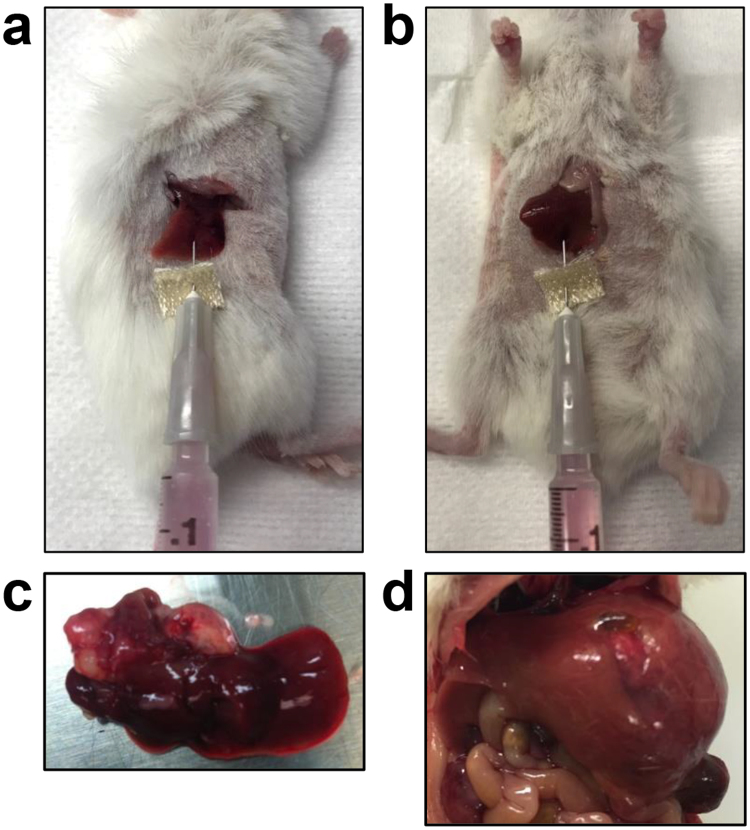
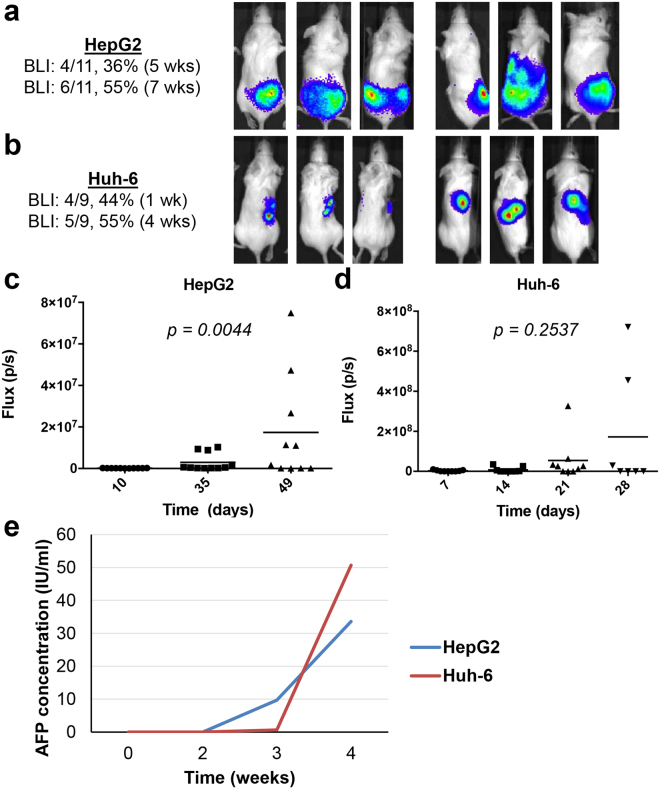
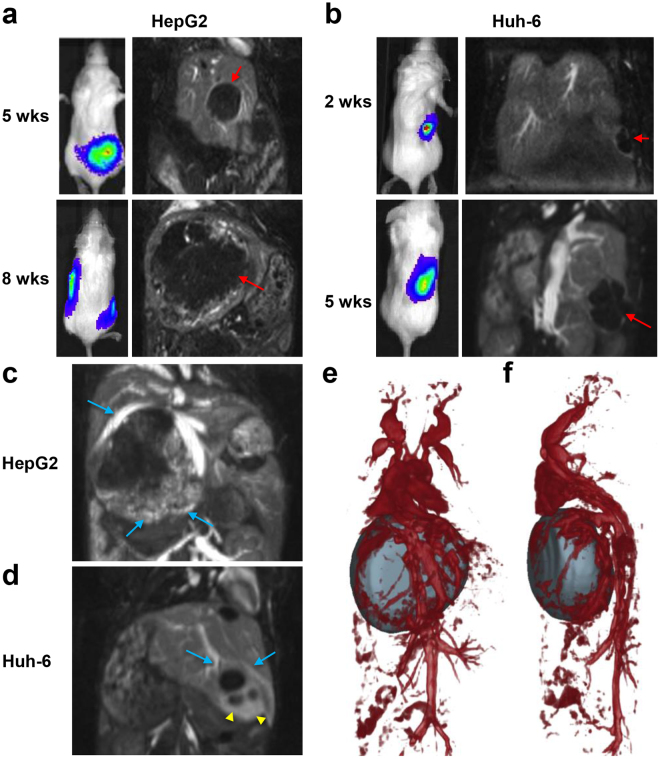
Currently, preclinical testing of therapies for hepatoblastoma (HB) is limited to subcutaneous and intrasplenic xenograft models that do not recapitulate the hepatic tumors seen in patients. We hypothesized that injection of HB cell lines into the livers of mice would result in liver tumors that resemble their clinical counterparts. HepG2 and Huh-6 HB cell lines were injected, and tumor growth was monitored with bioluminescence imaging (BLI) and magnetic resonance imaging (MRI). Levels of human α-fetoprotein (AFP) were monitored in the serum of animals. Immunohistochemical and gene expression analyses were also completed on xenograft tumor samples. BLI signal indicative of tumor growth was seen in 55% of HepG2- and Huh-6-injected animals after a period of four to seven weeks. Increased AFP levels correlated with tumor growth. MRI showed large intrahepatic tumors with active neovascularization. HepG2 and Huh-6 xenografts showed expression of β-catenin, AFP, and Glypican-3 (GPC3). HepG2 samples displayed a consistent gene expression profile most similar to human HB tumors. Intrahepatic injection of HB cell lines leads to liver tumors in mice with growth patterns and biologic, histologic, and genetic features similar to human HB tumors. This orthotopic xenograft mouse model will enable clinically relevant testing of novel agents for HB.
目前,对肝母细胞瘤 (HB) 的治疗方法的临床前测试仅限于皮下和脾内异种移植模型,这些模型不能重现患者中见到的肝肿瘤。我们假设将 HB 细胞系注射到小鼠肝脏中会导致类似于临床对照的肝肿瘤。注射 HepG2 和 Huh-6 HB 细胞系,并通过生物发光成像 (BLI) 和磁共振成像 (MRI) 监测肿瘤生长。监测动物血清中人α-胎蛋白 (AFP) 的水平。还对异种移植肿瘤样本进行了免疫组织化学和基因表达分析。在四到七周的时间后,55%的 HepG2 和 Huh-6 注射动物的 BLI 信号显示出肿瘤生长的迹象。AFP 水平的升高与肿瘤生长相关。MRI 显示出具有活跃新生血管的大肝内肿瘤。HepG2 和 Huh-6 异种移植物显示出β-连环蛋白、AFP 和 Glypican-3 (GPC3) 的表达。HepG2 样本显示出与人类 HB 肿瘤最相似的一致基因表达谱。HB 细胞系的肝内注射会导致小鼠肝肿瘤的生长模式以及生物学、组织学和遗传特征与人类 HB 肿瘤相似。这种原位异种移植小鼠模型将能够对 HB 的新型药物进行临床相关的测试。