Key Laboratory of Infectious Diseases and Molecular Immunopathology of Guangdong Province, Department of Microbiology and Immunology, Shantou University Medical College, Shantou, Guangdong Province, China.
Sci Rep. 2017 Dec 19;7(1):17761. doi: 10.1038/s41598-017-18087-2.
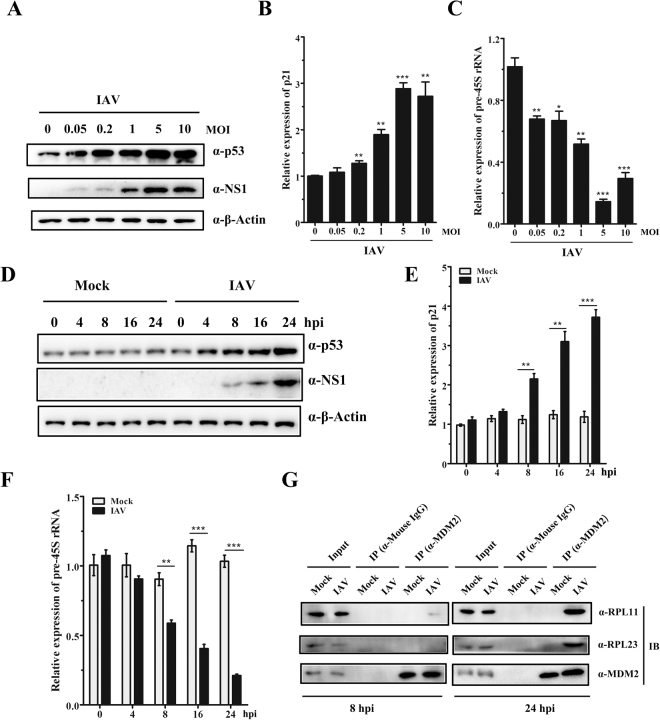
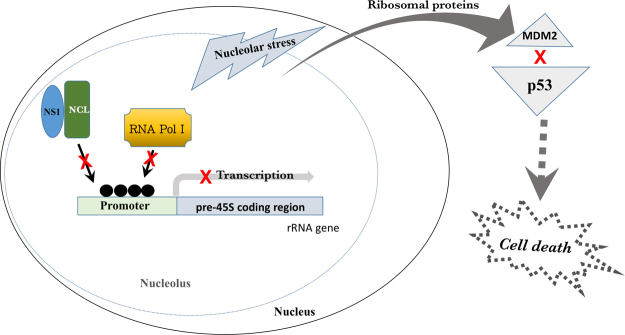
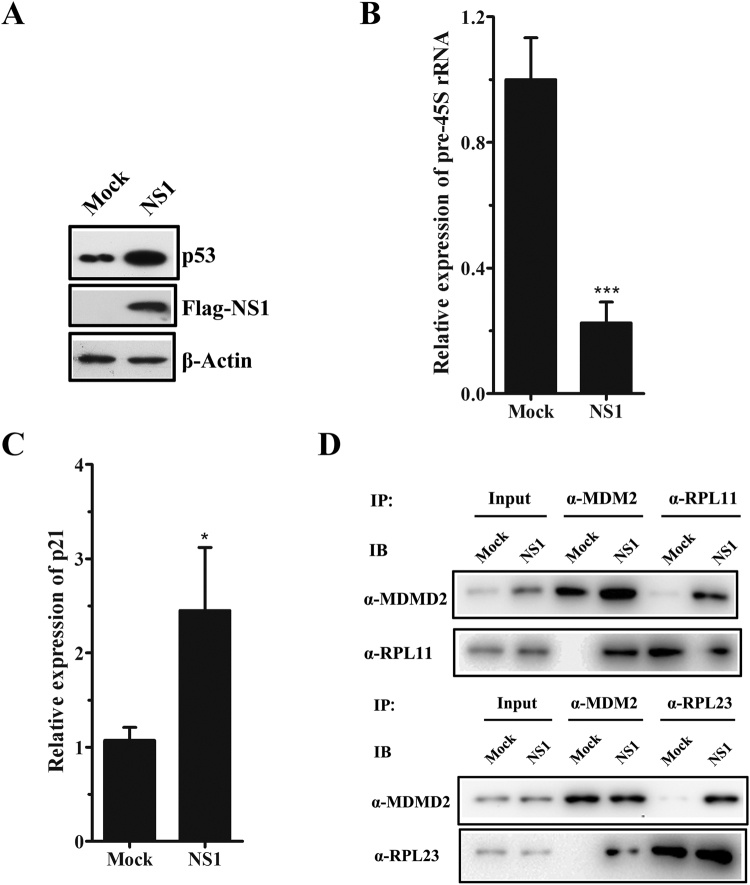
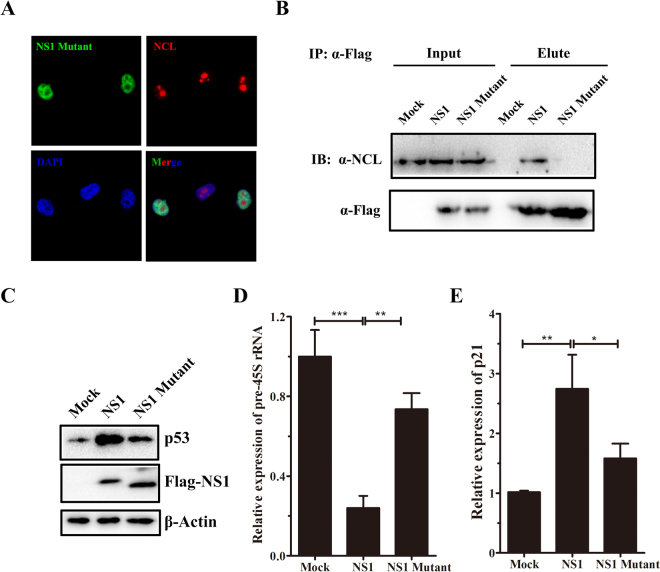
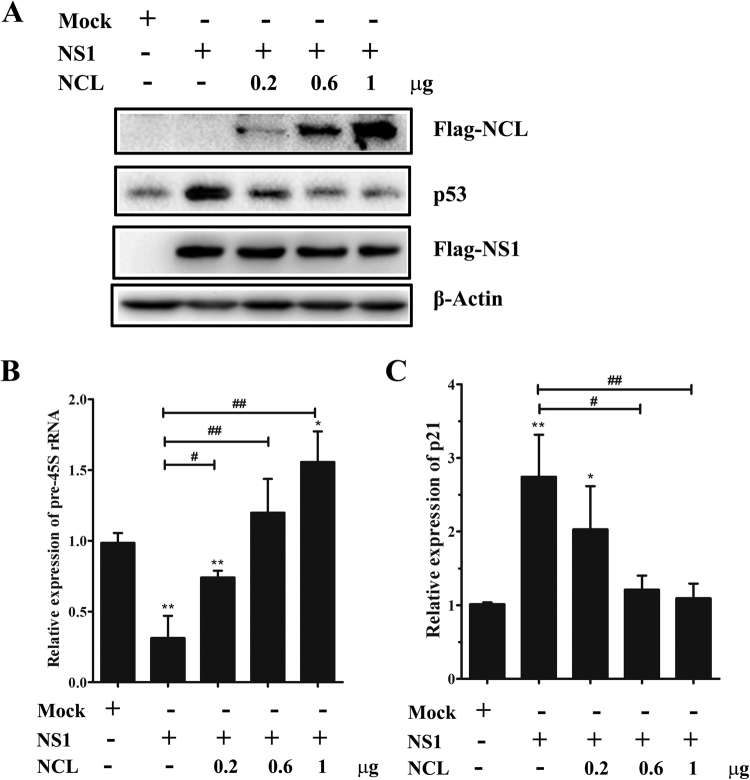
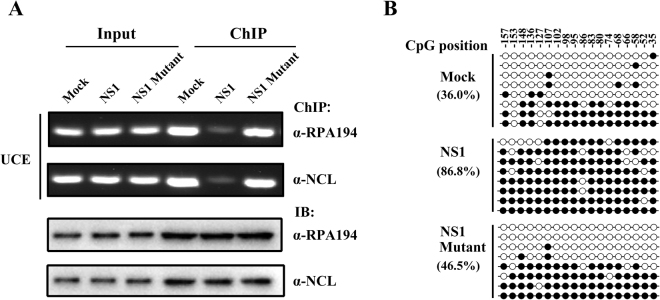
The nucleolus is a stress sensor associated with cell cycle progression and a central hub for the replication of pathogenic RNA viruses. However, the role of nucleolus in influenza A virus infection has not been well studied. Here we show that the interaction between NS1 protein of influenza A/Shantou/602/06 (H3N2) and nucleolin, a ubiquitous protein of nucleolus repressed RNA Pol I-dependent transcription via establishing hyper-methylation in the UCE of rRNA gene promoter. NS1 expressed cells showed significant association of ribosomal proteins with MDM2, and p53 accumulation, suggesting induced nucleolar stress. Disruption of the interaction of NS1 with nucleolin or overexpression of nucleolin in NS1 expressed cells revived RNA Pol I-dependent transcription, indicating nucleolin could be one target for NS1 to repress rRNA synthesis of host cells. Our present study suggests that NS1 protein of H3N2 could induce nucleolar stress based on epigenetic alteration of rRNA gene promoter via interaction with nucleolin.
核仁是与细胞周期进程相关的应激传感器,也是复制致病性 RNA 病毒的中央枢纽。然而,核仁在甲型流感病毒感染中的作用尚未得到很好的研究。在这里,我们发现甲型流感病毒/汕头/602/06(H3N2)的 NS1 蛋白与核仁蛋白核仁素之间的相互作用通过在 rRNA 基因启动子的 UCE 中建立高甲基化来抑制 RNA Pol I 依赖性转录。表达 NS1 的细胞中核糖体蛋白与 MDM2 明显相关,p53 积累,表明诱导核仁应激。破坏 NS1 与核仁素的相互作用或在表达 NS1 的细胞中过表达核仁素可恢复 RNA Pol I 依赖性转录,表明核仁素可能是 NS1 抑制宿主细胞 rRNA 合成的靶标之一。本研究表明,基于 H3N2 的 NS1 蛋白通过与核仁素相互作用,通过 rRNA 基因启动子的表观遗传改变诱导核仁应激。