Gilbert Rosalind A, Kelly William J, Altermann Eric, Leahy Sinead C, Minchin Catherine, Ouwerkerk Diane, Klieve Athol V
Department of Agriculture and Fisheries, EcoSciences Precinct, Brisbane, QLD, Australia.
Queensland Alliance for Agriculture and Food Innovation, University of Queensland, St Lucia, QLD, Australia.
Front Microbiol. 2017 Dec 5;8:2340. doi: 10.3389/fmicb.2017.02340. eCollection 2017.
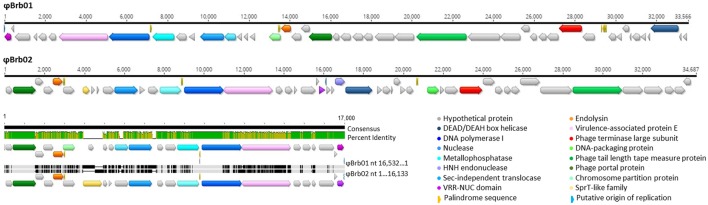
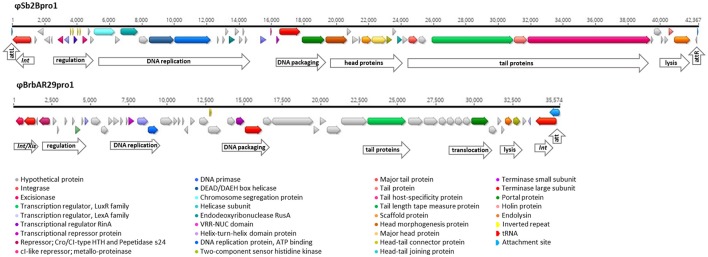
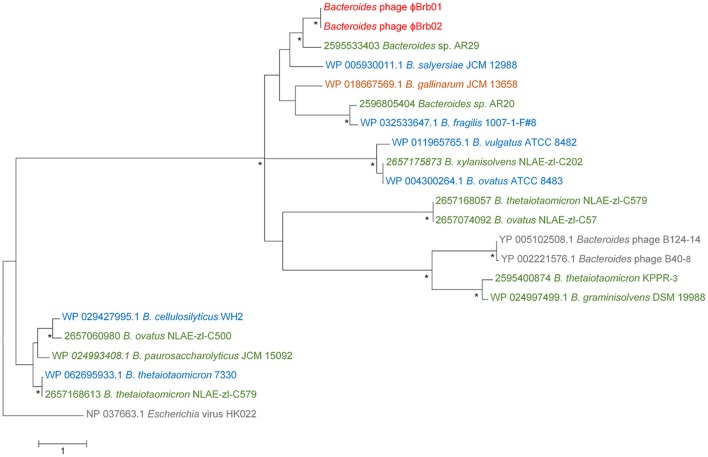
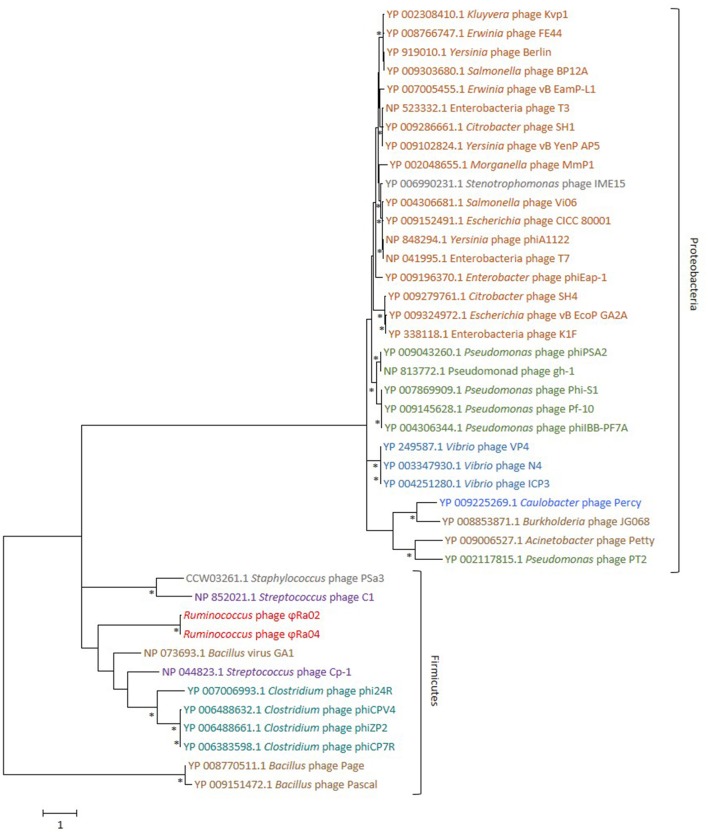
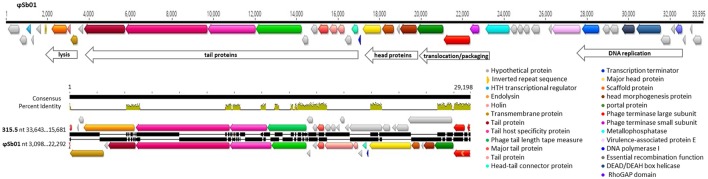
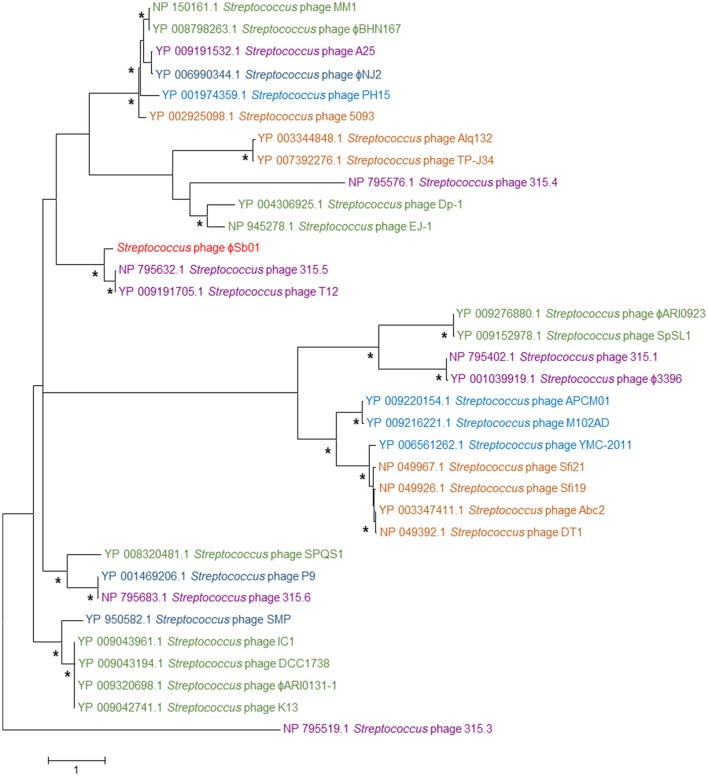
The rumen is known to harbor dense populations of bacteriophages (phages) predicted to be capable of infecting a diverse range of rumen bacteria. While bacterial genome sequencing projects are revealing the presence of phages which can integrate their DNA into the genome of their host to form stable, lysogenic associations, little is known of the genetics of phages which utilize lytic replication. These phages infect and replicate within the host, culminating in host lysis, and the release of progeny phage particles. While lytic phages for rumen bacteria have been previously isolated, their genomes have remained largely uncharacterized. Here we report the first complete genome sequences of lytic phage isolates specifically infecting three genera of rumen bacteria: , and . All phages were classified within the viral order Caudovirales and include two phage morphotypes, representative of the Siphoviridae and Podoviridae families. The phage genomes displayed modular organization and conserved viral genes were identified which enabled further classification and determination of closest phage relatives. Co-examination of bacterial host genomes led to the identification of several genes responsible for modulating phage:host interactions, including CRISPR/ elements and restriction-modification phage defense systems. These findings provide new genetic information and insights into how lytic phages may interact with bacteria of the rumen microbiome.
已知瘤胃中存在大量噬菌体,预计这些噬菌体能够感染多种瘤胃细菌。虽然细菌基因组测序项目揭示了一些噬菌体的存在,这些噬菌体可以将其DNA整合到宿主基因组中,形成稳定的溶原性关联,但对于利用裂解性复制的噬菌体的遗传学却知之甚少。这些噬菌体在宿主内感染并复制,最终导致宿主裂解,并释放子代噬菌体颗粒。虽然之前已经分离出瘤胃细菌的裂解性噬菌体,但其基因组在很大程度上仍未得到表征。在这里,我们报告了首次专门感染瘤胃细菌三个属(即[此处原文缺失属名]、[此处原文缺失属名]和[此处原文缺失属名])的裂解性噬菌体分离株的完整基因组序列。所有噬菌体都被归类在病毒目尾病毒目中,包括两种噬菌体形态类型,分别代表长尾噬菌体科和短尾噬菌体科。噬菌体基因组呈现模块化组织,并鉴定出保守的病毒基因,这有助于进一步分类和确定最接近的噬菌体亲缘关系。对细菌宿主基因组的共同检查导致鉴定出几个负责调节噬菌体与宿主相互作用的基因,包括CRISPR/[此处原文缺失相关内容]元件和限制修饰噬菌体防御系统。这些发现提供了新的遗传信息,并深入了解了裂解性噬菌体可能如何与瘤胃微生物群的细菌相互作用。