Department of Molecular and Cellular Biology, University of California-Davis, Davis, CA, 95616, USA.
Sci Rep. 2017 Dec 21;7(1):17965. doi: 10.1038/s41598-017-18406-7.
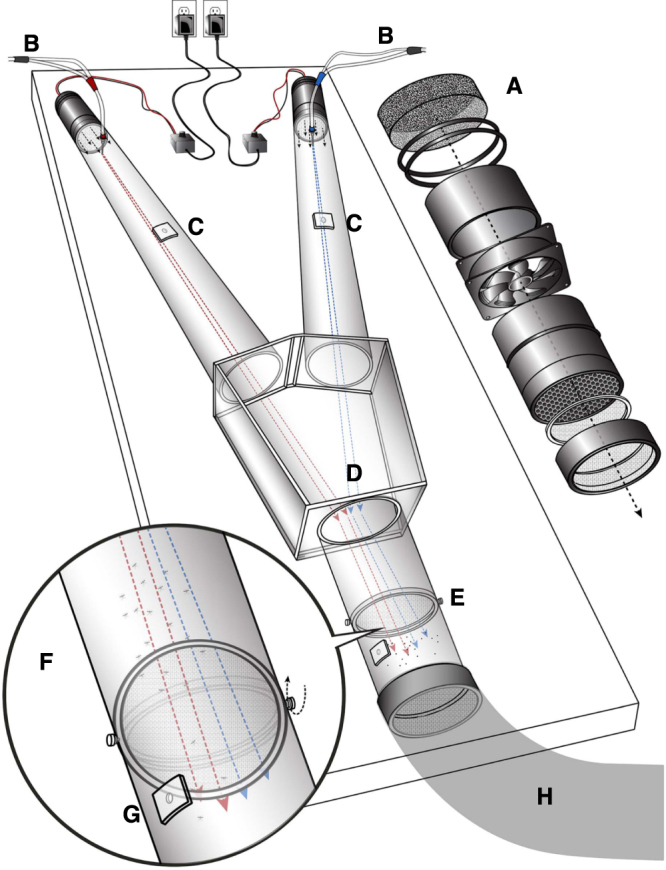
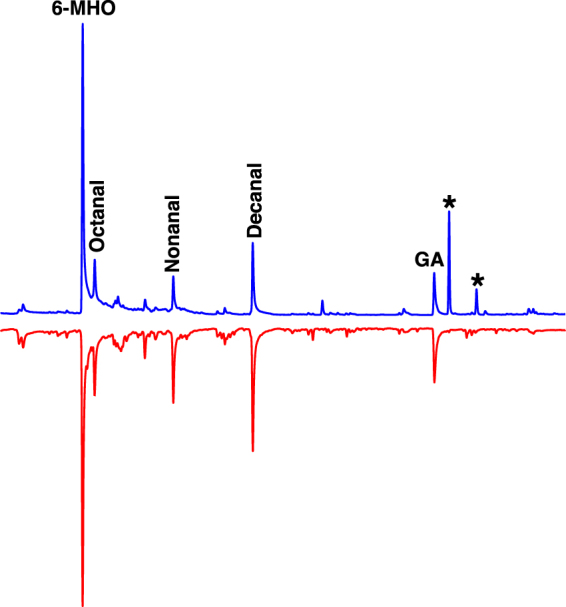
Anecdotes related to preferential mosquito bites are very common, but to date there is no complete explanation as to why one out of two people systematically receives more mosquito bites than the other when both are equally accessible. Here we tested the hypothesis that two constituents of skin emanations, 6-methyl-5-heptan-2-one (6-MHO) and geranylacetone (GA), are natural repellents and may account for differential attraction in different ratios. We studied skin emanations from two human subjects, confirmed in behavioral assays that female southern house mosquitoes are significantly more attracted to subject A (attractant) than to subject N (non-attractant), and tested their 6-MHO/GA ratios in a dual-choice olfactometer. Although repelling at high doses, 6-MHO/GA mixtures were not active at the levels emitted by human skin. We found, however, differential attraction elicited by the aldehydes in the ratios produced by subjects A and N. When tested in a dose commensurate with the level released from human skin and in the ratio produced by subject A, the aldehyde mixture significantly attracted mosquitoes. By contrast, an aldehyde mixture at the same ratio released by subject N did not attract mosquitoes. We, therefore, hypothesized that aldehydes may play a role in the commonly observed differential attraction.
有关蚊子偏爱叮咬某些人的轶事非常常见,但迄今为止,对于为什么当两个人同样容易被蚊子叮咬时,其中一个人总是比另一个人受到更多的蚊子叮咬,还没有一个完整的解释。在这里,我们测试了以下假设:皮肤散发物中的两种成分,6-甲基-5-庚烷-2-酮(6-MHO)和香叶基丙酮(GA),是天然的驱避剂,并且可能以不同的比例解释了不同的吸引力。我们研究了两个人体散发物,在行为测定中证实雌性南方家蚊明显更倾向于吸引 A 主体(有吸引力)而不是 N 主体(无吸引力),并在双选择嗅觉仪中测试了它们的 6-MHO/GA 比例。尽管 6-MHO/GA 混合物在高剂量下具有驱避作用,但在人体皮肤散发的水平下它们并不活跃。然而,我们发现由 A 主体和 N 主体产生的比例中的醛类引起了不同的吸引力。当以与人体皮肤释放水平相称的剂量并以 A 主体产生的比例测试时,醛混合物会显著吸引蚊子。相比之下,以 N 主体释放的相同比例的醛混合物不会吸引蚊子。因此,我们假设醛类可能在普遍观察到的不同吸引力中起作用。