Hellmann Anna-Maria, Lother Jasmin, Wurster Sebastian, Lutz Manfred B, Schmitt Anna Lena, Morton Charles Oliver, Eyrich Matthias, Czakai Kristin, Einsele Hermann, Loeffler Juergen
Medizinische Klinik & Poliklinik II, Universitätsklinikum Würzburg, Würzburg, Germany.
Institute of Virology and Immunobiology, University of Würzburg, Würzburg, Germany.
Front Immunol. 2017 Dec 6;8:1716. doi: 10.3389/fimmu.2017.01716. eCollection 2017.
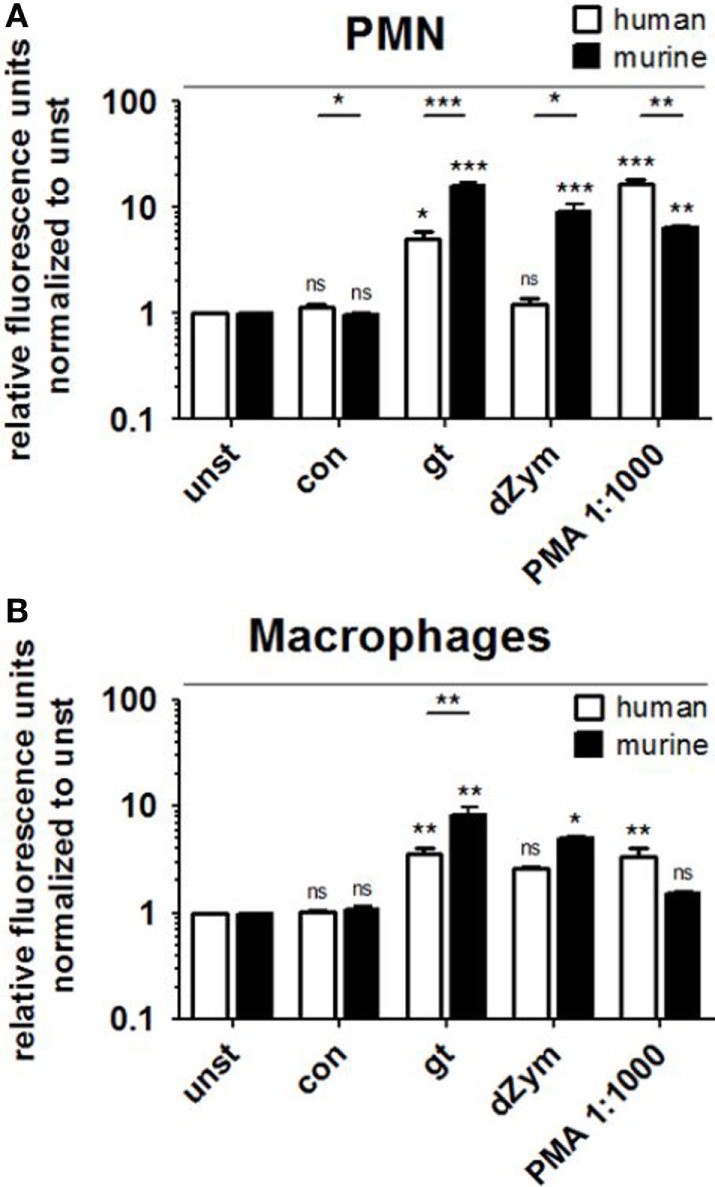
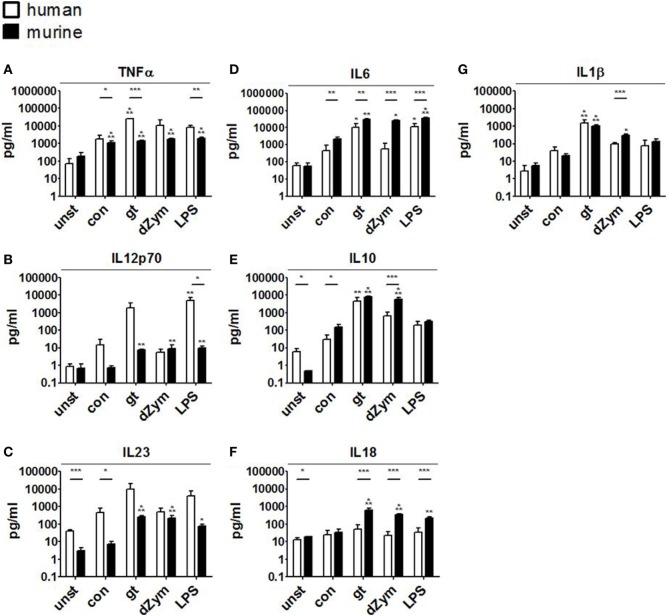
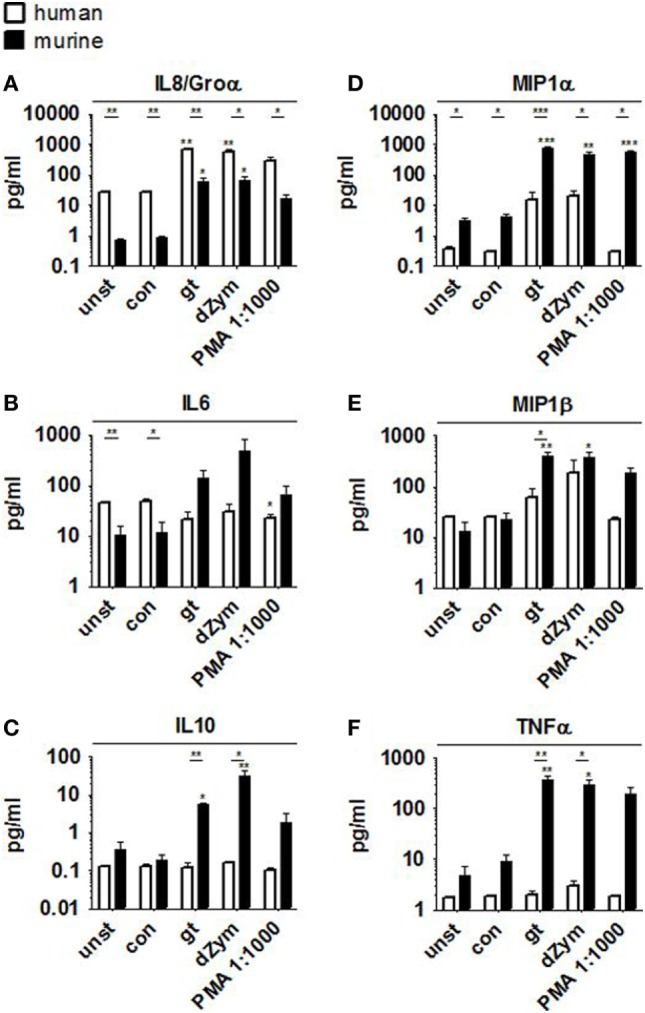
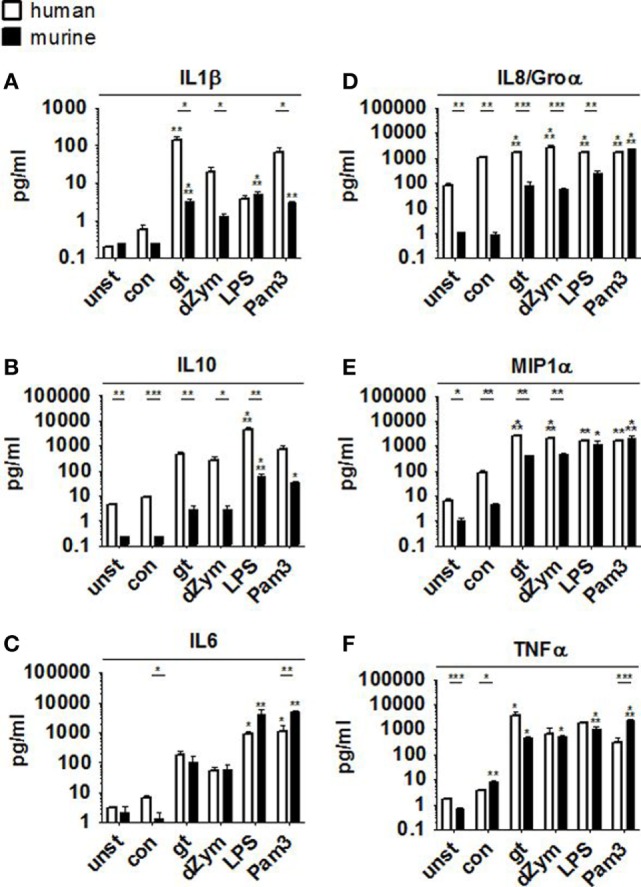
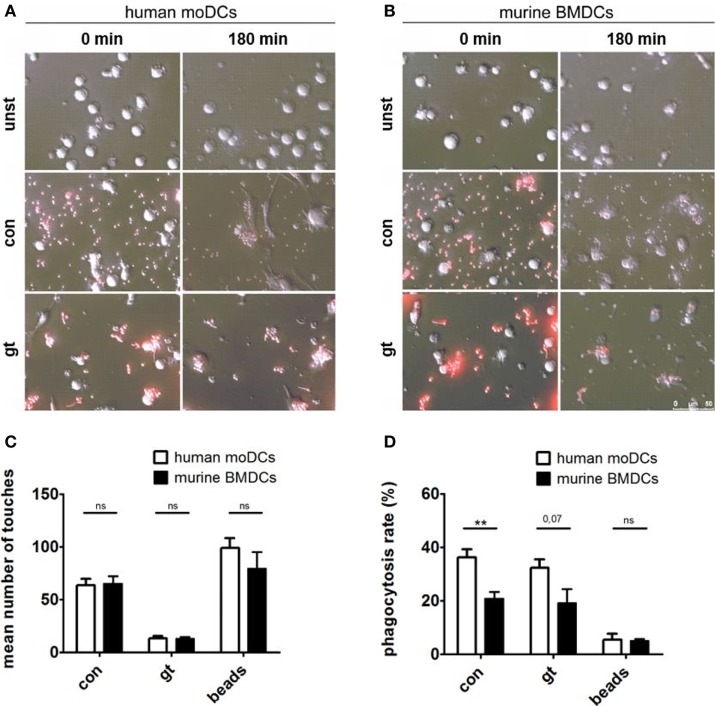
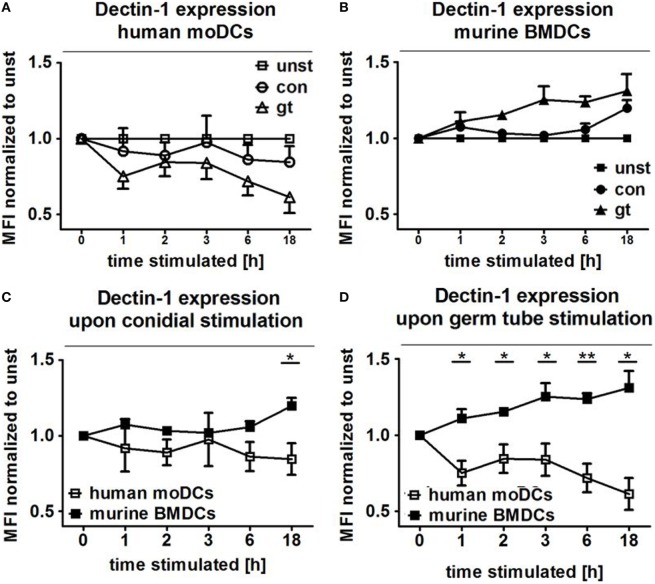
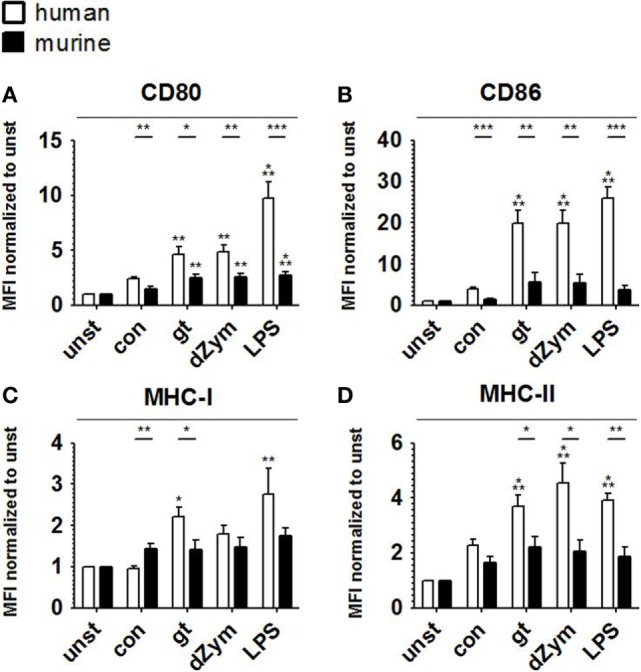
is the main cause of invasive fungal infections occurring almost exclusively in immunocompromised patients. An improved understanding of the initial innate immune response is key to the development of better diagnostic tools and new treatment options. Mice are commonly used to study immune defense mechanisms during the infection of the mammalian host with . However, little is known about functional differences between the human and murine immune response against this fungal pathogen. Thus, we performed a comparative functional analysis of human and murine dendritic cells (DCs), macrophages, and polymorphonuclear cells (PMNs) using standardized and reproducible working conditions, laboratory protocols, and readout assays. did not provoke identical responses in murine and human immune cells but rather initiated relatively specific responses. While human DCs showed a significantly stronger upregulation of their maturation markers and major histocompatibility complex molecules and phagocytosed more efficiently compared to their murine counterparts, murine PMNs and macrophages exhibited a significantly stronger release of reactive oxygen species after exposure to . For all studied cell types, human and murine samples differed in their cytokine response to conidia or germ tubes of . Furthermore, Dectin-1 showed inverse expression patterns on human and murine DCs after fungal stimulation. These specific differences should be carefully considered and highlight potential limitations in the transferability of murine host-pathogen interaction studies.
是侵袭性真菌感染的主要原因,几乎仅发生在免疫功能低下的患者中。更好地理解初始固有免疫反应是开发更好的诊断工具和新治疗方案的关键。小鼠常用于研究哺乳动物宿主感染期间的免疫防御机制。然而,对于人类和小鼠针对这种真菌病原体的免疫反应之间的功能差异知之甚少。因此,我们使用标准化且可重复的工作条件、实验室方案和读数测定法,对人类和小鼠的树突状细胞(DC)、巨噬细胞和多形核细胞(PMN)进行了比较功能分析。在小鼠和人类免疫细胞中并未引发相同的反应,而是引发了相对特异的反应。与小鼠对应细胞相比,人类DC显示出其成熟标志物和主要组织相容性复合体分子的上调明显更强,并且吞噬效率更高,而小鼠PMN和巨噬细胞在暴露于后表现出活性氧的释放明显更强。对于所有研究的细胞类型,人类和小鼠样本对分生孢子或芽管的细胞因子反应有所不同。此外,在真菌刺激后,Dectin-1在人类和小鼠DC上呈现相反的表达模式。这些特定差异应予以仔细考虑,并突出了小鼠宿主-病原体相互作用研究可转移性的潜在局限性。