School of Life Sciences, University of Warwick, Coventry CV4 7AL, UK.
Department of Biology, College of William and Mary, Williamsburg, VA 23187, USA.
Curr Biol. 2018 Jan 8;28(1):93-99.e3. doi: 10.1016/j.cub.2017.11.037. Epub 2017 Dec 21.
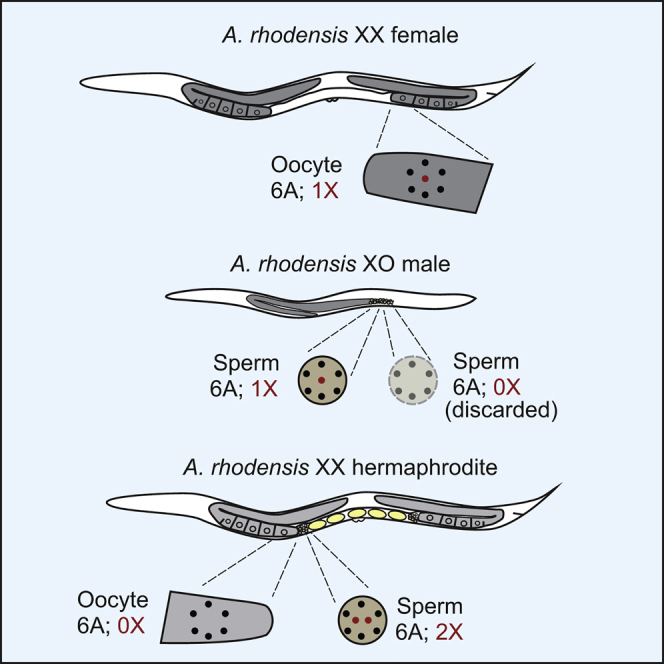
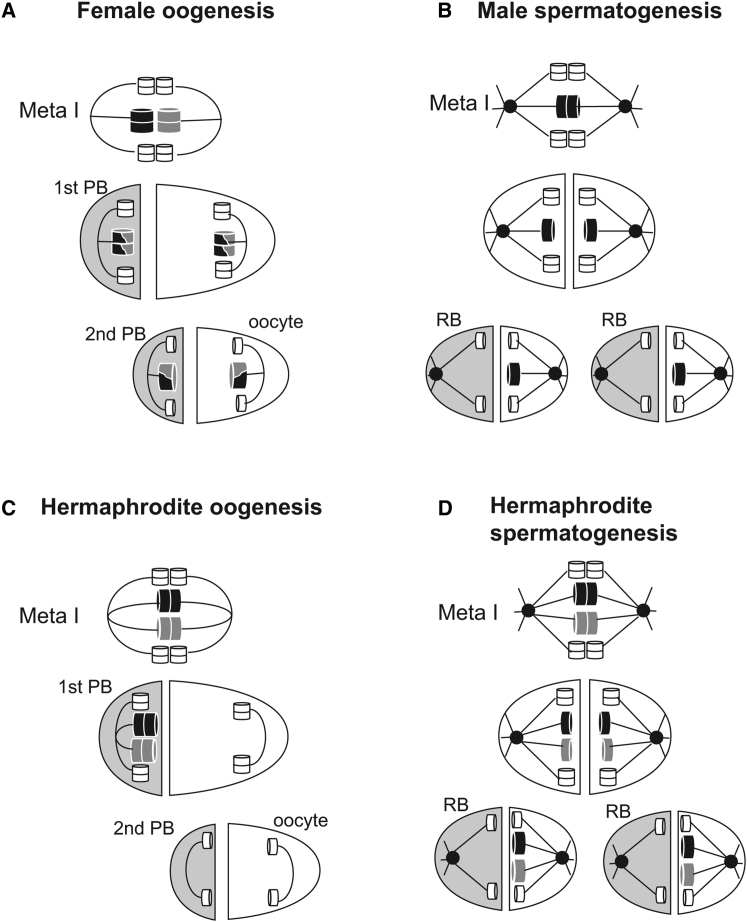
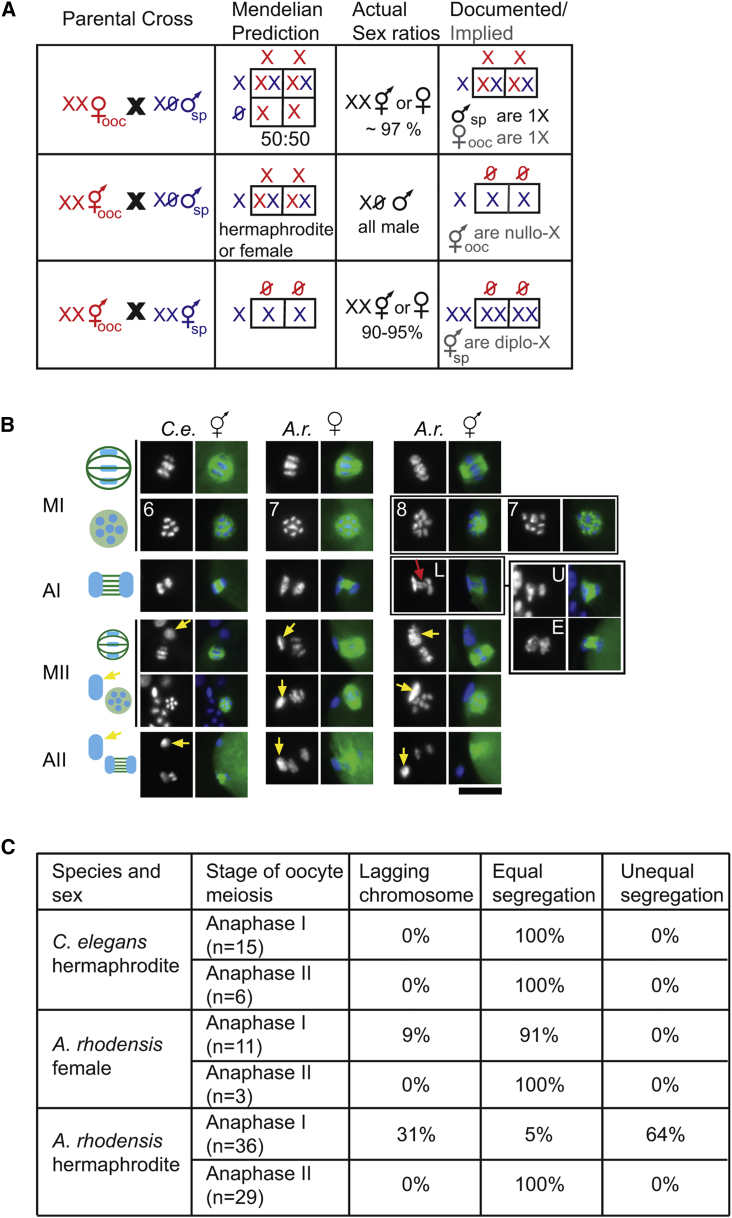
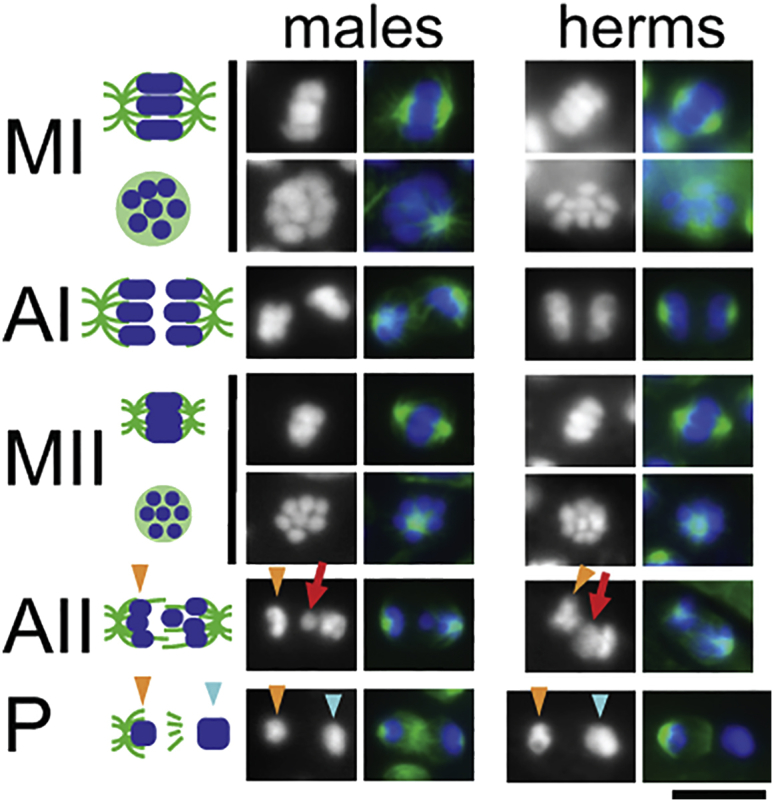
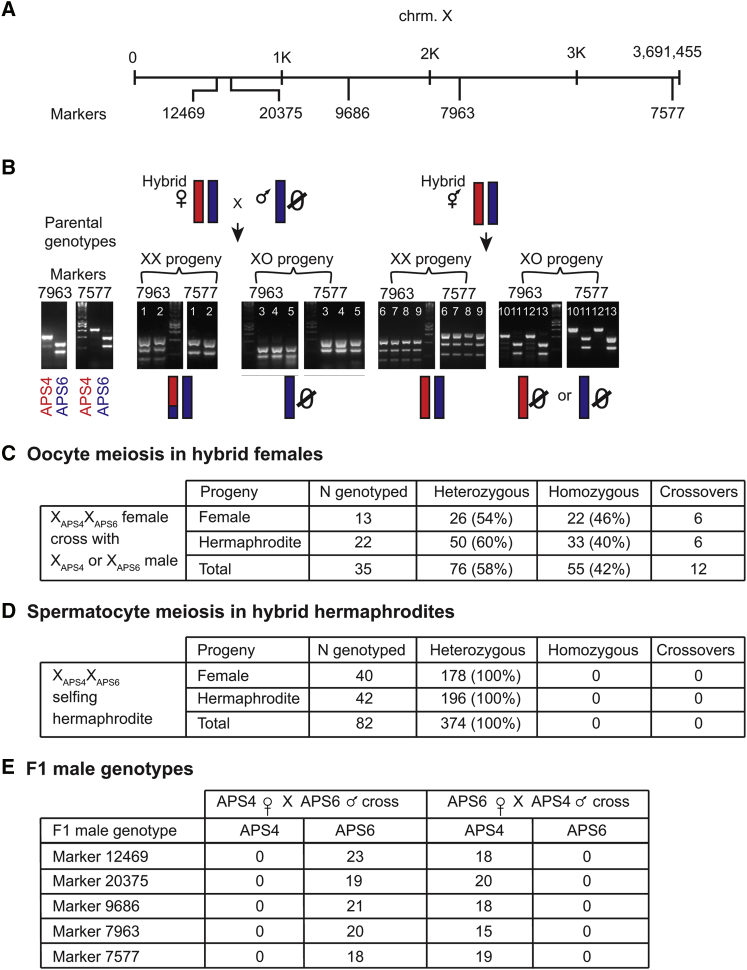
Three key steps in meiosis allow diploid organisms to produce haploid gametes: (1) homologous chromosomes (homologs) pair and undergo crossovers; (2) homologs segregate to opposite poles; and (3) sister chromatids segregate to opposite poles. The XX/XO sex determination system found in many nematodes [1] facilitates the study of meiosis because variation is easily recognized [2-4]. Here we show that meiotic segregation of X chromosomes in the trioecious nematode Auanema rhodensis [5] varies according to sex (hermaphrodite, female, or male) and type of gametogenesis (oogenesis or spermatogenesis). In this species, XO males exclusively produce X-bearing sperm [6, 7]. The unpaired X precociously separates into sister chromatids, which co-segregate with the autosome set to generate a functional haplo-X sperm. The other set of autosomes is discarded into a residual body. Here we explore the X chromosome behavior in female and hermaphrodite meioses. Whereas X chromosomes segregate following the canonical pattern during XX female oogenesis to yield haplo-X oocytes, during XX hermaphrodite oogenesis they segregate to the first polar body to yield nullo-X oocytes. Thus, crosses between XX hermaphrodites and males yield exclusively male progeny. During hermaphrodite spermatogenesis, the sister chromatids of the X chromosomes separate during meiosis I, and homologous X chromatids segregate to the functional sperm to create diplo-X sperm. Given these intra-species, intra-individual, and intra-gametogenesis variations in the meiotic program, A. rhodensis is an ideal model for studying the plasticity of meiosis and how it can be modulated.
(1)同源染色体(同源物)配对并发生交叉;(2)同源物分离到相对的两极;(3)姐妹染色单体分离到相对的两极。许多线虫中发现的 XX/XO 性别决定系统[1]便于研究减数分裂,因为易于识别变异[2-4]。在这里,我们表明,在三栖线虫 Auanema rhodensis[5]中,X 染色体的减数分裂分离根据性别(雌雄同体、雌性或雄性)和配子发生类型(卵发生或精子发生)而变化。在这个物种中,XO 雄性仅产生携带 X 的精子[6,7]。未配对的 X 过早地分离为姐妹染色单体,它们与常染色体一起分离,生成功能单倍体-X 精子。另一组常染色体被丢弃到残余体中。在这里,我们探讨了雌性和雌雄同体减数分裂中的 X 染色体行为。虽然 X 染色体在 XX 雌性卵发生中按照经典模式分离,以产生单倍体-X 卵母细胞,但在 XX 雌雄同体卵发生中,它们分离到第一极体,以产生 nullo-X 卵母细胞。因此,XX 雌雄同体与雄性之间的杂交仅产生雄性后代。在雌雄同体精子发生过程中,X 染色体的姐妹染色单体在减数分裂 I 中分离,同源 X 染色体分离到功能精子中,以产生二倍体-X 精子。鉴于减数分裂方案在种内、个体内和配子发生内的这些变化,A. rhodensis 是研究减数分裂可塑性及其如何被调节的理想模型。