Bullard Whitney, Kieft Rudo, Sabatini Robert
Department of Biochemistry and Molecular Biology, University of Georgia, Athens, GA, 30602, USA.
Biol Methods Protoc. 2017 Jan;2(1). doi: 10.1093/biomethods/bpw006. Epub 2017 Jan 25.
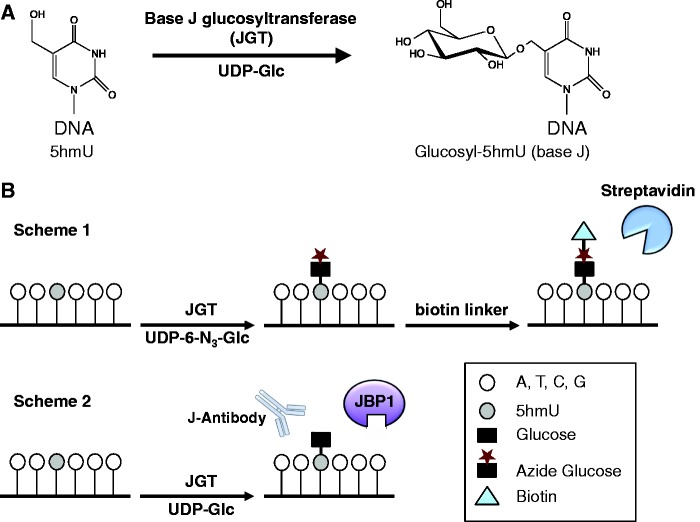
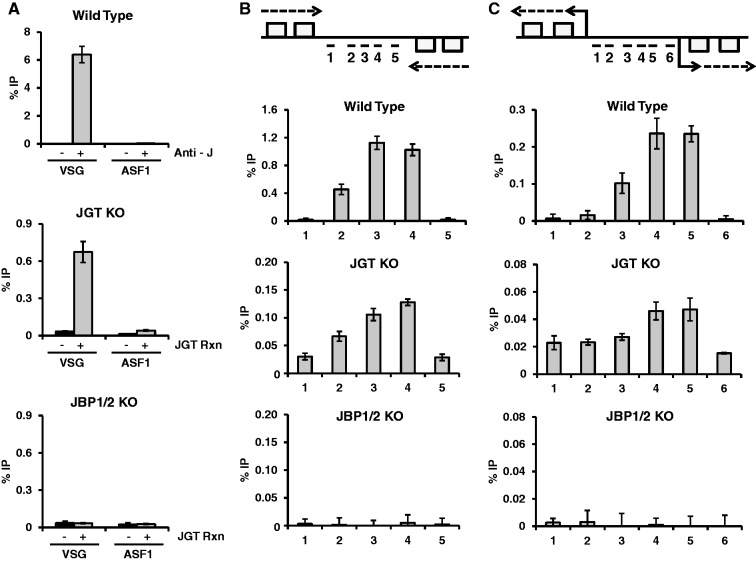
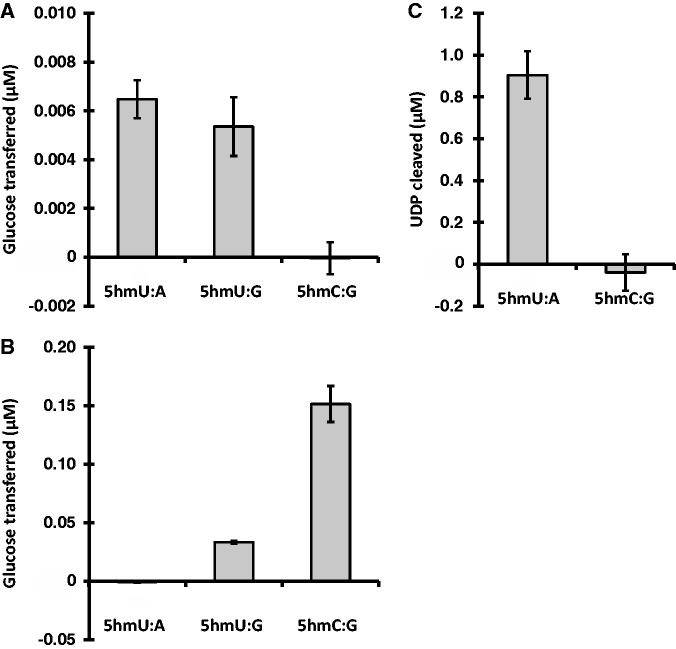
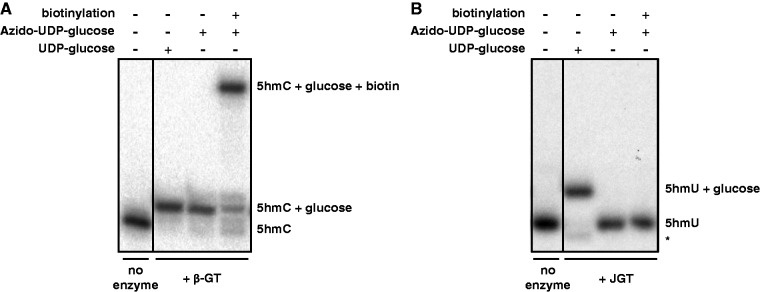
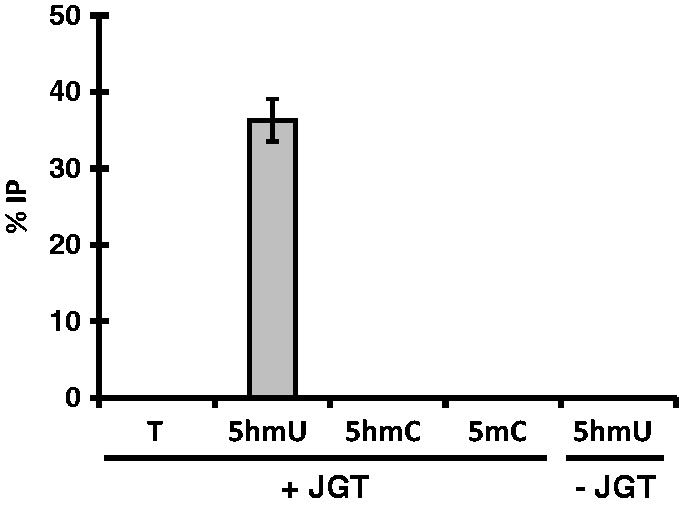
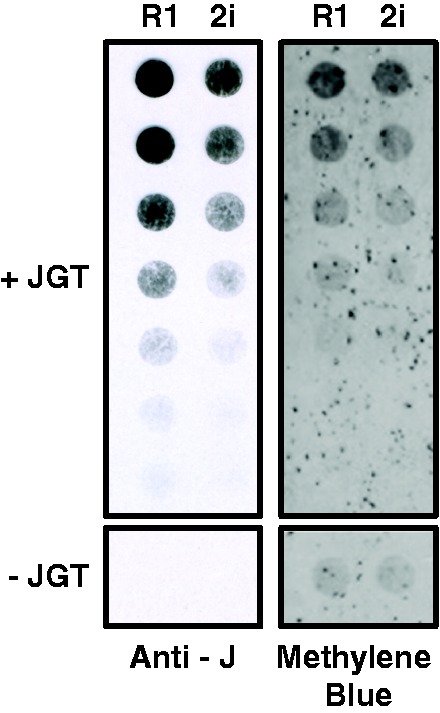
Recently, 5-hydroxymethyluracil (5hmU) was identified in mammalian genomic DNA as an oxidative product of thymine by the ten-eleven translocation (TET) proteins. While the biological role of this modification remains unclear, identifying its genomic location will assist in elucidating function. Here we present a rapid and robust method to selectively tag and enrich genomic regions containing 5hmU. This method involves the selective glucosylation of 5hmU residues by the base J glucosyltransferase from trypanosomes creating glucosylhydroxymethyluracil (base J). The base J can then be efficiently and selectively pulled down by antibodies against base J or by J-binding protein 1. DNA that is enriched is suitable for analysis by quantitative PCR or sequencing. We utilized this tagging reaction to provide proof of concept for the enrichment of 5hmU containing DNA from a pool that contains modified and unmodified DNA. Furthermore, we demonstrate that the base J pull-down assay identifies 5hmU at specific regions of the trypanosome genome involved in transcriptional repression. The method described here will allow for a greater understanding of the functional role and dynamics of 5hmU in biology.
最近,5-羟甲基尿嘧啶(5hmU)在哺乳动物基因组DNA中被鉴定为胸腺嘧啶经10-11易位(TET)蛋白催化产生的氧化产物。虽然这种修饰的生物学作用尚不清楚,但确定其在基因组中的位置将有助于阐明其功能。在此,我们提出了一种快速且可靠的方法,用于选择性标记和富集含有5hmU的基因组区域。该方法包括利用锥虫的碱基J糖基转移酶对5hmU残基进行选择性糖基化,生成葡萄糖基羟甲基尿嘧啶(碱基J)。然后,碱基J可以通过抗碱基J抗体或J结合蛋白1被高效且选择性地拉下。富集的DNA适用于通过定量PCR或测序进行分析。我们利用这种标记反应,从包含修饰和未修饰DNA的混合样本中富集含5hmU的DNA,以此提供概念验证。此外,我们证明碱基J拉下分析可鉴定锥虫基因组中参与转录抑制的特定区域的5hmU。本文所述方法将有助于更深入了解5hmU在生物学中的功能作用和动态变化。