Department of Neurology, University of California, San Francisco, CA, USA.
Program in Immunology, University of California, San Francisco, CA, USA.
Neurotherapeutics. 2018 Jan;15(1):92-101. doi: 10.1007/s13311-017-0594-z.
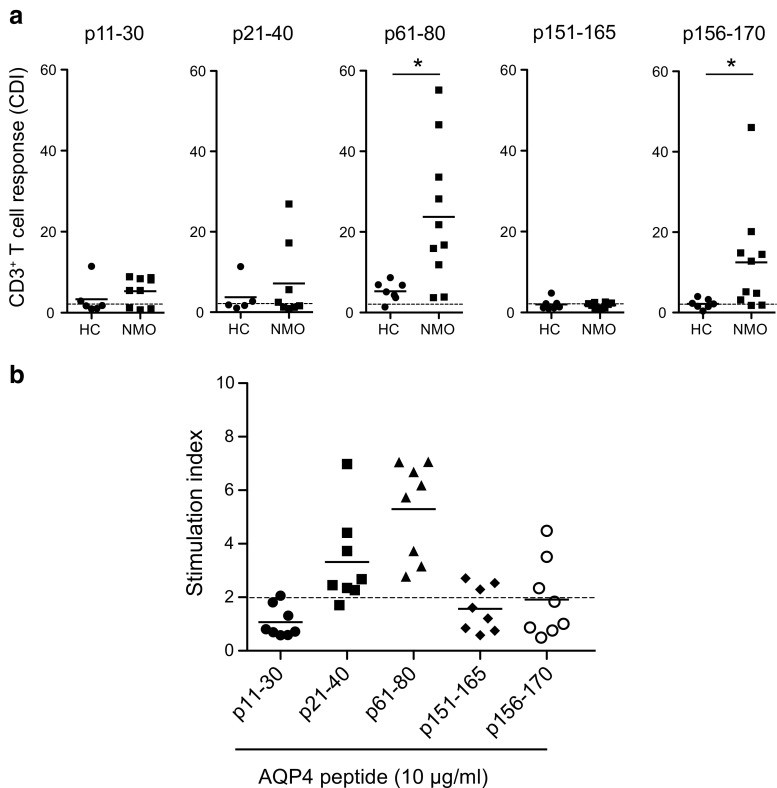
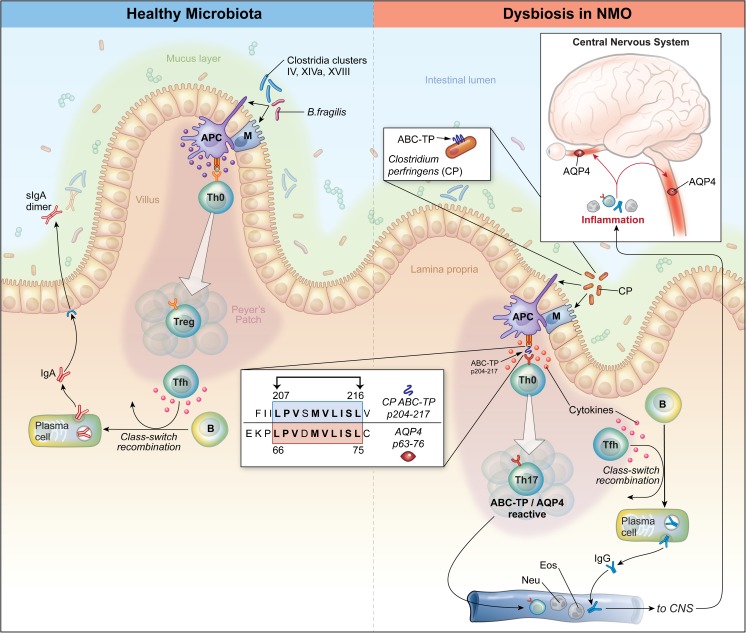
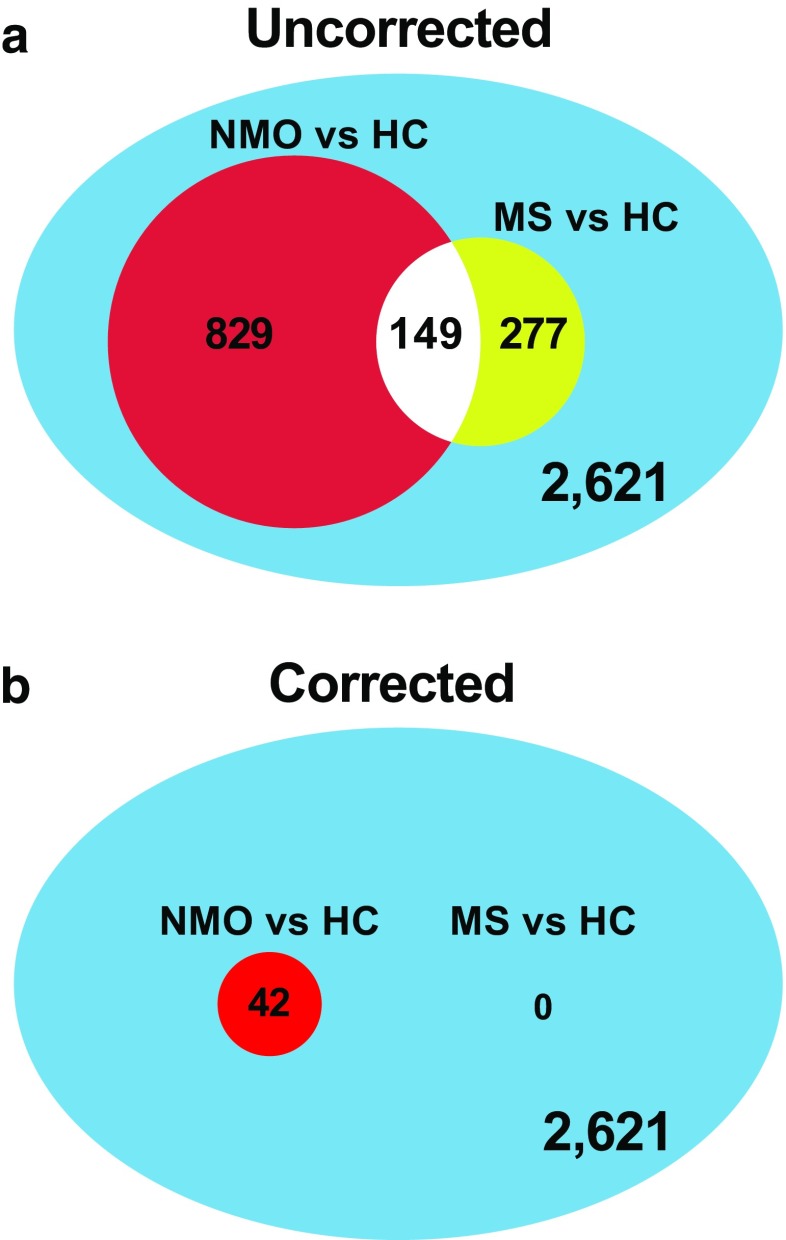
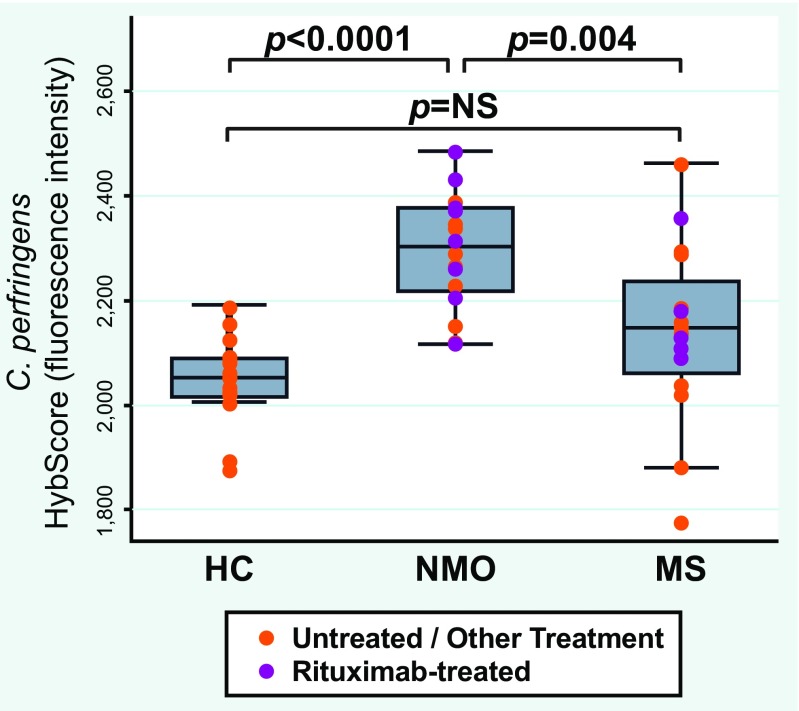
Neuromyelitis optica (NMO) is a rare, disabling, sometimes fatal central nervous system inflammatory demyelinating disease that is associated with antibodies ("NMO IgG") that target the water channel protein aquaporin-4 (AQP4) expressed on astrocytes. There is considerable interest in identifying environmental triggers that may elicit production of NMO IgG by AQP4-reactive B cells. Although NMO is considered principally a humoral autoimmune disease, antibodies of NMO IgG are IgG1, a T-cell-dependent immunoglobulin subclass, indicating that AQP4-reactive T cells have a pivotal role in NMO pathogenesis. When AQP4-specific proliferative T cells were first identified in patients with NMO it was discovered that T cells recognizing the dominant AQP4 T-cell epitope exhibited a T helper 17 (Th17) phenotype and displayed cross-reactivity to a homologous peptide sequence within a protein of Clostridium perfringens, a commensal bacterium found in human gut flora. The initial analysis of gut microbiota in NMO demonstrated that, in comparison to healthy controls (HC) and patients with multiple sclerosis, the microbiome of NMO is distinct. Remarkably, C. perfringens was the second most significantly enriched taxon in NMO, and among bacteria identified at the species level, C. perfringens was the one most highly associated with NMO. Those discoveries, along with evidence that certain Clostridia in the gut can regulate the balance between regulatory T cells and Th17 cells, indicate that gut microbiota, and possibly C. perfringens itself, could participate in NMO pathogenesis. Collectively, the evidence linking microbiota to humoral and cellular immunity in NMO underscores the importance for further investigating this relationship.
视神经脊髓炎(NMO)是一种罕见的、使人丧失能力的、有时甚至致命的中枢神经系统炎症性脱髓鞘疾病,与靶向星形胶质细胞上表达的水通道蛋白 aquaporin-4(AQP4)的抗体(“NMO IgG”)有关。人们非常感兴趣的是确定环境触发因素,这些因素可能会通过 AQP4 反应性 B 细胞产生 NMO IgG。尽管 NMO 被认为主要是一种体液自身免疫性疾病,但 NMO IgG 的抗体是 IgG1,这是一种 T 细胞依赖性免疫球蛋白亚类,表明 AQP4 反应性 T 细胞在 NMO 发病机制中具有关键作用。当首次在 NMO 患者中鉴定出 AQP4 特异性增殖 T 细胞时,发现识别主要 AQP4 T 细胞表位的 T 细胞表现出 Th17(辅助性 T 细胞 17)表型,并对梭状芽胞杆菌内同源肽序列表现出交叉反应性,梭状芽胞杆菌是一种存在于人类肠道菌群中的共生细菌。对 NMO 肠道微生物组的最初分析表明,与健康对照(HC)和多发性硬化症患者相比,NMO 的微生物组是不同的。值得注意的是,梭状芽胞杆菌是 NMO 中第二丰富的分类群,在鉴定出的细菌中,梭状芽胞杆菌与 NMO 的关联度最高。这些发现,以及肠道内某些梭状芽胞杆菌可以调节调节性 T 细胞和 Th17 细胞之间平衡的证据,表明肠道微生物组,甚至可能是梭状芽胞杆菌本身,可能参与 NMO 的发病机制。总的来说,将微生物组与 NMO 中的体液和细胞免疫联系起来的证据强调了进一步研究这种关系的重要性。