Department of Neurology, University of California, San Francisco, CA 94158.
Division of Biology & Biological Engineering, California Institute of Technology, Pasadena, CA 91125.
Proc Natl Acad Sci U S A. 2017 Oct 3;114(40):10713-10718. doi: 10.1073/pnas.1711235114. Epub 2017 Sep 11.
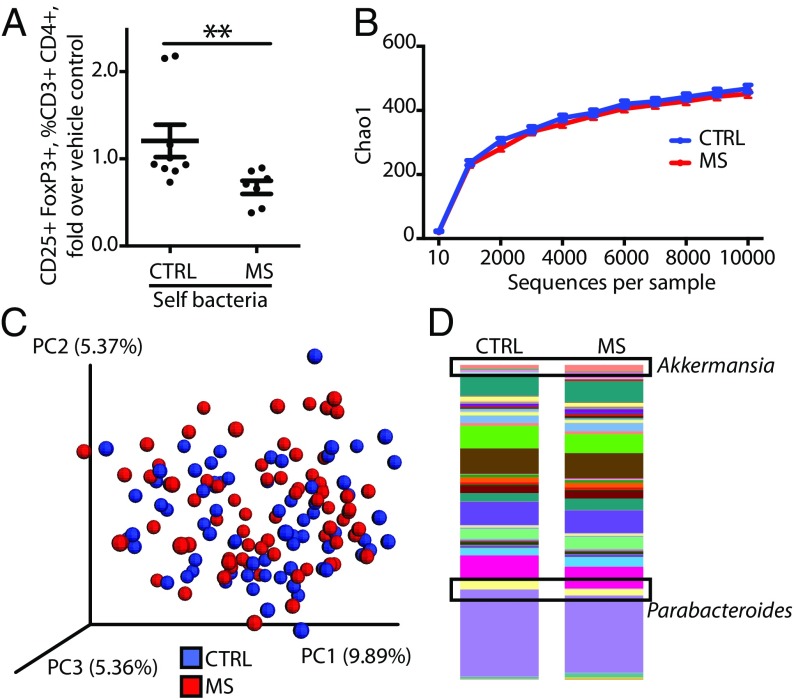
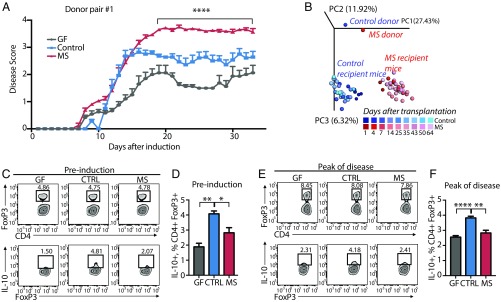
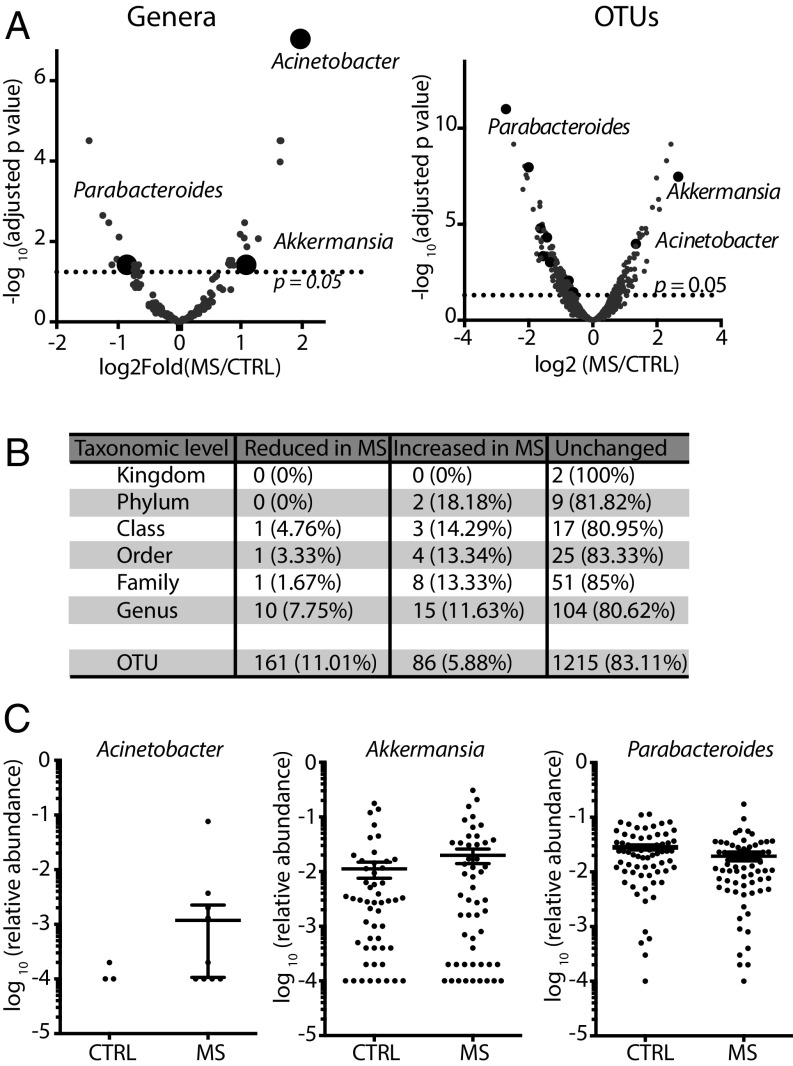
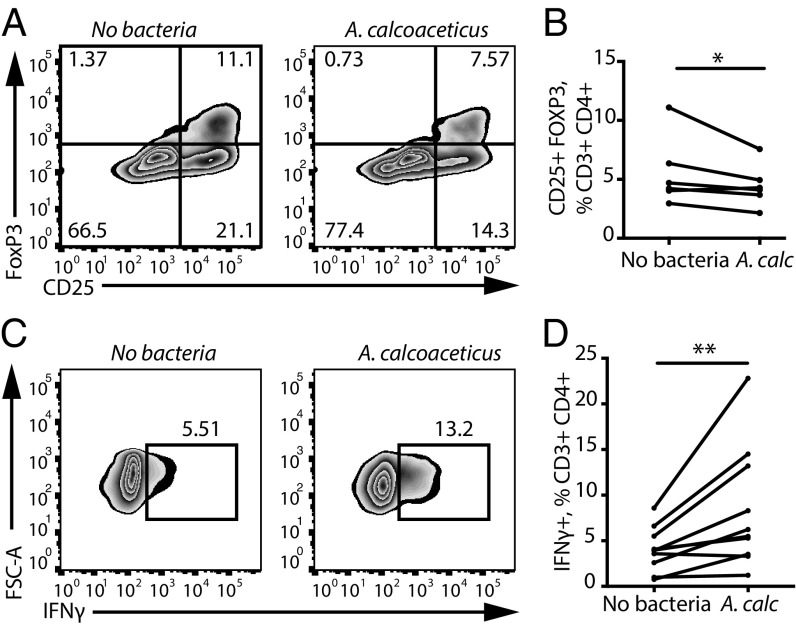
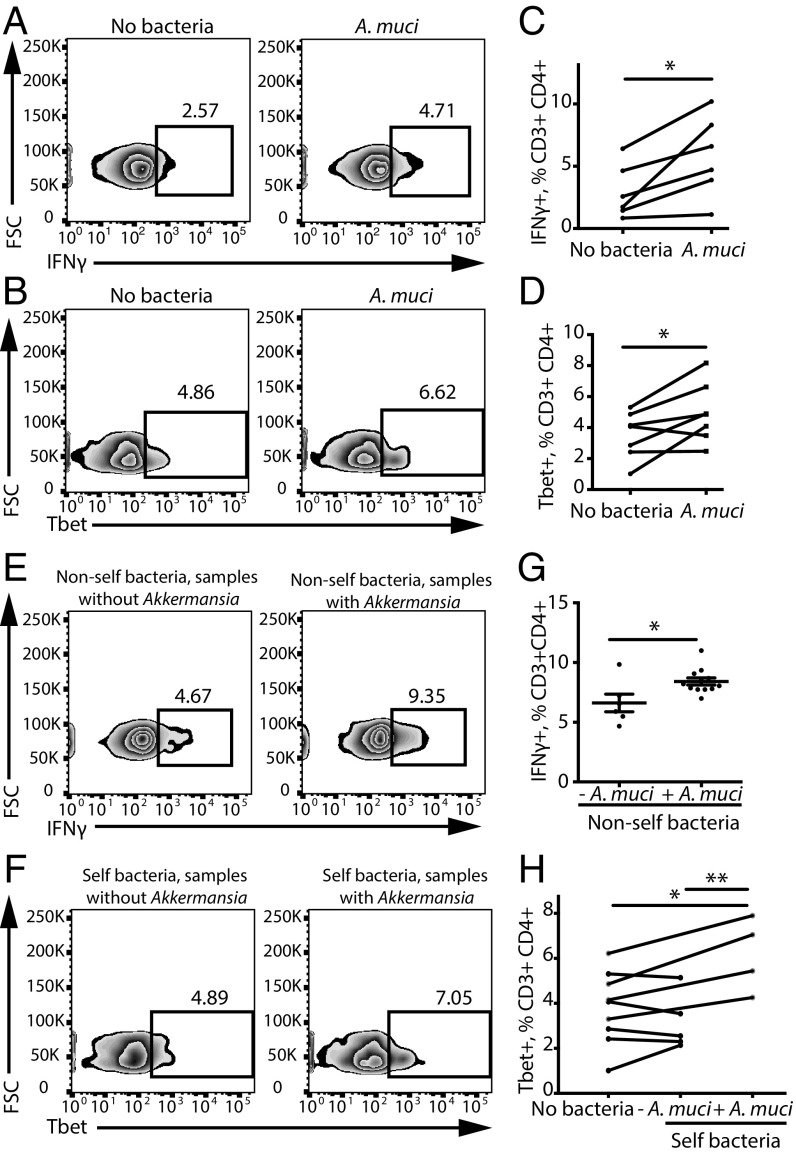
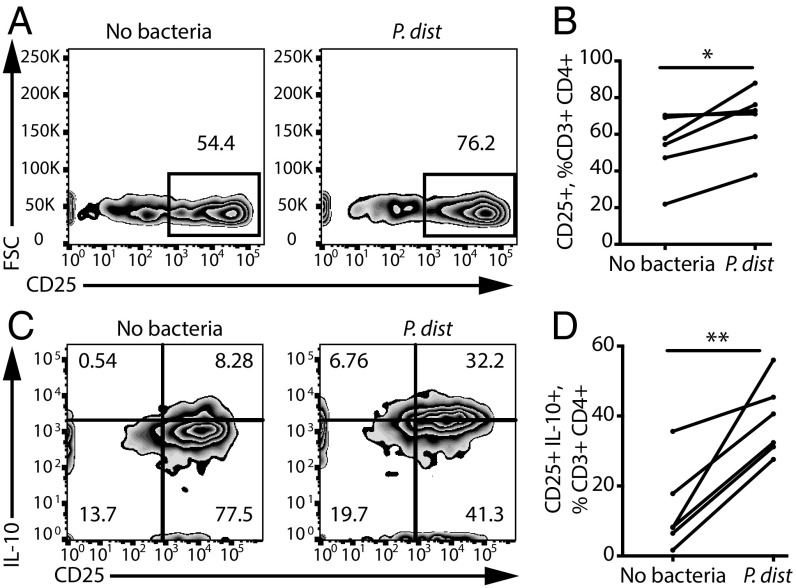
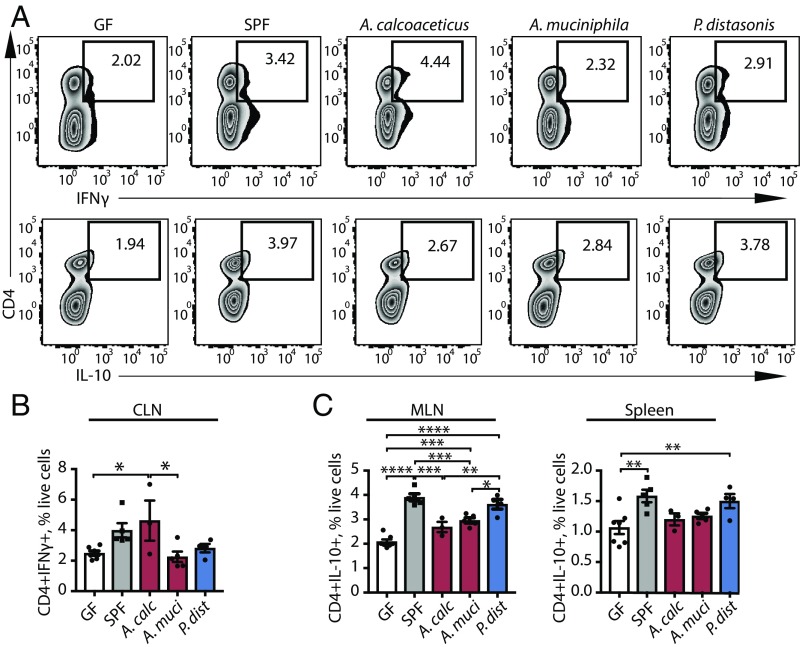
The gut microbiota regulates T cell functions throughout the body. We hypothesized that intestinal bacteria impact the pathogenesis of multiple sclerosis (MS), an autoimmune disorder of the CNS and thus analyzed the microbiomes of 71 MS patients not undergoing treatment and 71 healthy controls. Although no major shifts in microbial community structure were found, we identified specific bacterial taxa that were significantly associated with MS. and , both increased in MS patients, induced proinflammatory responses in human peripheral blood mononuclear cells and in monocolonized mice. In contrast, , which was reduced in MS patients, stimulated antiinflammatory IL-10-expressing human CD4CD25 T cells and IL-10FoxP3 Tregs in mice. Finally, microbiota transplants from MS patients into germ-free mice resulted in more severe symptoms of experimental autoimmune encephalomyelitis and reduced proportions of IL-10 Tregs compared with mice "humanized" with microbiota from healthy controls. This study identifies specific human gut bacteria that regulate adaptive autoimmune responses, suggesting therapeutic targeting of the microbiota as a treatment for MS.
肠道微生物群调节全身的 T 细胞功能。我们假设肠道细菌会影响多发性硬化症(MS)的发病机制,MS 是一种中枢神经系统的自身免疫性疾病,因此我们分析了 71 名未经治疗的 MS 患者和 71 名健康对照者的微生物组。尽管没有发现微生物群落结构的重大变化,但我们确定了与 MS 明显相关的特定细菌分类群。在 MS 患者中, 和 增加,诱导人外周血单核细胞和单定植小鼠的促炎反应。相比之下, 在 MS 患者中减少,在小鼠中刺激抗炎性 IL-10 表达的人 CD4CD25 T 细胞和 IL-10FoxP3 Tregs。最后,将 MS 患者的微生物群移植到无菌小鼠中,与用健康对照者的微生物群“人源化”的小鼠相比,导致实验性自身免疫性脑脊髓炎的症状更严重,IL-10 Tregs 的比例降低。这项研究确定了调节适应性自身免疫反应的特定人类肠道细菌,这表明针对微生物组的治疗可能是 MS 的一种治疗方法。