Institute for Molecular Bioscience, the University of Queensland, St. Lucia, QLD 4072, Australia.
Centre for Nutrition and Gastrointestinal Diseases, Discipline of Medicine, University of Adelaide, South Australian Health and Medical Research Institute (SAHMRI), North Terrace, Adelaide, South Australia 5000, Australia.
Toxins (Basel). 2017 Dec 27;10(1):15. doi: 10.3390/toxins10010015.
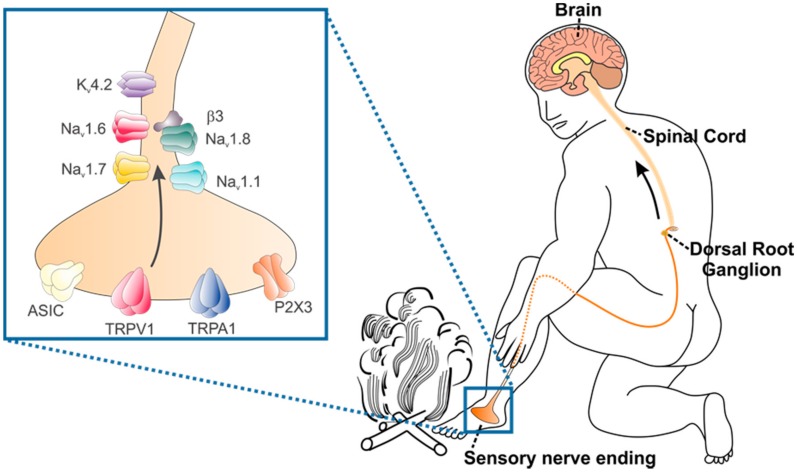
Venoms are produced by a wide variety of species including spiders, scorpions, reptiles, cnidarians, and fish for the purpose of harming or incapacitating predators or prey. While some venoms are of relatively simple composition, many contain hundreds to thousands of individual components with distinct pharmacological activity. Pain-inducing or "algesic" venom compounds have proven invaluable to our understanding of how physiological nociceptive neural networks operate. In this review, we present an overview of some of the diverse nociceptive pathways that can be modulated by specific venom components to evoke pain.
毒液由多种物种产生,包括蜘蛛、蝎子、爬行动物、刺胞动物和鱼类,目的是伤害或使捕食者或猎物丧失能力。虽然有些毒液的成分相对简单,但许多毒液含有数百到数千种具有独特药理活性的成分。引起疼痛或“痛觉”的毒液化合物已被证明对我们理解生理痛觉神经网络的运作非常有价值。在这篇综述中,我们介绍了一些不同的痛觉途径,这些途径可以被特定的毒液成分调节,从而引起疼痛。