Laboratory of Regulation of Gene Expression, Institute of Microbiology ASCR, Videnska 1083, Prague, 142 20, the Czech Republic.
Laboratory of Gene Regulation and Development, Eunice Kennedy Shriver National Institute of Child Health and Human Development, NIH, Bethesda, MD 20892, USA.
FEMS Microbiol Rev. 2018 Mar 1;42(2):165-192. doi: 10.1093/femsre/fux059.
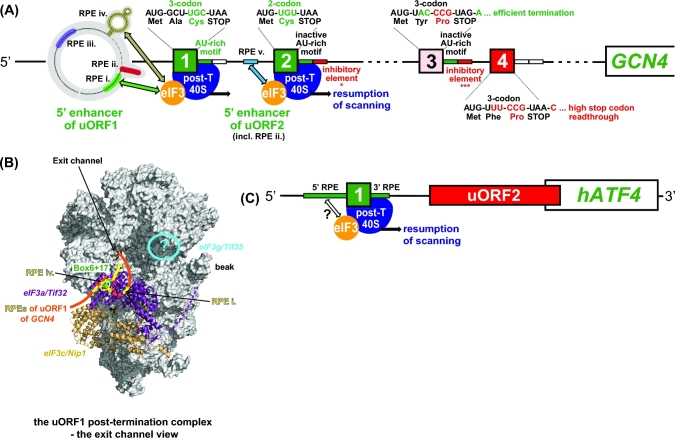
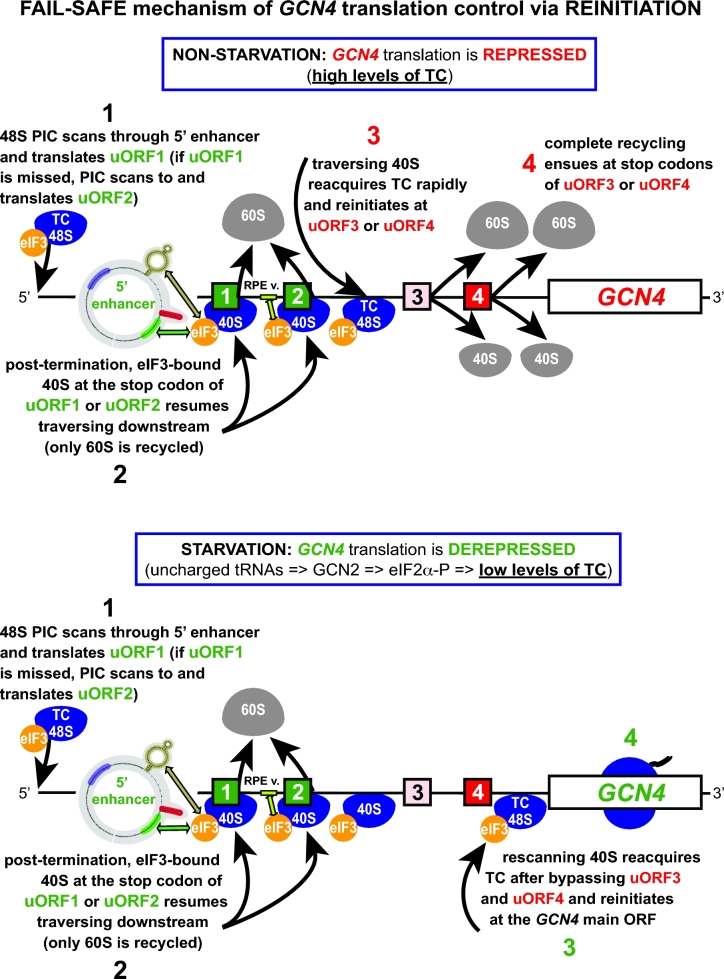
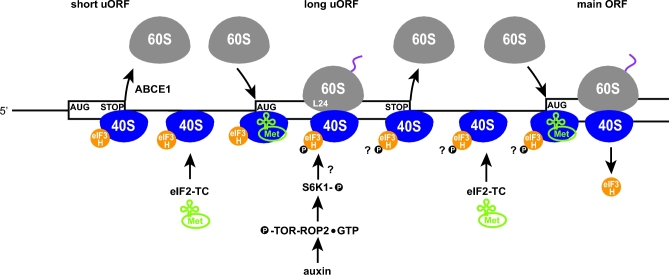
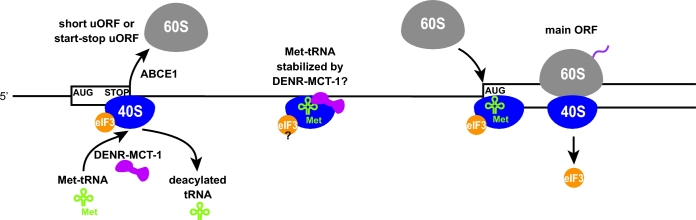
Protein production must be strictly controlled at its beginning and end to synthesize a polypeptide that faithfully copies genetic information carried in the encoding mRNA. In contrast to viruses and prokaryotes, the majority of mRNAs in eukaryotes contain only one coding sequence, resulting in production of a single protein. There are, however, many exceptional mRNAs that either carry short open reading frames upstream of the main coding sequence (uORFs) or even contain multiple long ORFs. A wide variety of mechanisms have evolved in microbes and higher eukaryotes to prevent recycling of some or all translational components upon termination of the first translated ORF in such mRNAs and thereby enable subsequent translation of the next uORF or downstream coding sequence. These specialized reinitiation mechanisms are often regulated to couple translation of the downstream ORF to various stimuli. Here we review all known instances of both short uORF-mediated and long ORF-mediated reinitiation and present our current understanding of the underlying molecular mechanisms of these intriguing modes of translational control.
蛋白质的合成必须在其起始和结束时严格控制,以合成忠实复制编码 mRNA 所携带遗传信息的多肽。与病毒和原核生物不同,真核生物中的大多数 mRNA 仅包含一个编码序列,导致仅产生一种蛋白质。然而,有许多例外的 mRNA,它们要么在主要编码序列的上游携带短开放阅读框(uORFs),要么甚至包含多个长 ORFs。在微生物和高等真核生物中已经进化出了各种各样的机制,以防止在这些 mRNA 中的第一个翻译 ORF 终止时回收一些或所有翻译成分,从而能够随后翻译下一个 uORF 或下游编码序列。这些专门的重新起始机制通常受到调节,以将下游 ORF 的翻译与各种刺激联系起来。在这里,我们回顾了所有已知的短 uORF 介导和长 ORF 介导的重新起始实例,并介绍了我们目前对这些有趣的翻译控制模式的潜在分子机制的理解。