Kavitha Muthu Subash, Kurita Takio, Park Soon-Yong, Chien Sung-Il, Bae Jae-Sung, Ahn Byeong-Cheol
Department of Nuclear Medicine, Kyungpook National University, School of Medicine and Hospital, Daegu, Korea.
Graduate School of Engineering, Hiroshima University, Hiroshima, Japan.
PLoS One. 2017 Dec 27;12(12):e0189974. doi: 10.1371/journal.pone.0189974. eCollection 2017.
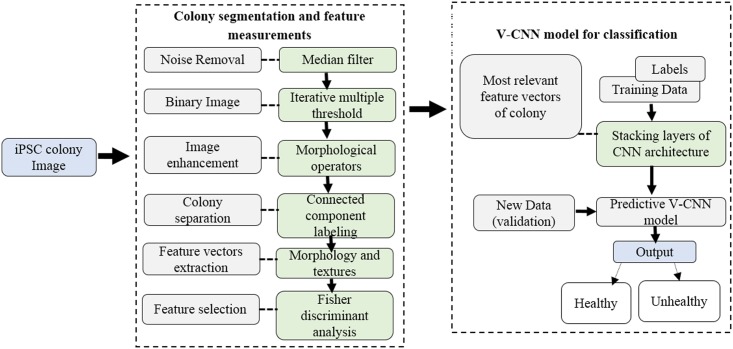
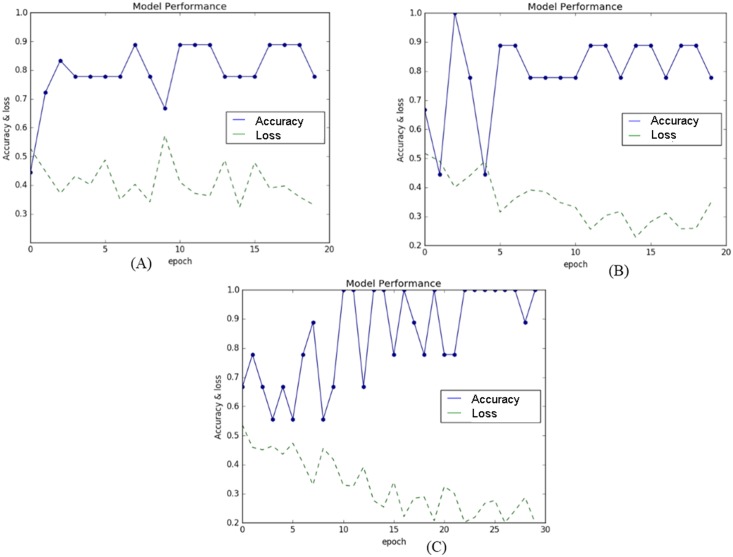
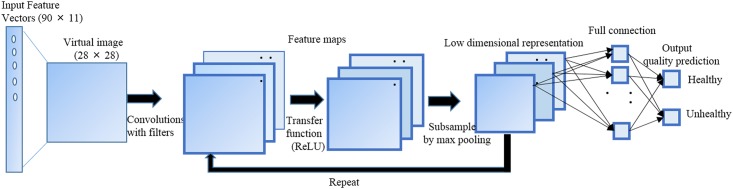
Pluripotent stem cells can potentially be used in clinical applications as a model for studying disease progress. This tracking of disease-causing events in cells requires constant assessment of the quality of stem cells. Existing approaches are inadequate for robust and automated differentiation of stem cell colonies. In this study, we developed a new model of vector-based convolutional neural network (V-CNN) with respect to extracted features of the induced pluripotent stem cell (iPSC) colony for distinguishing colony characteristics. A transfer function from the feature vectors to the virtual image was generated at the front of the CNN in order for classification of feature vectors of healthy and unhealthy colonies. The robustness of the proposed V-CNN model in distinguishing colonies was compared with that of the competitive support vector machine (SVM) classifier based on morphological, textural, and combined features. Additionally, five-fold cross-validation was used to investigate the performance of the V-CNN model. The precision, recall, and F-measure values of the V-CNN model were comparatively higher than those of the SVM classifier, with a range of 87-93%, indicating fewer false positives and false negative rates. Furthermore, for determining the quality of colonies, the V-CNN model showed higher accuracy values based on morphological (95.5%), textural (91.0%), and combined (93.2%) features than those estimated with the SVM classifier (86.7, 83.3, and 83.4%, respectively). Similarly, the accuracy of the feature sets using five-fold cross-validation was above 90% for the V-CNN model, whereas that yielded by the SVM model was in the range of 75-77%. We thus concluded that the proposed V-CNN model outperforms the conventional SVM classifier, which strongly suggests that it as a reliable framework for robust colony classification of iPSCs. It can also serve as a cost-effective quality recognition tool during culture and other experimental procedures.
多能干细胞有可能作为研究疾病进展的模型应用于临床。对细胞中致病事件的这种追踪需要不断评估干细胞的质量。现有的方法不足以实现干细胞集落的稳健和自动化分化。在本研究中,我们针对诱导多能干细胞(iPSC)集落的提取特征,开发了一种基于向量的卷积神经网络(V-CNN)新模型,以区分集落特征。在卷积神经网络前端生成从特征向量到虚拟图像的传递函数,以便对健康和不健康集落的特征向量进行分类。将所提出的V-CNN模型在区分集落方面的稳健性与基于形态、纹理和组合特征的竞争性支持向量机(SVM)分类器进行了比较。此外,使用五折交叉验证来研究V-CNN模型的性能。V-CNN模型的精确率、召回率和F值相对高于SVM分类器,范围为87%-93%,表明假阳性率和假阴性率较低。此外,为了确定集落的质量,V-CNN模型基于形态(95.5%)、纹理(91.0%)和组合(93.2%)特征显示出比SVM分类器(分别为86.7%、83.3%和83.4%)更高的准确率值。同样,使用五折交叉验证时,V-CNN模型的特征集准确率高于90%,而SVM模型的准确率在75%-77%范围内。因此,我们得出结论,所提出的V-CNN模型优于传统的SVM分类器,这有力地表明它是用于iPSC稳健集落分类的可靠框架。它还可以在培养和其他实验过程中作为一种经济高效的质量识别工具。