Scaria Puthupparampil V, Chen Beth, Rowe Christopher G, Jones David S, Barnafo Emma, Fischer Elizabeth R, Anderson Charles, MacDonald Nicholas J, Lambert Lynn, Rausch Kelly M, Narum David L, Duffy Patrick E
Laboratory of Malaria Immunology and Vaccinology, NIAID, National Institutes of Health, Rockville, Maryland, United States of America.
EM Unit/RTB Rocky Mountain Laboratories/NIAID/NIH, Hamilton, MT, United States of America.
PLoS One. 2017 Dec 27;12(12):e0190312. doi: 10.1371/journal.pone.0190312. eCollection 2017.
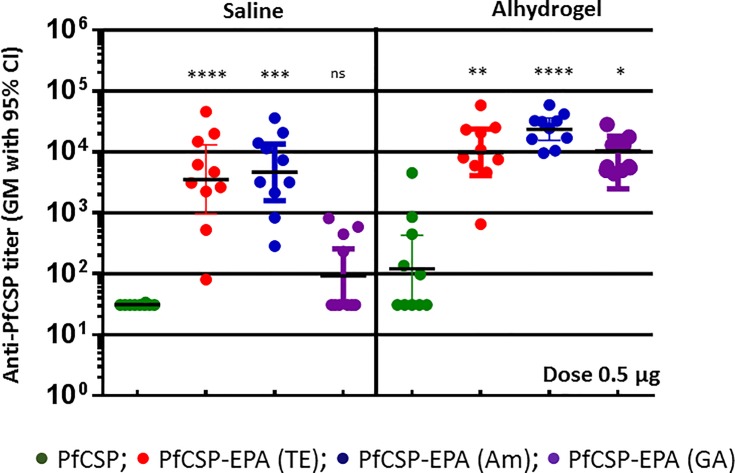
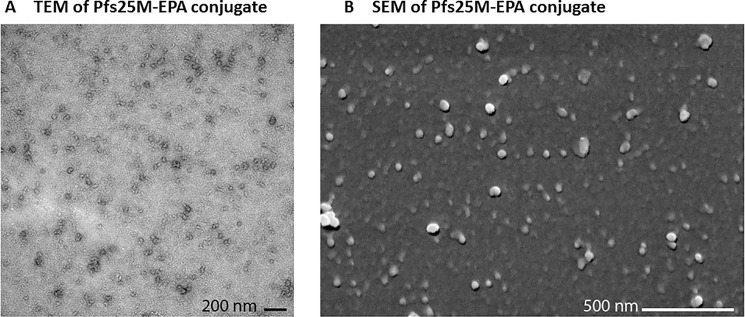
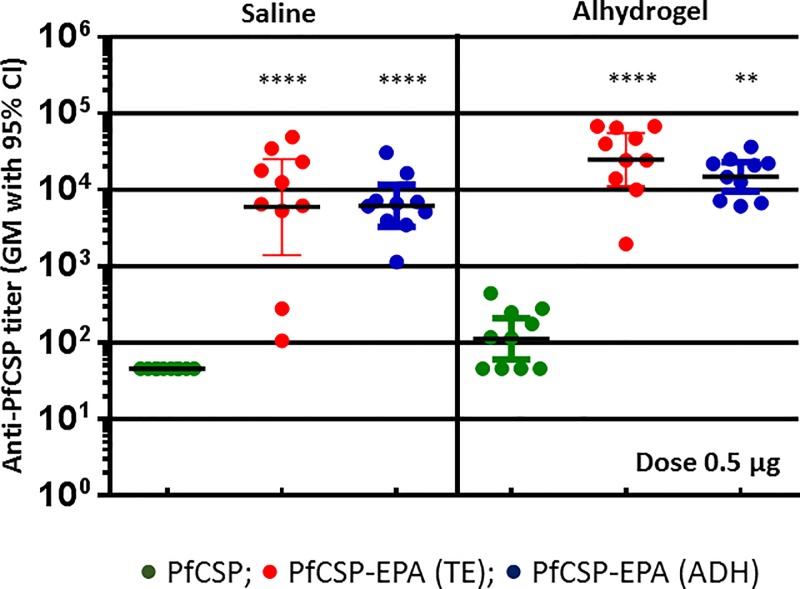
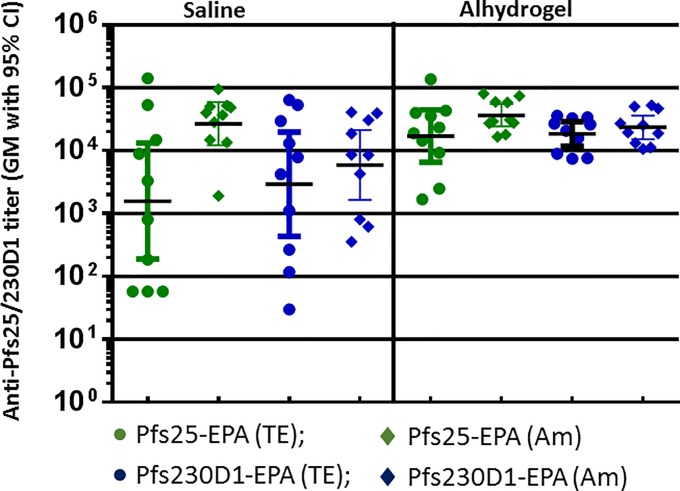
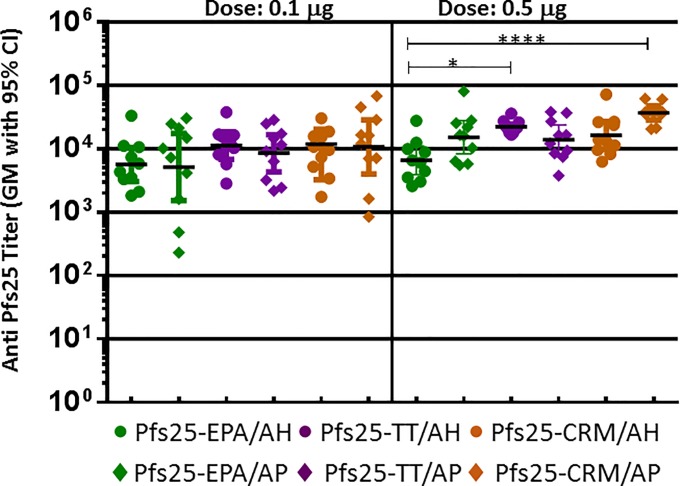
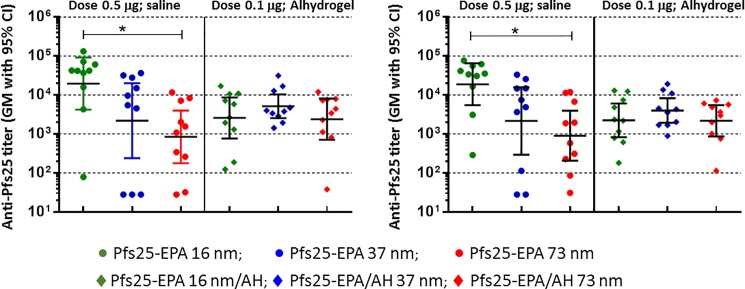
Chemical conjugation of polysaccharide to carrier proteins has been a successful strategy to generate potent vaccines against bacterial pathogens. We developed a similar approach for poorly immunogenic malaria protein antigens. Our lead candidates in clinical trials are the malaria transmission blocking vaccine antigens, Pfs25 and Pfs230D1, individually conjugated to the carrier protein Exoprotein A (EPA) through thioether chemistry. These conjugates form nanoparticles that show enhanced immunogenicity compared to unconjugated antigens. In this study, we examined the broad applicability of this technology as a vaccine development platform, by comparing the immunogenicity of conjugates prepared by four different chemistries using different malaria antigens (PfCSP, Pfs25 and Pfs230D1), and carriers such as EPA, TT and CRM197. Several conjugates were synthesized using thioether, amide, ADH and glutaraldehyde chemistries, characterized for average molecular weight and molecular weight distribution, and evaluated in mice for humoral immunogenicity. Conjugates made with the different chemistries, or with different carriers, showed no significant difference in immunogenicity towards the conjugated antigens. Since particle size can influence immunogenicity, we tested conjugates with different average size in the range of 16-73 nm diameter, and observed greater immunogenicity of smaller particles, with significant differences between 16 and 73 nm particles. These results demonstrate the multiple options with respect to carriers and chemistries that are available for protein-protein conjugate vaccine development.
将多糖与载体蛋白进行化学偶联是一种成功的策略,可用于生产针对细菌病原体的有效疫苗。我们针对免疫原性较差的疟疾蛋白抗原开发了一种类似的方法。我们在临床试验中的主要候选疫苗是疟疾传播阻断疫苗抗原Pfs25和Pfs230D1,它们分别通过硫醚化学与载体蛋白外蛋白A(EPA)偶联。与未偶联的抗原相比,这些偶联物形成的纳米颗粒具有更高的免疫原性。在本研究中,我们通过比较使用不同疟疾抗原(PfCSP、Pfs25和Pfs230D1)以及载体(如EPA、TT和CRM197)的四种不同化学方法制备的偶联物的免疫原性,研究了该技术作为疫苗开发平台的广泛适用性。使用硫醚、酰胺、ADH和戊二醛化学方法合成了几种偶联物,对其平均分子量和分子量分布进行了表征,并在小鼠中评估了体液免疫原性。用不同化学方法或不同载体制备的偶联物对偶联抗原的免疫原性没有显著差异。由于颗粒大小会影响免疫原性,我们测试了直径在16 - 73 nm范围内不同平均大小的偶联物,观察到较小颗粒具有更高的免疫原性,16 nm和73 nm颗粒之间存在显著差异。这些结果证明了在蛋白质 - 蛋白质偶联疫苗开发中,载体和化学方法有多种选择。