Center of Biomechanics and Bioengineering, Key Laboratory of Microgravity (National Microgravity Laboratory), and Beijing Key Laboratory of Engineered Construction and Mechanobiology, Institute of Mechanics, Chinese Academy of Sciences, Beijing 100190, China.
School of Engineering Sciences, University of Chinese Academy of Sciences, Beijing 100049, China.
Mol Biol Cell. 2018 Feb 15;29(4):408-418. doi: 10.1091/mbc.E16-12-0827. Epub 2017 Dec 27.
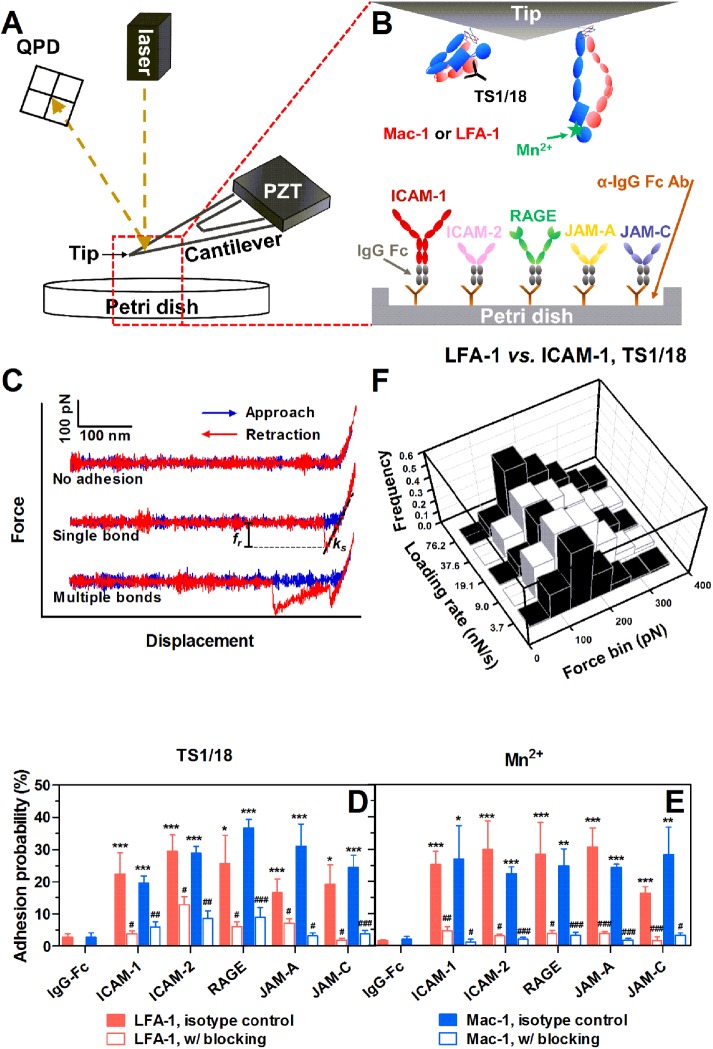
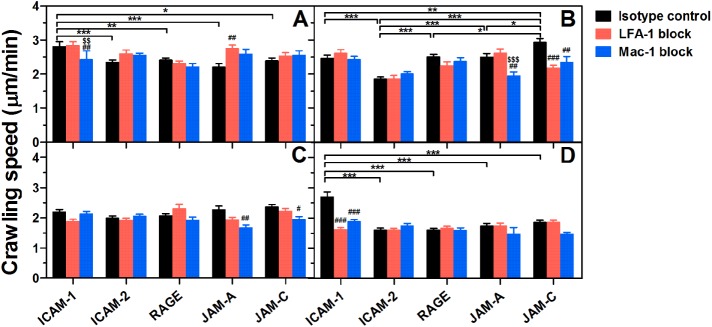
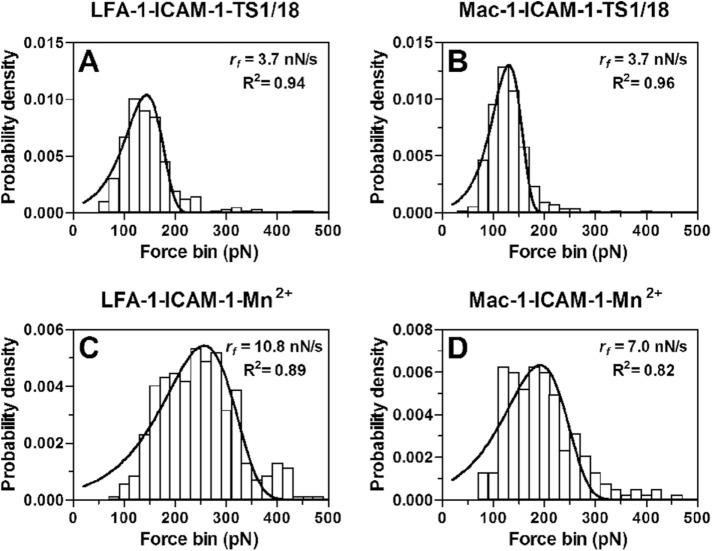
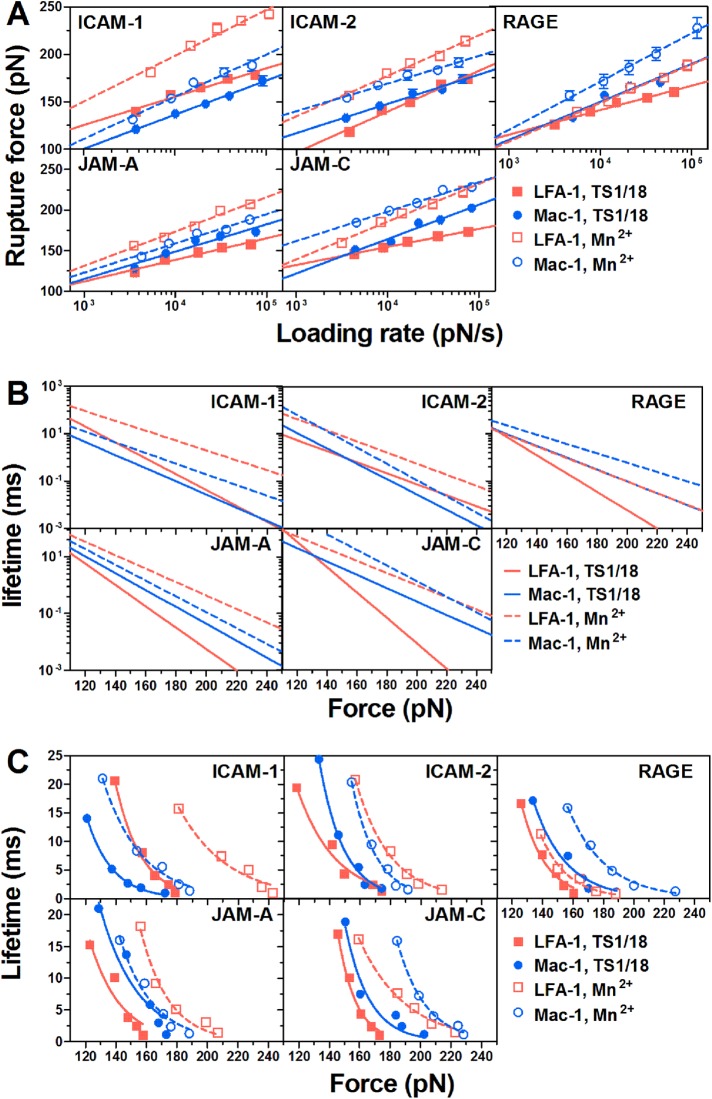
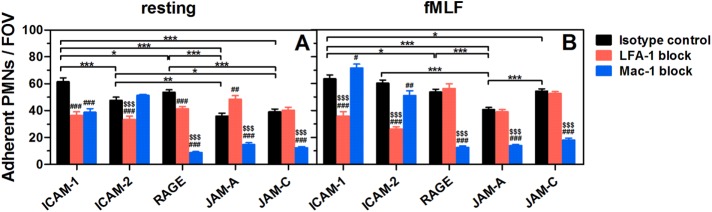
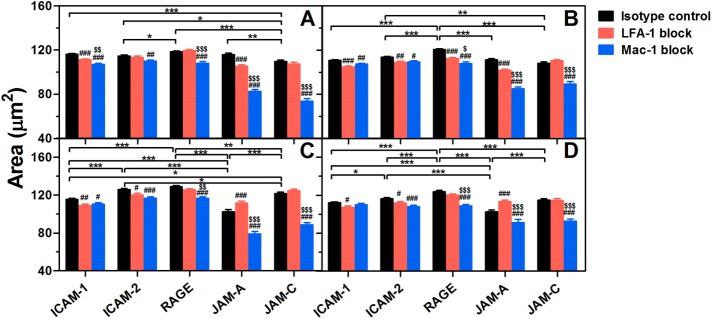
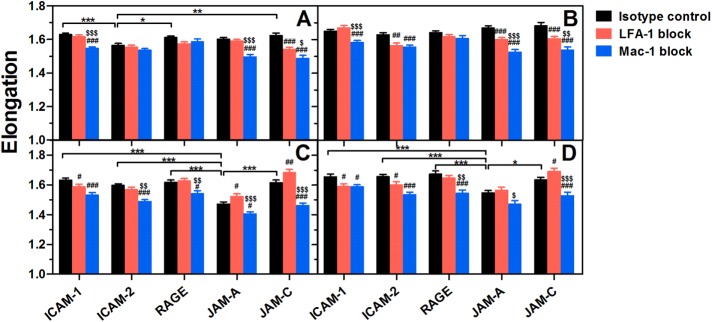
Lymphocyte function-associated antigen-1 (LFA-1) and macrophage-1 antigen (Mac-1) and their counterreceptors such as intercellular cell adhesion molecules (ICAM-1 and ICAM-2), junctional adhesion molecules (JAM-A, JAM-C), and receptors for advanced glycation end products (RAGE) are crucial for promoting polymorphonuclear leukocyte (neutrophil, PMN) recruitment. The underlying mechanisms of ligand-specific bindings in this cascade remain incompletely known. We compared the dynamic force spectra for various LFA-1/Mac-1-ligand bonds using single-molecule atomic force microscopy (AFM) and tested their functions in mediating PMN recruitment under in vitro shear flow. Distinct features of bond rupture forces and lifetimes were uncovered for these ligands, implying their diverse roles in regulating PMN adhesion on endothelium. LFA-1 dominates PMN adhesion on ICAM-1 and ICAM-2, while Mac-1 mediates PMN adhesion on RAGE, JAM-A, and JAM-C, which is consistent with their bond strength. All ligands can trigger PMN spreading and polarization, in which Mac-1 seems to induce outside-in signaling more effectively. LFA-1-ICAM-1 and LFA-1/Mac-1-JAM-C bonds can accelerate PMN crawling under high shear stress, presumably due to their high mechanical strength. This work provides new insight into basic molecular mechanisms of physiological ligands of β2 integrins in PMN recruitment.
淋巴细胞功能相关抗原-1(LFA-1)和巨噬细胞-1 抗原(Mac-1)及其相应配体,如细胞间黏附分子(ICAM-1 和 ICAM-2)、连接黏附分子(JAM-A、JAM-C)和晚期糖基化终产物受体(RAGE),对于促进多形核白细胞(中性粒细胞,PMN)募集至关重要。但在这个级联反应中,配体特异性结合的潜在机制尚不完全清楚。我们使用单分子原子力显微镜(AFM)比较了各种 LFA-1/Mac-1-配体键的动态力谱,并测试了它们在体外剪切流介导PMN 募集中的功能。这些配体的键断裂力和寿命具有明显不同的特征,暗示它们在调节PMN 与内皮细胞黏附方面的不同作用。LFA-1 主导 PMN 与 ICAM-1 和 ICAM-2 的黏附,而 Mac-1 介导 PMN 与 RAGE、JAM-A 和 JAM-C 的黏附,这与它们的键强度一致。所有配体都可以触发 PMN 的伸展和极化,而 Mac-1 似乎更有效地诱导外向信号。LFA-1-ICAM-1 和 LFA-1/Mac-1-JAM-C 键可以在高剪切应力下加速 PMN 的爬行,这可能是由于它们具有较高的机械强度。这项工作为β2 整合素生理配体在 PMN 募集中的基本分子机制提供了新的见解。