Stein G, Lian J, Stein J, Briggs R, Shalhoub V, Wright K, Pauli U, van Wijnen A
Department of Cell Biology, University of Massachusetts Medical Center, Worcester 01655.
Proc Natl Acad Sci U S A. 1989 Mar;86(6):1865-9. doi: 10.1073/pnas.86.6.1865.
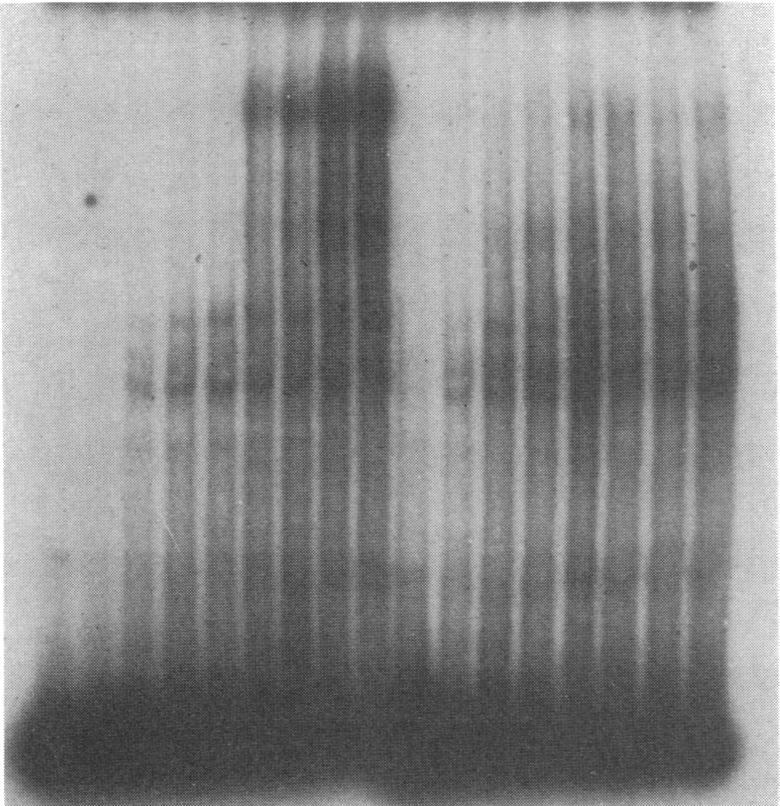
Two sites of protein-DNA interaction have been identified in vivo and in vitro in the proximal promoter regions of an H4 and an H3 human histone gene. In proliferating cells, these genes are transcribed throughout the cell cycle, and both the more distal site I and the proximal site II are occupied by promoter-binding factors. In this report we demonstrate that during the shutdown of proliferation and onset of differentiation of the human promyelocytic leukemia cell line HL-60 into cells that exhibit phenotypic properties of monocytes, histone gene expression is down-regulated at the level of transcription. In vivo occupancy of site I by promoter factors persists in the differentiated HL-60 cells, but protein-DNA interactions at site II are selectively lost. Furthermore, in vitro binding activity of the site II promoter factor HiNF-D is lost in differentiated cells, and nuclear extracts from differentiated cells do not support in vitro transcription of these histone genes. Our results suggest that the interaction of HiNF-D with proximal promoter site II sequences plays a primary role in rendering cell growth-regulated histone genes transcribable in proliferating cells. It appears that while cell-cycle control of histone gene expression is mediated by both transcription and mRNA stability, with the shutdown of proliferation and onset mRNA stability, with the shutdown of proliferation and onset of differentiation, histone gene expression is regulated at the transcriptional level.
在人H4和H3组蛋白基因的近端启动子区域,已在体内和体外鉴定出两个蛋白质-DNA相互作用位点。在增殖细胞中,这些基因在整个细胞周期中都进行转录,更远端的位点I和近端的位点II都被启动子结合因子占据。在本报告中,我们证明,在人早幼粒细胞白血病细胞系HL-60停止增殖并开始分化为具有单核细胞表型特性的细胞的过程中,组蛋白基因表达在转录水平上被下调。在分化的HL-60细胞中,启动子因子对位点I的体内占据持续存在,但位点II处的蛋白质-DNA相互作用选择性丧失。此外,位点II启动子因子HiNF-D的体外结合活性在分化细胞中丧失,并且分化细胞的核提取物不支持这些组蛋白基因的体外转录。我们的结果表明,HiNF-D与近端启动子位点II序列的相互作用在使细胞生长调节的组蛋白基因在增殖细胞中可转录方面起主要作用。看来,虽然组蛋白基因表达的细胞周期控制是由转录和mRNA稳定性介导的,但随着增殖停止和分化开始,mRNA稳定性发生变化,组蛋白基因表达在转录水平上受到调节。