Department of Dermatology & Cutaneous Biology Research Institute, Yonsei University College of Medicine, Seoul 03722, Korea.
Department of Medical Engineering, Yonsei University College of Medicine, Seoul 03722, Korea.
Int J Mol Sci. 2017 Dec 28;19(1):76. doi: 10.3390/ijms19010076.
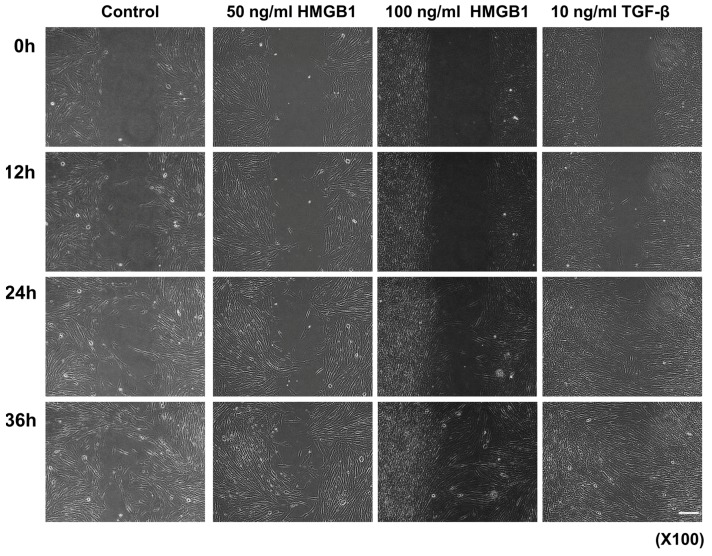
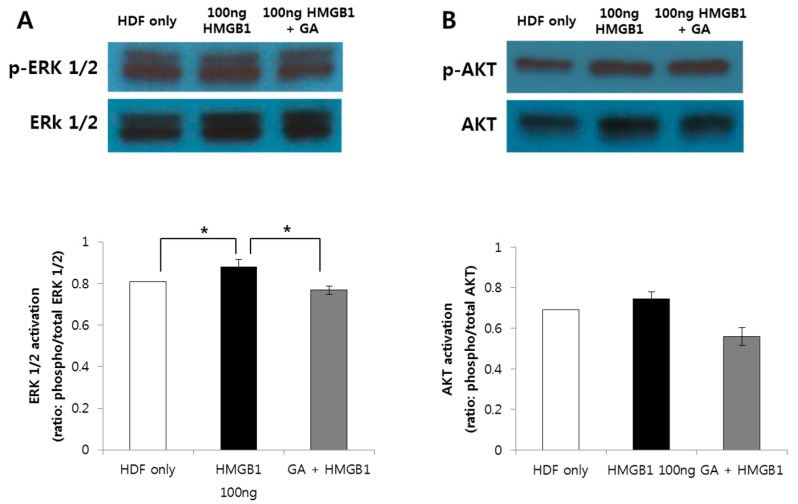
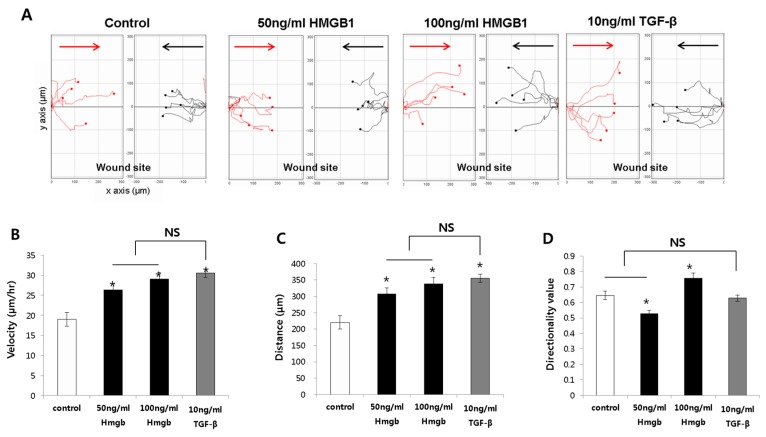
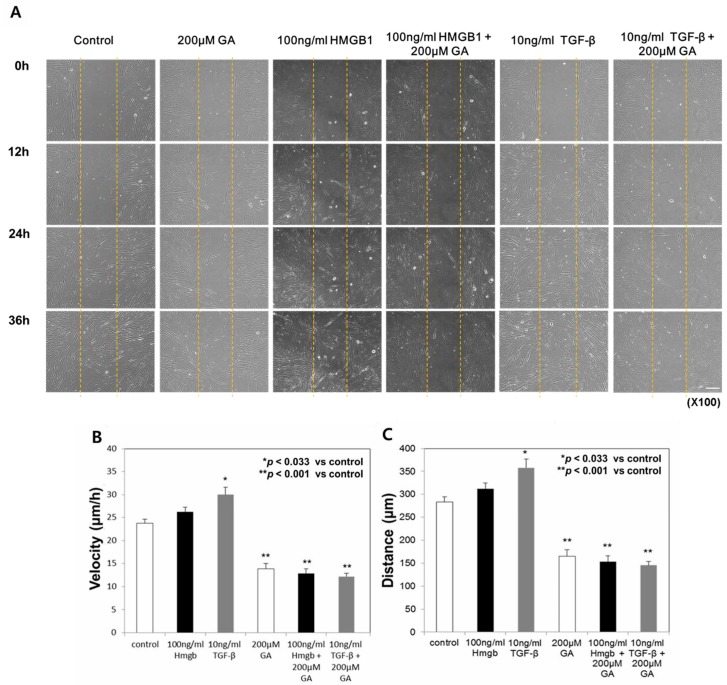
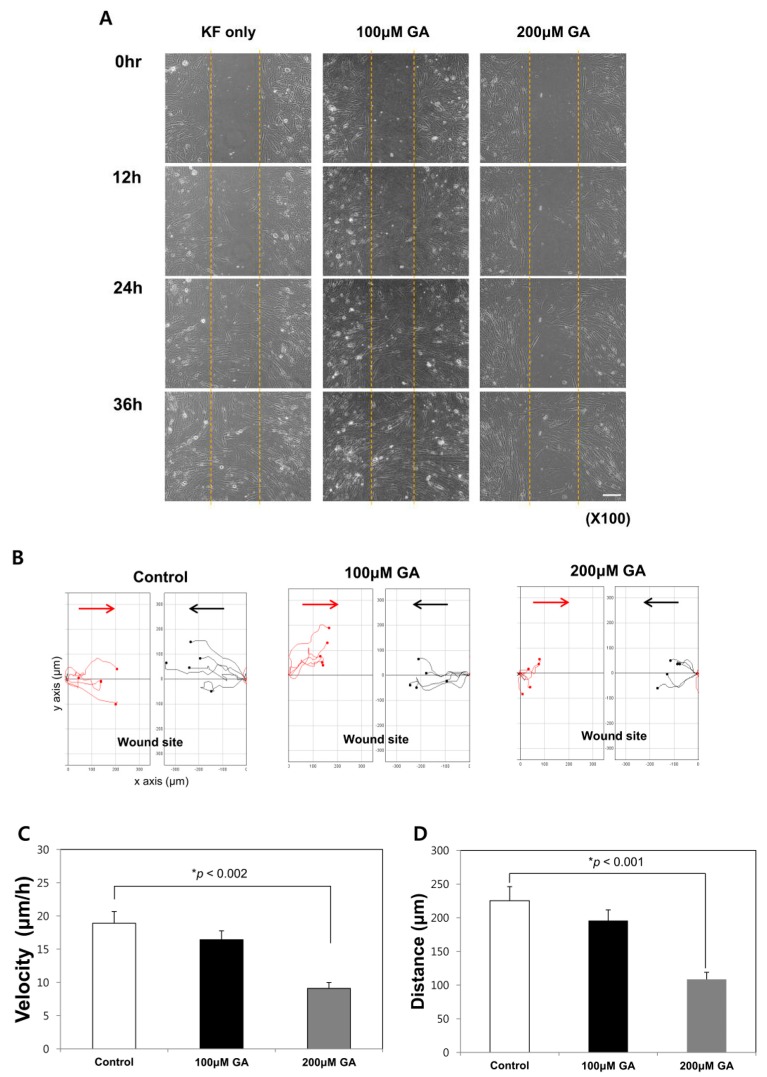
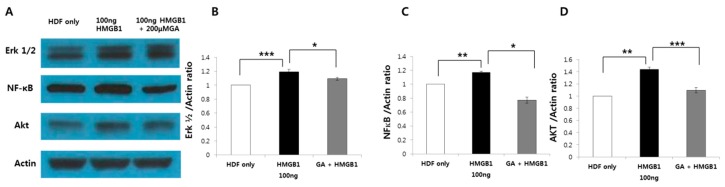
Emerging studies have revealed the involvement of high-mobility group box 1 (HMGB1) in systemic fibrotic diseases, yet its role in the cutaneous scarring process has not yet been investigated. We hypothesized that HMGB1 may promote fibroblast activity to cause abnormal cutaneous scarring. In vitro wound healing assay with normal and keloid fibroblasts demonstrated that HMGB1 administration promoted the migration of both fibroblasts with increased speed and a greater traveling distance. Treatment of the HMGB1 inhibitor glycyrrhizic acid (GA) showed an opposing effect on both activities. To analyze the downstream mechanism, the protein levels of extracellular signal-regulated kinase (ERK) 1/2, protein kinase B (AKT), and nuclear factor kappa-light-chain-enhancer of activated B cells (NF-κB) were measured by western blot analysis. HMGB1 increased the expression levels of ERK1/2, AKT, and NF-κB compared to the control, which was suppressed by GA. HMGB1 promoted both normal and keloid fibroblasts migration to a degree equivalent to that achieved with TGF-β. We concluded that HMGB1 activates fibroblasts via the receptor for advanced glycation end product (RAGE)-mitogen-activated protein kinases (MAPK) and NF-κB interaction signaling pathways. Further knowledge of the relationship of HMGB1 with skin fibrosis may lead to a promising clinical approach to manage abnormal scarring.
新兴研究揭示了高迁移率族蛋白 B1(HMGB1)在系统性纤维化疾病中的作用,但它在皮肤瘢痕形成过程中的作用尚未被研究。我们假设 HMGB1 可能促进成纤维细胞活性,导致异常皮肤瘢痕形成。体外正常和瘢痕成纤维细胞的伤口愈合试验表明,HMGB1 给药促进了两种成纤维细胞的迁移,速度加快,迁移距离增加。HMGB1 抑制剂甘草酸(GA)的处理对这两种活性均表现出相反的作用。为了分析下游机制,通过 Western blot 分析测量了细胞外信号调节激酶(ERK)1/2、蛋白激酶 B(AKT)和核因子 kappa-轻链增强子的活化 B 细胞(NF-κB)的蛋白水平。与对照组相比,HMGB1 增加了 ERK1/2、AKT 和 NF-κB 的表达水平,而 GA 则抑制了其表达。HMGB1 促进正常和瘢痕成纤维细胞的迁移程度与 TGF-β相当。我们得出结论,HMGB1 通过晚期糖基化终产物受体(RAGE)-丝裂原活化蛋白激酶(MAPK)和 NF-κB 相互作用信号通路激活成纤维细胞。进一步了解 HMGB1 与皮肤纤维化的关系可能为管理异常瘢痕形成提供有前途的临床方法。