Department of Physics and Astronomy, Washburn University , Topeka, Kansas.
Astrobiology. 2018 May;18(5):481-490. doi: 10.1089/ast.2017.1730. Epub 2017 Dec 28.
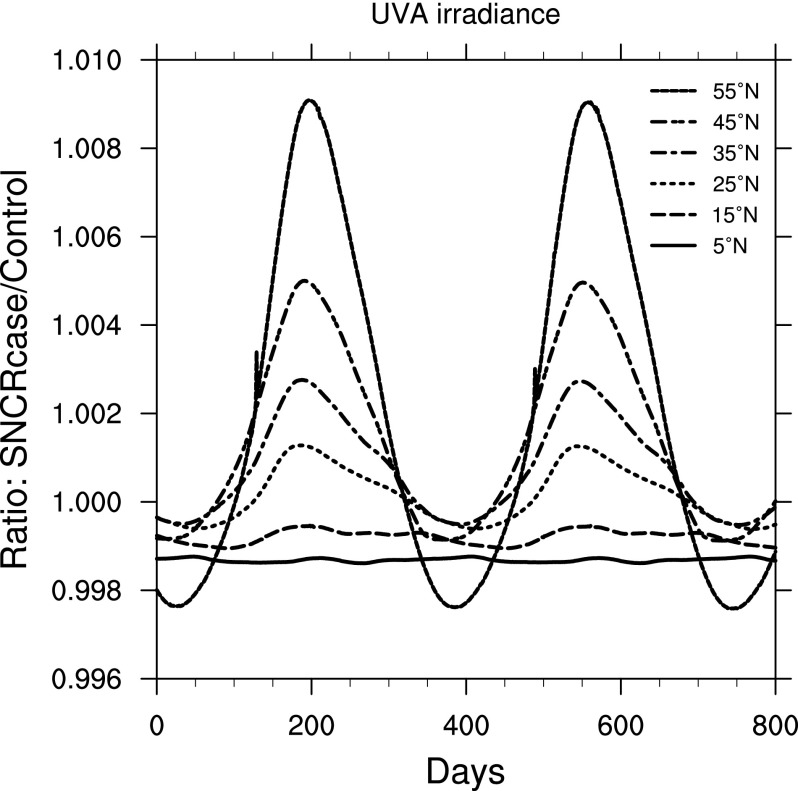
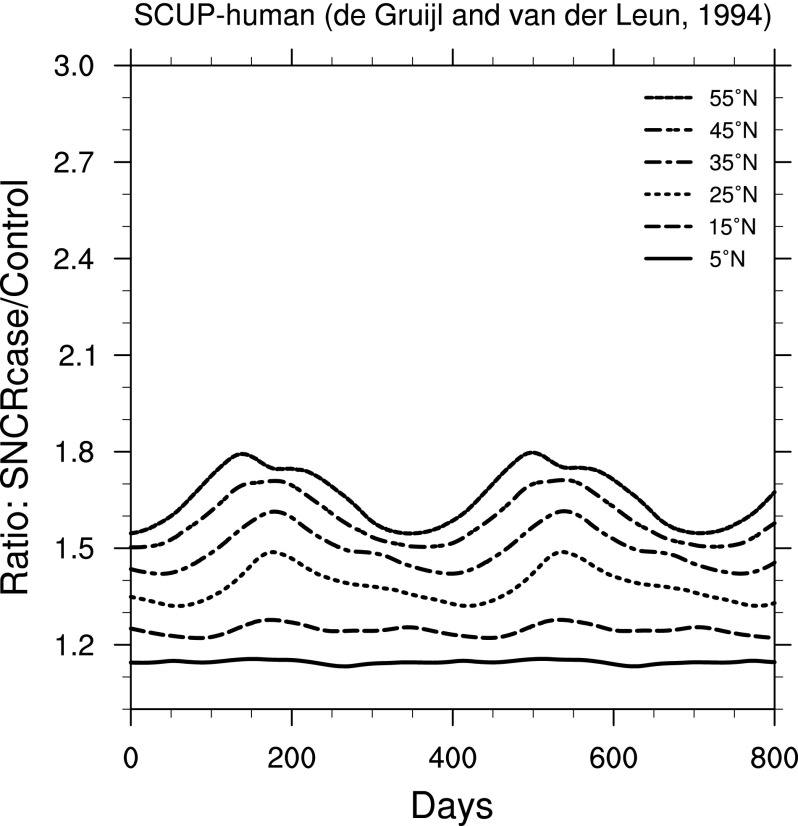
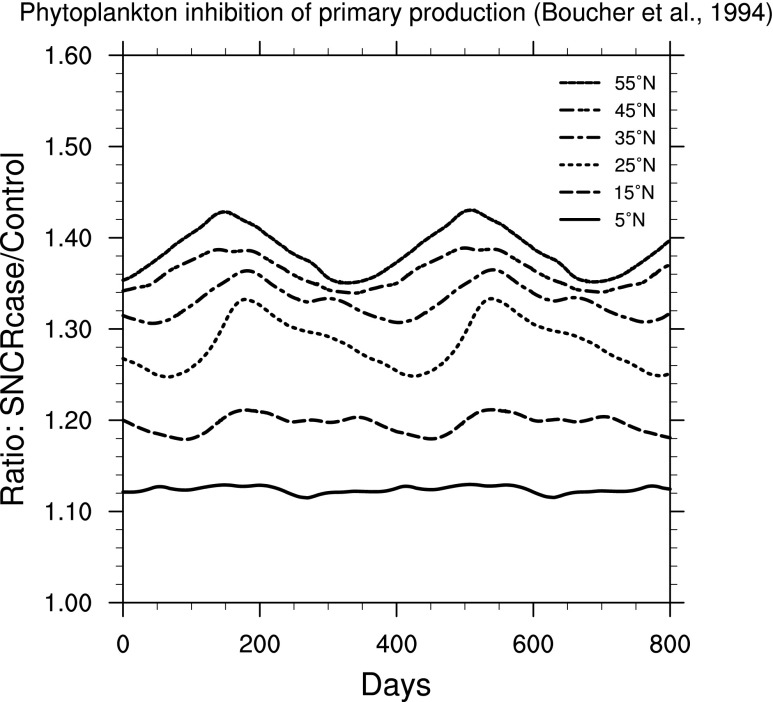
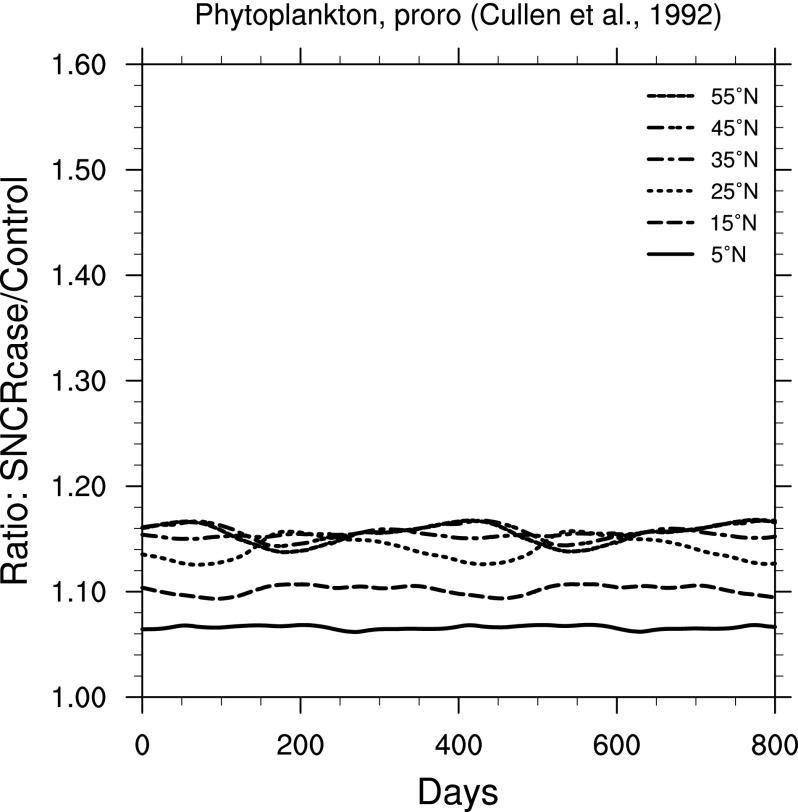
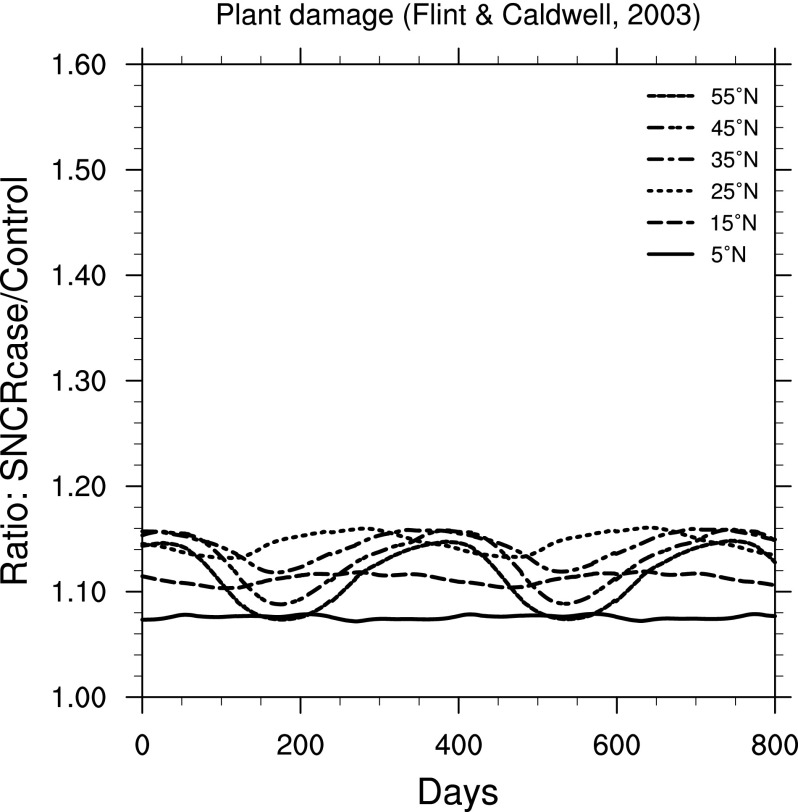
We investigated the potential biological impacts at Earth's surface of stratospheric O depletion caused by nearby supernovae known to have occurred about 2.5 and 8 million years ago at about 50 pc distance. New and previously published atmospheric chemistry modeling results were combined with radiative transfer modeling to determine changes in surface-level solar irradiance and biological responses. We find that UVB irradiance is increased by a factor of 1.1 to 2.8, with large variation in latitude, and seasonally at high-latitude regions. Changes in UVA and PAR (visible light) are much smaller. DNA damage (in vitro) is increased by factors similar to UVB, while other biological impacts (erythema, skin cancer, cataracts, marine phytoplankton photosynthesis inhibition, and plant damage) are increased by smaller amounts. We conclude that biological impacts due to increased UV irradiance in this SN case are not mass-extinction level but might be expected to contribute to changes in species abundances; this result fits well with species turnover observed around the Pliocene-Pleistocene boundary. Key Words: UV radiation-Supernovae-Ozone-Radiative transfer. Astrobiology 18, 481-490.
我们研究了由大约 250 万和 800 万年前距离约 50 个天文单位的附近超新星爆发导致的平流层臭氧消耗对地球表面可能产生的生物学影响。新的和以前发表的大气化学建模结果与辐射传输建模相结合,以确定地表太阳辐照度和生物响应的变化。我们发现,UVB 辐照度增加了 1.1 到 2.8 倍,在纬度上存在很大的差异,并且在高纬度地区存在季节性变化。UVA 和 PAR(可见光)的变化要小得多。DNA 损伤(体外)的增加幅度与 UVB 相似,而其他生物学影响(红斑、皮肤癌、白内障、海洋浮游植物光合作用抑制和植物损伤)的增加幅度较小。我们得出的结论是,在这种 SN 情况下,由于紫外线辐照度增加而导致的生物学影响不会达到大规模灭绝的水平,但可能会导致物种丰度的变化;这一结果与上新世-更新世边界附近观察到的物种更替非常吻合。关键词:紫外线辐射-超新星-臭氧-辐射传输。天体生物学 18,481-490。