Department of Biochemistry, Kosin University College of Medicine, Busan 49267, Republic of Korea.
Department of Anatomy, Inje University College of Medicine, Busan 47392, Republic of Korea.
Mol Med Rep. 2018 Mar;17(3):3563-3574. doi: 10.3892/mmr.2017.8355. Epub 2017 Dec 27.
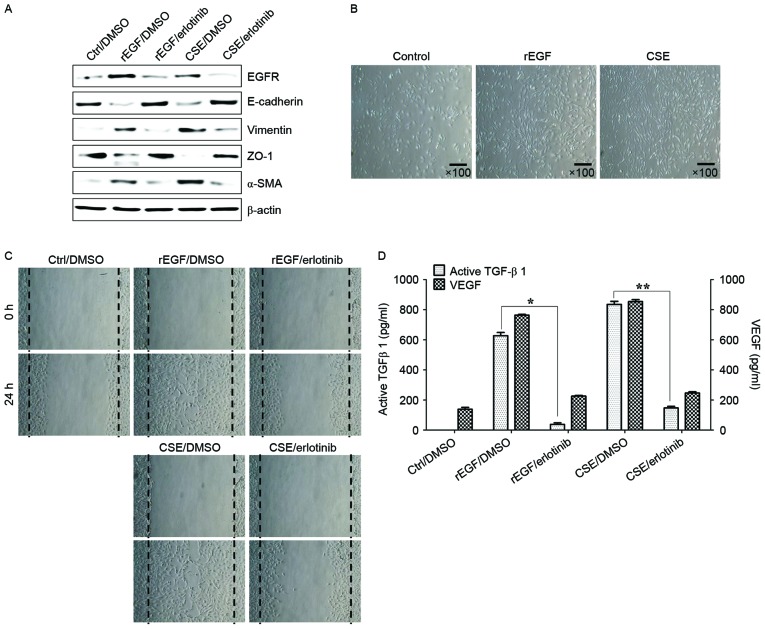
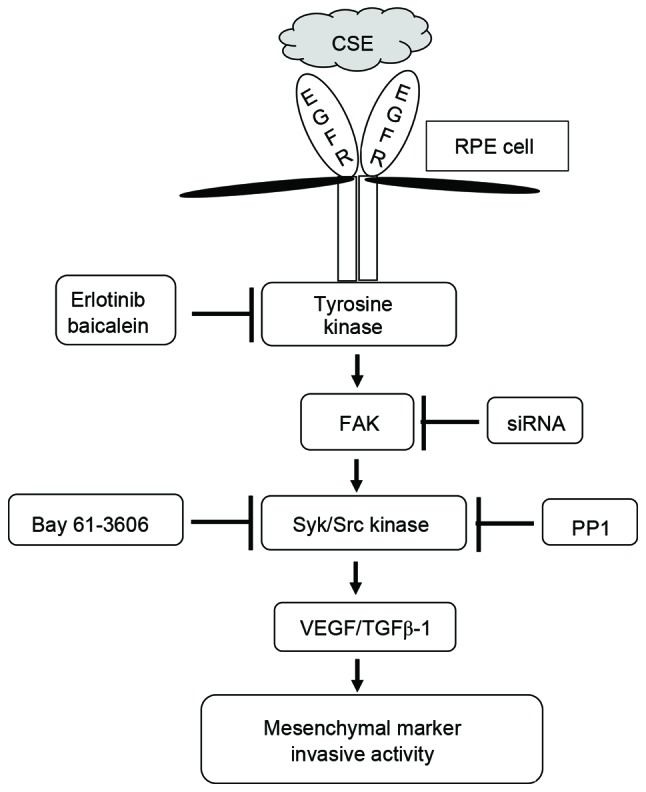
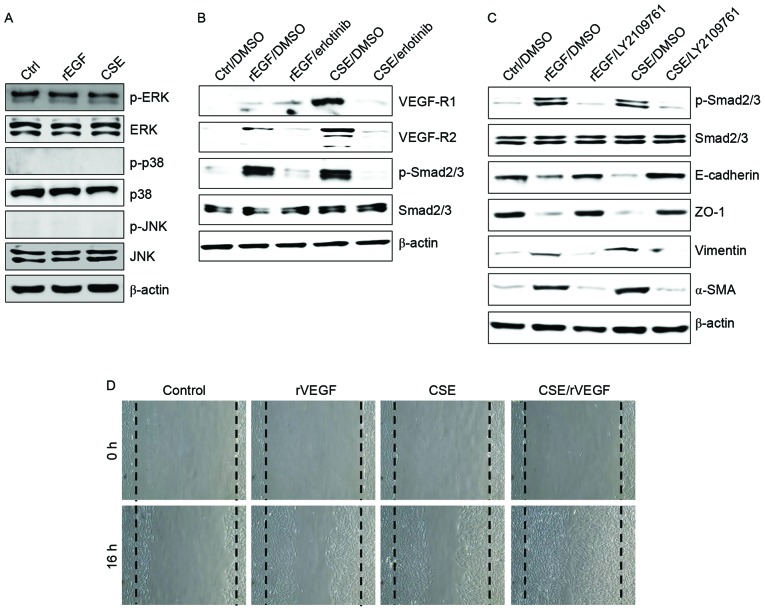
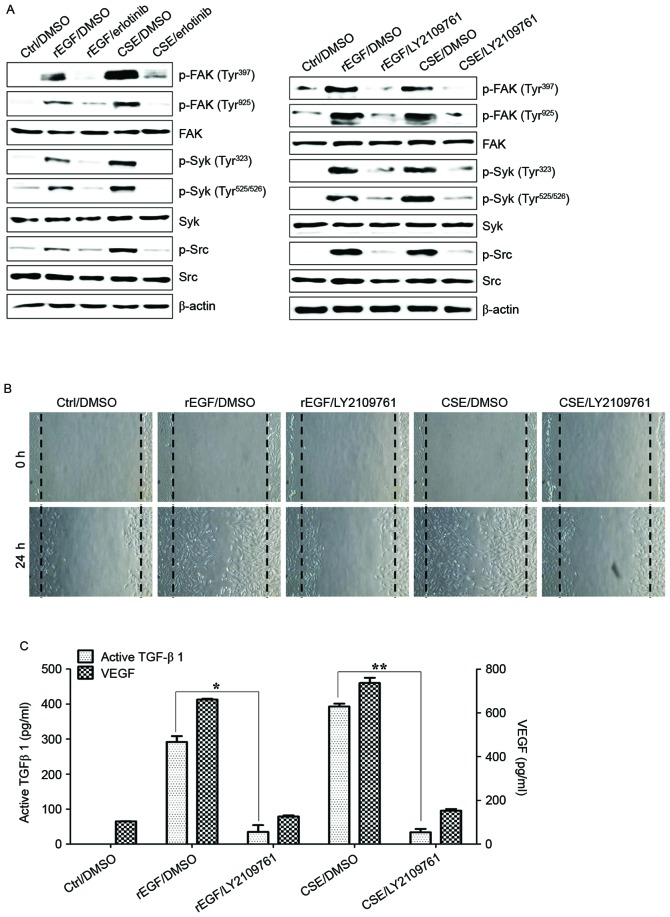
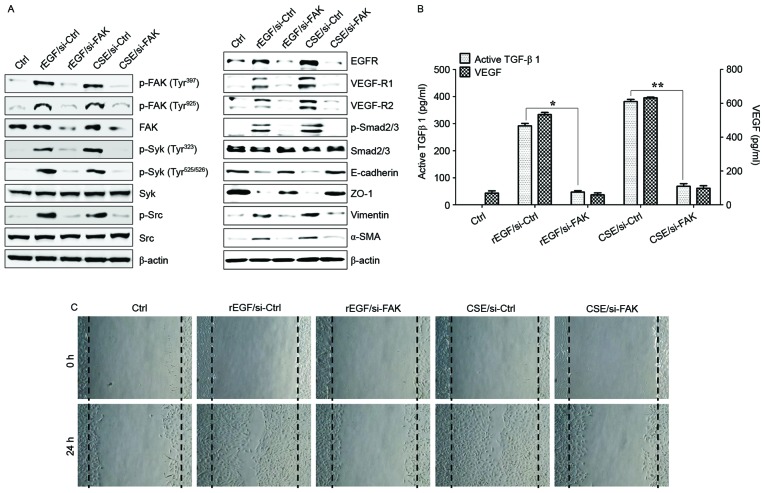
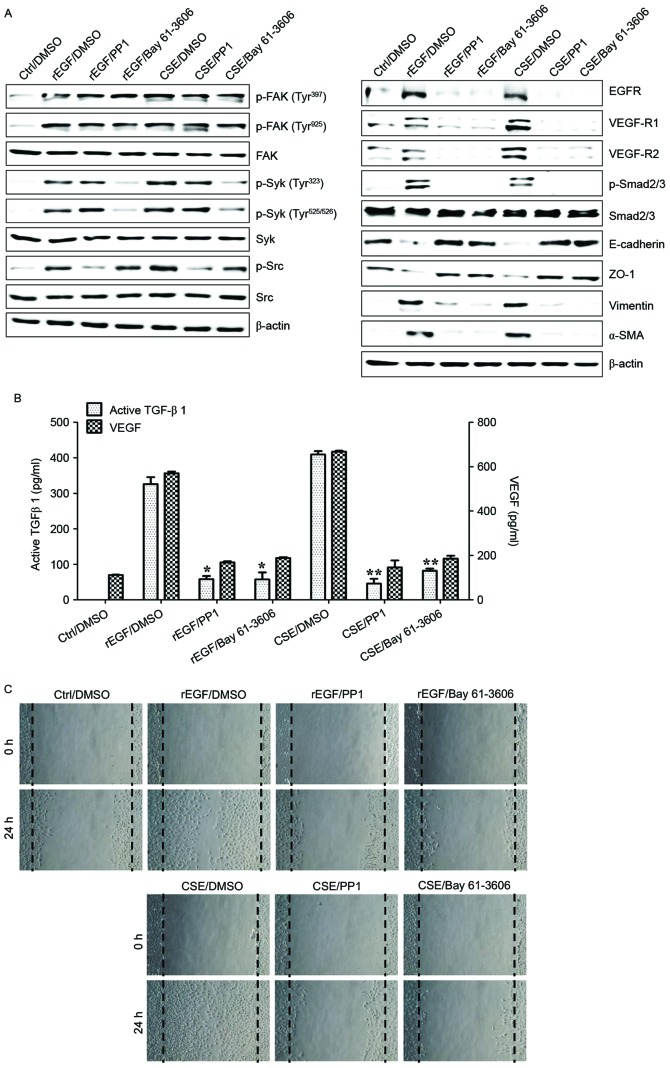
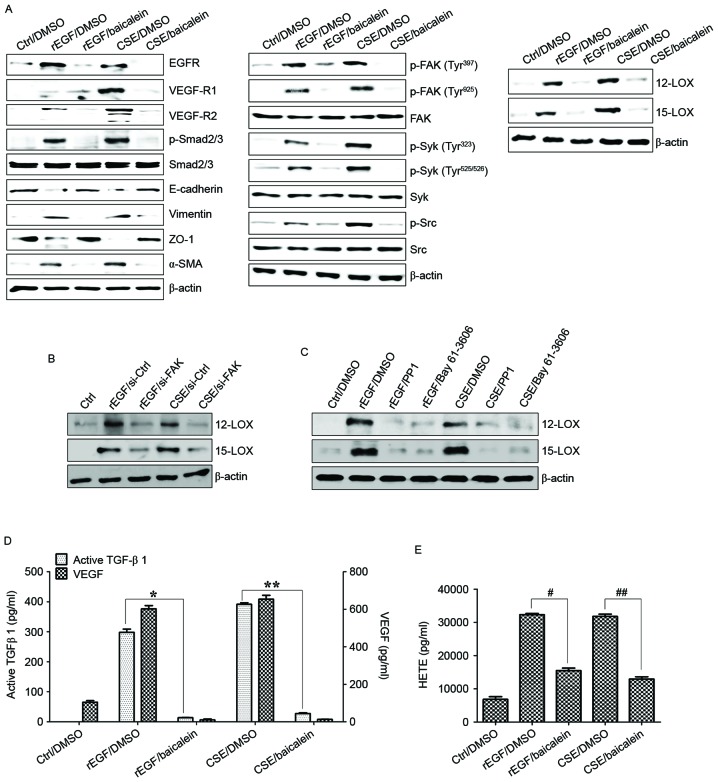
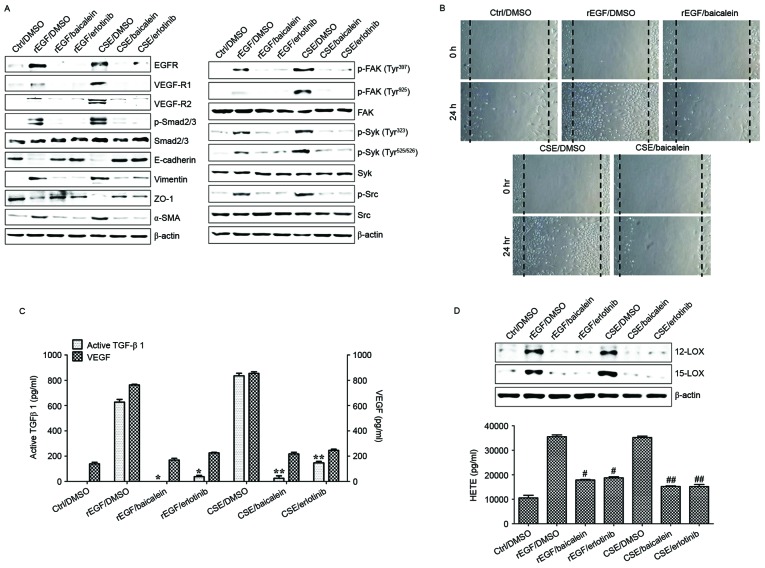
Epithelial-mesenchymal transition (EMT) of retinal pigment epithelial (RPE) cells is inevitable change of age‑related macular degeneration (AMD). Smoking is a major risk factor for the development of EMT in several diseases, including lung cancer. Cigarette smoke‑induced stress promotes the production of epidermal growth factor (EGF) in RPE cells. However, the underlying signaling pathways induced by aberrant EGF receptor (EGFR) expression in cigarette smoke-exposed RPE cells remain largely unknown. In the present study, the morphological transformation and production of EMT-associated cytokines were investigated to analyze the effect of smoking on the retina. Furthermore, EGF‑treated or cigarette smoke‑exposed RPE cells, as well as the downstream targets of EGFR, were investigated to identify the key molecules involved in EMT of cigarette smoke‑stimulated RPE cells via immunoblotting. Exposure of RPE cells to cigarette smoke extract (CSE) induced secretion of VEGF and TGF‑β1, and increased the expression of EMT markers. CSE‑mediated focal adhesion kinase (FAK) activation resulted in the phosphorylation and activation of spleen associated tyrosine kinase (Syk)/Src proto‑oncogene, non‑receptor tyrosine kinase (Src), leading to migration and invasion of RPE cells. Knockdown of FAK or pharmacological inhibition of Syk/Src abrogated CSE‑mediated VEGF and TGF‑β1 production and blocked the phosphorylation of Smad2/3 in CSE‑stimulated RPE cells. Erlotinib (an EGFR inhibitor) suppressed EGF and CSE‑mediated switch from an epithelial to mesenchymal phenotype. Baicalein, an inhi-bitor of 12/15‑lipooxygenase, also efficiently suppressed CSE‑induced EMT processes by inhibiting EGFR‑associated downstream signaling transduction. The results identified a novel signaling pathway mediated by EGFR in CSE‑activated RPE cells, and suggest baicalein as a potential new therapeutic drug for CSE‑associated retinopathy.
上皮-间充质转化(EMT)是年龄相关性黄斑变性(AMD)中视网膜色素上皮(RPE)细胞不可避免的变化。吸烟是包括肺癌在内的几种疾病中 EMT 发生的主要危险因素。香烟烟雾引起的应激促进了 RPE 细胞中表皮生长因子(EGF)的产生。然而,香烟烟雾暴露的 RPE 细胞中异常 EGFR 表达诱导的潜在信号通路在很大程度上仍不清楚。在本研究中,通过分析吸烟对视网膜的影响,研究了 EMT 相关细胞因子的形态转化和产生。此外,通过免疫印迹法研究了 EGF 处理或香烟烟雾暴露的 RPE 细胞以及 EGFR 的下游靶点,以鉴定参与香烟烟雾刺激的 RPE 细胞 EMT 的关键分子。RPE 细胞暴露于香烟烟雾提取物(CSE)可诱导 VEGF 和 TGF-β1 的分泌,并增加 EMT 标志物的表达。CSE 介导的黏着斑激酶(FAK)激活导致脾相关酪氨酸激酶(Syk)/Src 原癌基因,非受体酪氨酸激酶(Src)的磷酸化和激活,导致 RPE 细胞的迁移和侵袭。FAK 敲低或 Syk/Src 的药理学抑制消除了 CSE 介导的 VEGF 和 TGF-β1 的产生,并阻断了 CSE 刺激的 RPE 细胞中 Smad2/3 的磷酸化。表皮生长因子受体(EGFR)抑制剂厄洛替尼抑制了 EGF 和 CSE 介导的上皮到间充质表型的转变。12/15-脂氧合酶抑制剂黄芩素也通过抑制 EGFR 相关的下游信号转导,有效地抑制了 CSE 诱导的 EMT 过程。该结果确定了 CSE 激活的 RPE 细胞中由 EGFR 介导的新信号通路,并提示黄芩素可能成为与 CSE 相关的视网膜病变的潜在新治疗药物。