Department of Medical Research, Taipei Veterans General Hospital, Taipei 112201, Taiwan; College of Medicine, National Yang Ming Chiao Tung University, Taipei 112304, Taiwan.
Department of Medical Research, Taipei Veterans General Hospital, Taipei 112201, Taiwan.
J Adv Res. 2024 Jun;60:141-157. doi: 10.1016/j.jare.2023.06.004. Epub 2023 Jun 15.
Epithelial-mesenchymal transition (EMT) of retinal pigment epithelial (RPE) cells is related to the pathogenesis of various retinopathies including age-related macular degeneration (AMD). Oxidative stress is the major factor that induces degeneration of RPE cells associated with the etiology of AMD.
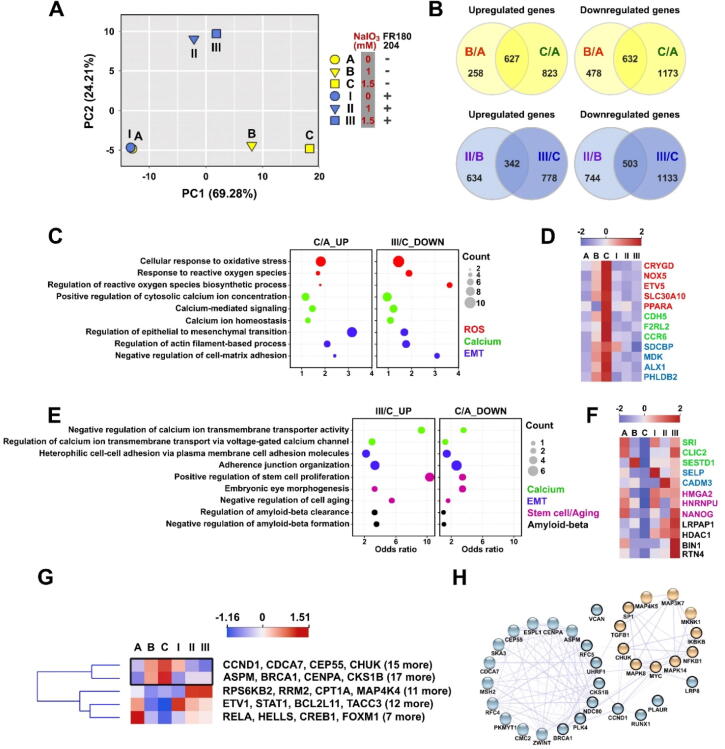
Sodium iodate (NaIO) generates intracellular reactive oxygen species (ROS) and is widely used to establish a model of AMD due to the selective induction of retinal degeneration. This study was performed to clarify the effects of multiple NaIO-stimulated signaling pathways on EMT in RPE cells.
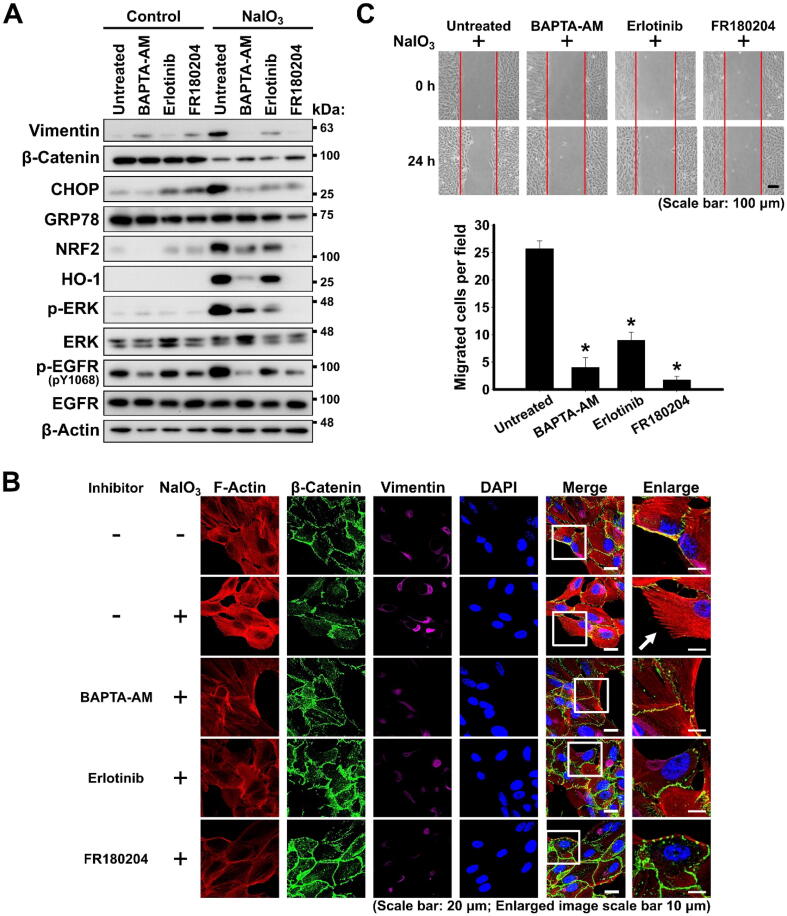
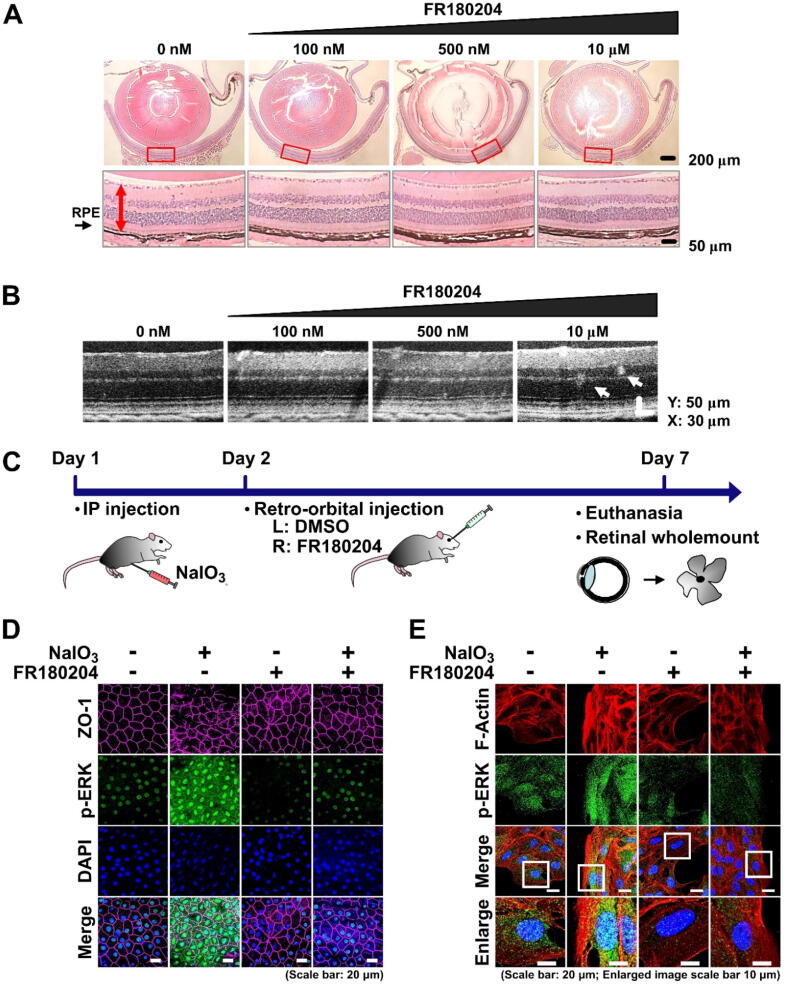
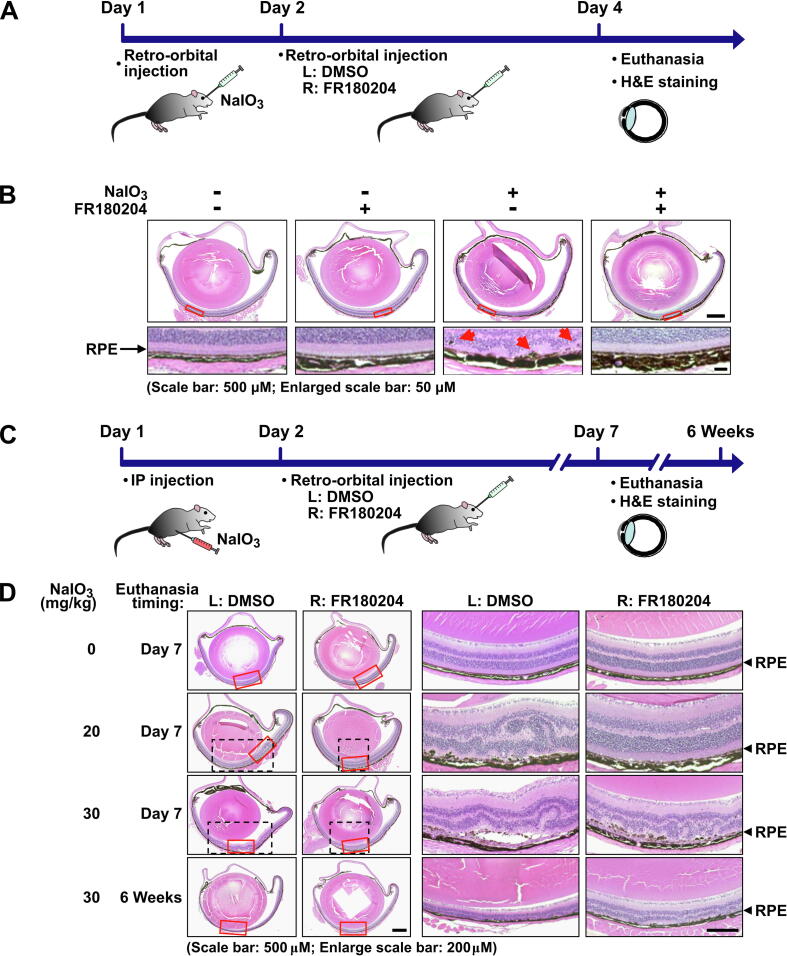
The EMT characteristics in NaIO-treated human ARPE-19 cells and RPE cells of the mouse eyes were analyzed. Multiple oxidative stress-induced modulators were investigated and the effects of pre-treatment with Ca chelator, extracellular signal-related kinase (ERK) inhibitor, or epidermal growth factor receptor (EGFR) inhibitor on NaIO-induced EMT were determined. The efficacy of post-treatment with ERK inhibitor on the regulation of NaIO-induced signaling pathways was dissected and its role in retinal thickness and morphology was evaluated by using histological cross-sections and spectral domain optical coherence tomography.
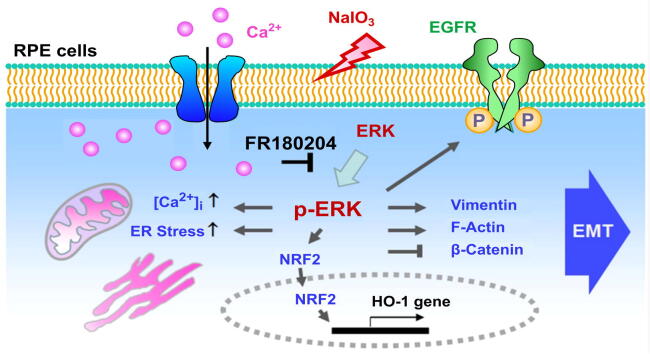
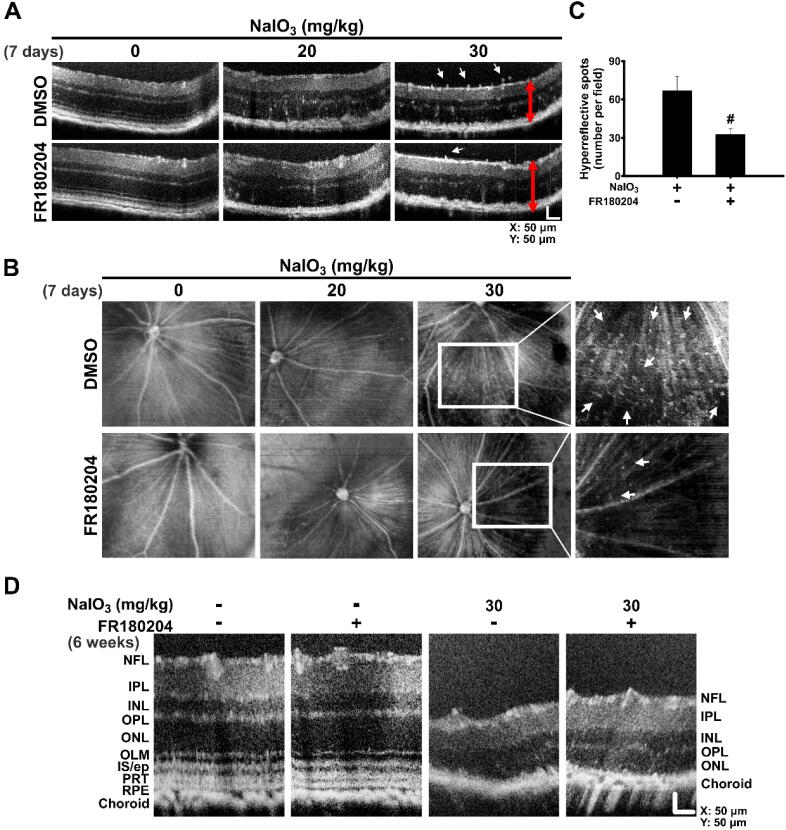
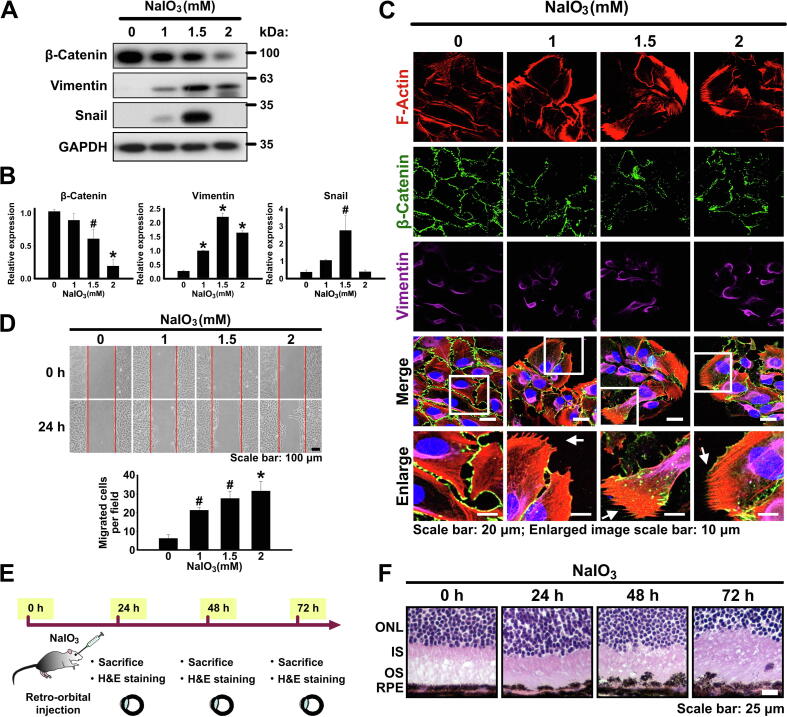
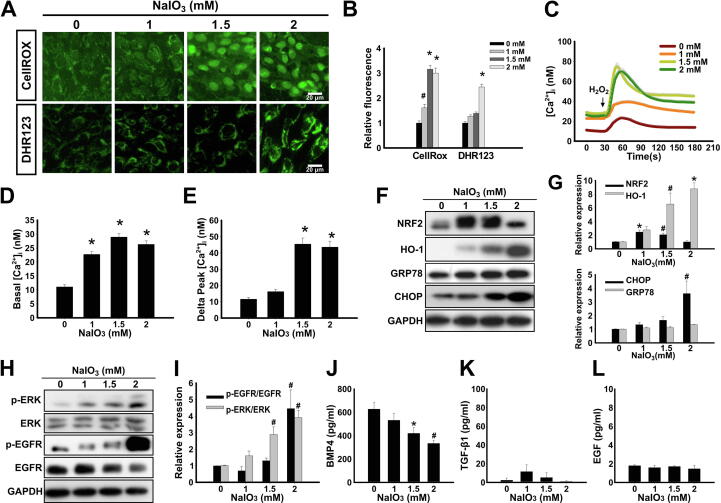
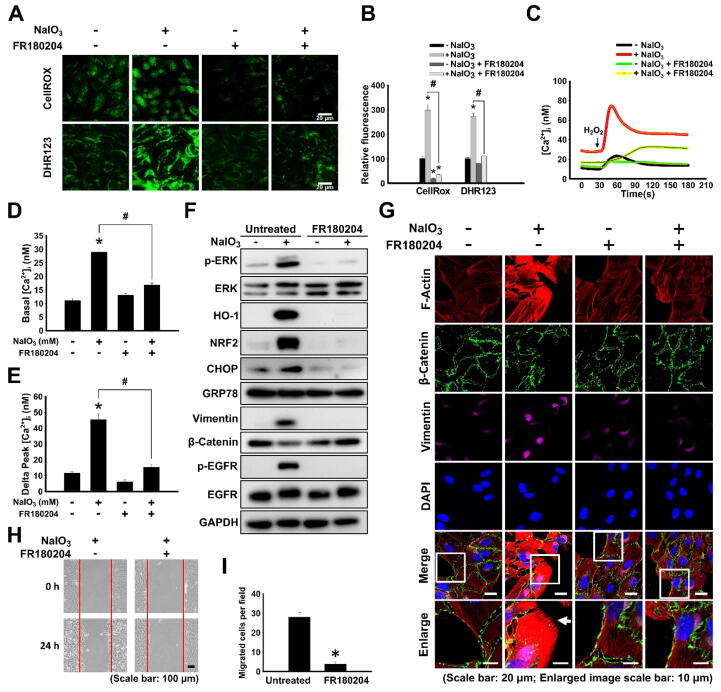
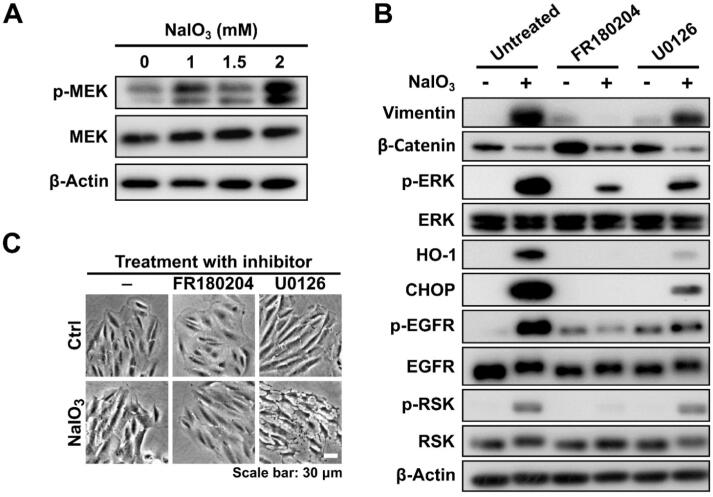
We found that NaIO induced EMT in ARPE-19 cells and in RPE cells of the mouse eyes. The intracellular ROS, Ca, endoplasmic reticulum (ER) stress marker, phospho-ERK, and phospho-EGFR were increased in NaIO-stimulated cells. Our results showed that pre-treatment with Ca chelator, ERK inhibitor, or EGFR inhibitor decreased NaIO-induced EMT, interestingly, the inhibition of ERK displayed the most prominent effect. Furthermore, post-treatment with FR180204, a specific ERK inhibitor, reduced intracellular ROS and Ca levels, downregulated phospho-EGFR and ER stress marker, attenuated EMT of RPE cells, and prevented structural disorder of the retina induced by NaIO.
ERK is a crucial regulator of multiple NaIO-induced signaling pathways that coordinate EMT program in RPE cells. Inhibition of ERK may be a potential therapeutic strategy for the treatment of AMD.
视网膜色素上皮 (RPE) 细胞的上皮-间充质转化 (EMT) 与各种视网膜病变的发病机制有关,包括年龄相关性黄斑变性 (AMD)。氧化应激是诱导与 AMD 病因相关的 RPE 细胞变性的主要因素。
碘酸钠 (NaIO) 会产生细胞内活性氧 (ROS),并由于选择性诱导视网膜变性而被广泛用于建立 AMD 模型。本研究旨在阐明 NaIO 刺激的多条信号通路对 RPE 细胞 EMT 的影响。
分析 NaIO 处理的人 ARPE-19 细胞和小鼠眼睛的 RPE 细胞中的 EMT 特征。研究了多种氧化应激诱导调节剂,并确定了用钙螯合剂、细胞外信号相关激酶 (ERK) 抑制剂或表皮生长因子受体 (EGFR) 抑制剂预处理对 NaIO 诱导的 EMT 的影响。通过使用组织学横断面和光谱域光相干断层扫描来剖析 ERK 抑制剂对 NaIO 诱导的信号通路的调节作用及其对视网膜厚度和形态的作用。
我们发现 NaIO 诱导了 ARPE-19 细胞和小鼠眼睛的 RPE 细胞发生 EMT。NaIO 刺激的细胞中细胞内 ROS、Ca、内质网 (ER) 应激标志物、磷酸化-ERK 和磷酸化-EGFR 增加。我们的结果表明,用钙螯合剂、ERK 抑制剂或 EGFR 抑制剂预处理可降低 NaIO 诱导的 EMT,有趣的是,ERK 抑制剂的抑制作用最为显著。此外,用 FR180204(一种特异性 ERK 抑制剂)后处理可降低细胞内 ROS 和 Ca 水平,下调磷酸化-EGFR 和 ER 应激标志物,减轻 RPE 细胞的 EMT,并防止 NaIO 引起的视网膜结构紊乱。
ERK 是协调 RPE 细胞 EMT 程序的多条 NaIO 诱导信号通路的关键调节剂。抑制 ERK 可能是治疗 AMD 的一种潜在治疗策略。