Cui Shaohua, Dong Lili, Qian Jialin, Ye Lin, Jiang Liyan
Department of Respiratory Medicine, Shanghai Chest Hospital, Shanghai Jiao Tong University.
J Cancer. 2018 Jan 1;9(1):129-134. doi: 10.7150/jca.21842. eCollection 2018.
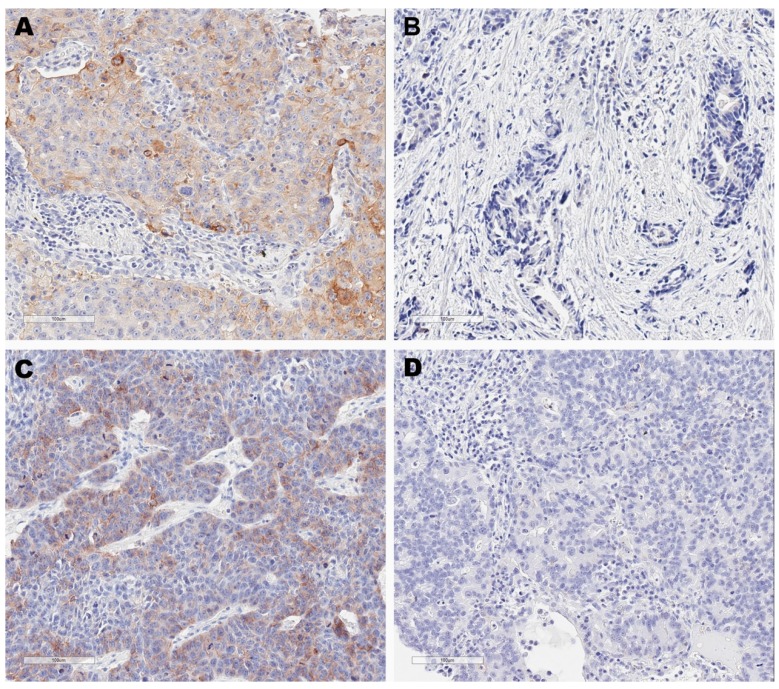
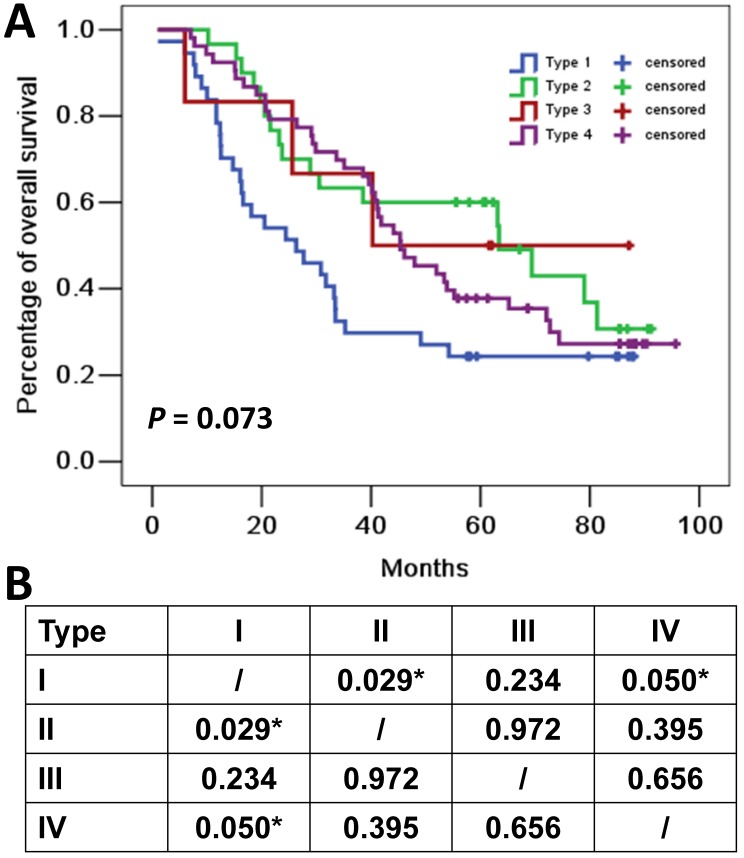
To explore the possible correlation between programmed death ligand 1 (PD-L1)/tumor-infiltrating lymphocytes (TIL) status and clinical factors in non-small cell lung (NSCLC). A total of 126 surgical NSCLC samples with stage I to IIIA were retrospectively collected and analyzed. Immunohistochemistry (IHC) assays were used to detect PD-L1 protein expression. PD-L1 positivity on tumor cells was defined by positive tumor cell (TC) percentage using 5% cutoff value. Thirty-seven patients (29.4%), thirty patients (23.8%), six patients (4.8%) and fifty-three patients (42%) were classified as type I (PD-L1+, TIL+), type II (PD-L1-, TIL-), type III (PD-L1+, TIL-) and type IV (PD-L1-, TIL+) tumor environments according to PD-L1/TIL status, respectively. Statistical differences could be observed in factors including gender (<0.001), smoking status (<0.001), age (=0.002), histological types (<0.001), mutation (=0.008) and mutation (=0.003) across the four type tumors. Type I tumors were associated with ever smoking, non-adenocarcinoma histological types and mutation. Type II tumors were associated with female gender, never-smoking, adenocarcinoma histological types and mutation. Type III tumors were associated with ever smoking and type IV tumors were associated with female gender and mutation. Clinical factors associated with NSCLC microenvironment types based on PD-L1/TIL differed a lot across different types. The findings of this study may help to facilitate the understanding of the relationship between tumor microenvironment and clinical factors, and also the selecting of patients for combination immunotherapies.
探讨程序性死亡配体1(PD-L1)/肿瘤浸润淋巴细胞(TIL)状态与非小细胞肺癌(NSCLC)临床因素之间的可能相关性。回顾性收集并分析了126例I至IIIA期手术切除的NSCLC样本。采用免疫组织化学(IHC)检测PD-L1蛋白表达。肿瘤细胞上的PD-L1阳性定义为阳性肿瘤细胞(TC)百分比,截断值为5%。根据PD-L1/TIL状态,分别有37例患者(29.4%)、30例患者(23.8%)、6例患者(4.8%)和53例患者(42%)被分类为I型(PD-L1+,TIL+)、II型(PD-L1-,TIL-)、III型(PD-L1+,TIL-)和IV型(PD-L1-,TIL+)肿瘤环境。在四种类型肿瘤的性别(<0.001)、吸烟状态(<0.001)、年龄(=0.002)、组织学类型(<0.001)、 突变(=0.008)和 突变(=0.003)等因素中可观察到统计学差异。I型肿瘤与曾经吸烟、非腺癌组织学类型和 突变相关。II型肿瘤与女性、从不吸烟、腺癌组织学类型和 突变相关。III型肿瘤与曾经吸烟相关,IV型肿瘤与女性和 突变相关。基于PD-L1/TIL的与NSCLC微环境类型相关的临床因素在不同类型之间差异很大。本研究结果可能有助于促进对肿瘤微环境与临床因素之间关系的理解,以及为联合免疫治疗选择患者。