Department of Clinical Oncology, Li Ka Shing Faculty of Medicine, The University of Hong Kong, Hong Kong, China.
Centre for Cancer Research, Li Ka Shing Faculty of Medicine, The University of Hong Kong, Hong Kong, China.
Theranostics. 2018 Jan 1;8(1):185-198. doi: 10.7150/thno.21383. eCollection 2018.
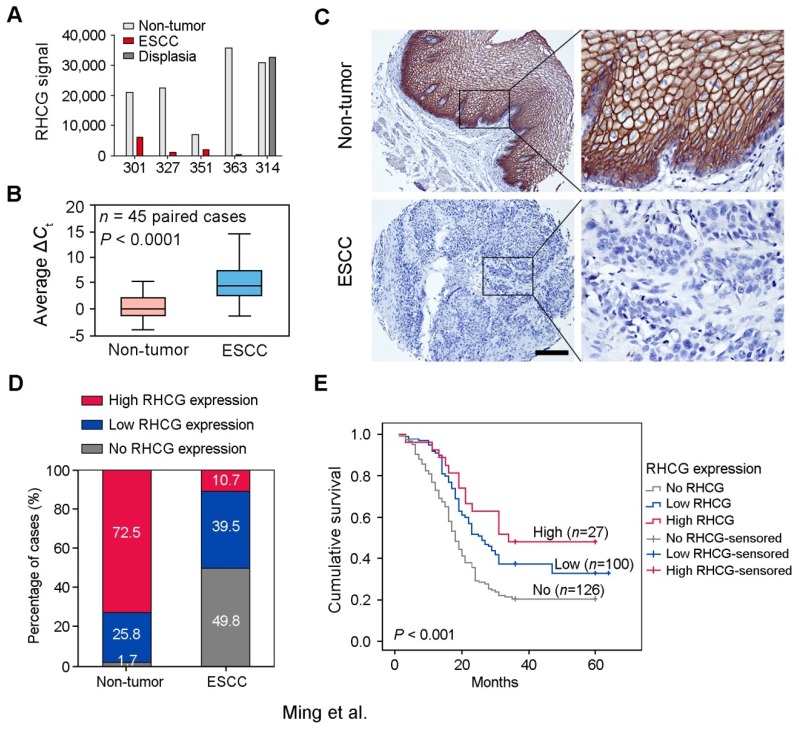
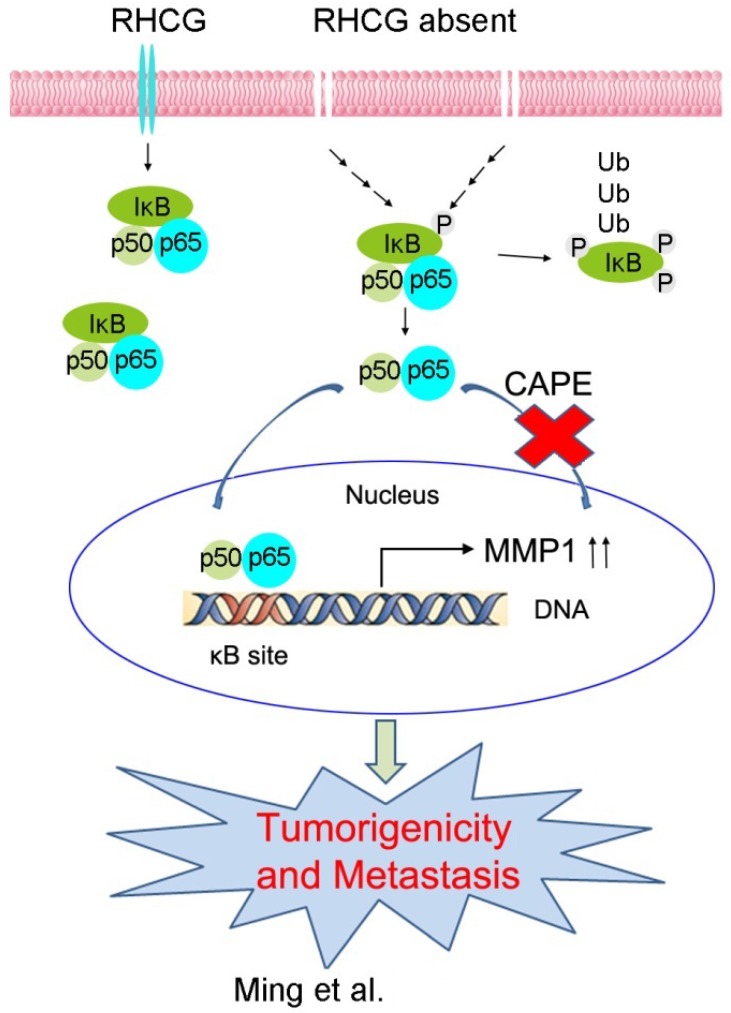
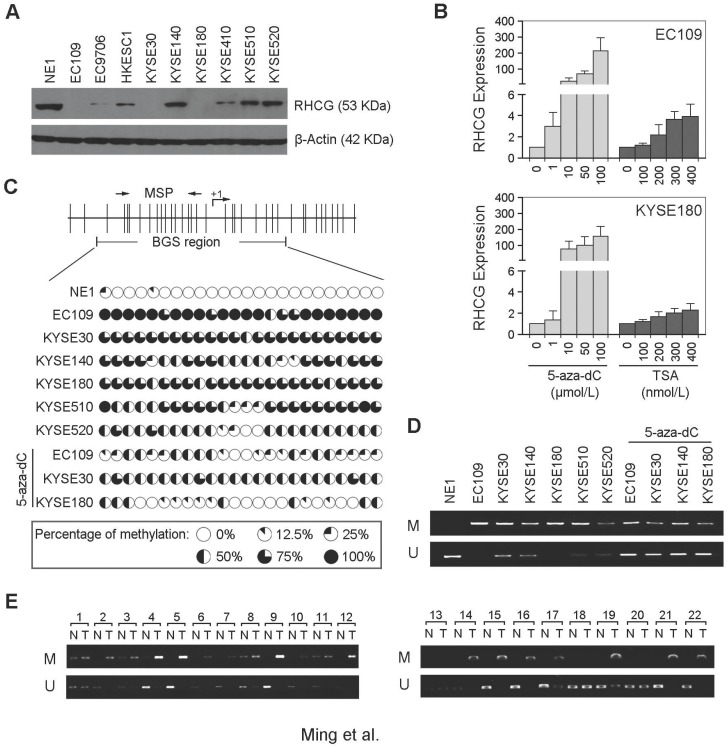
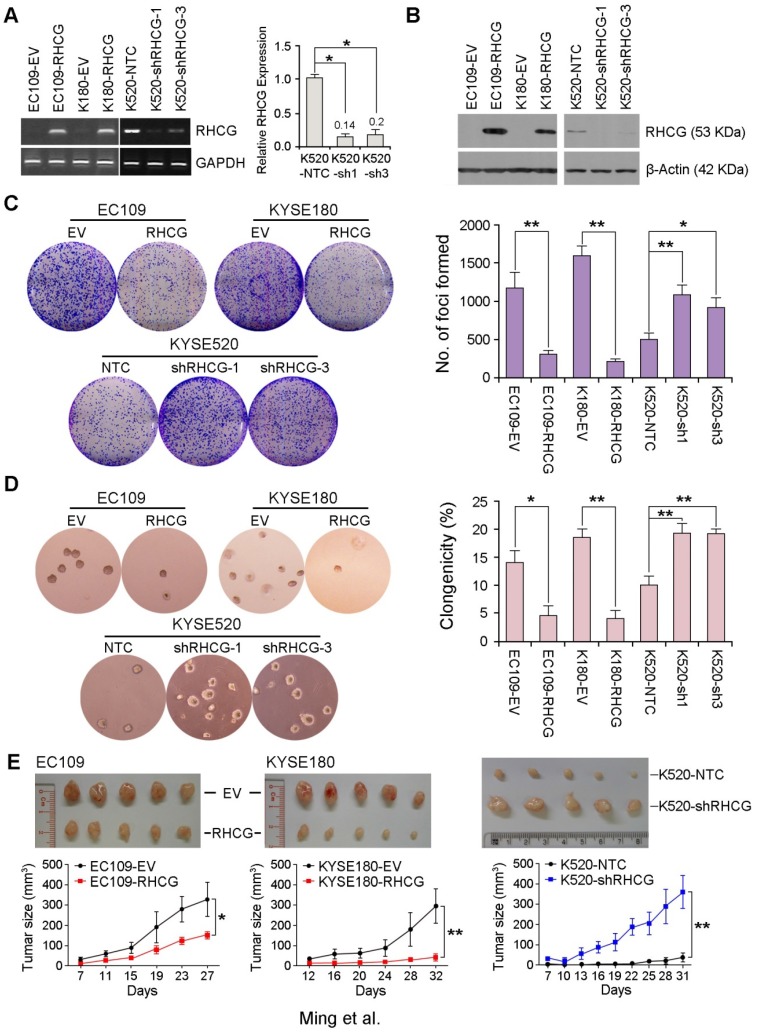
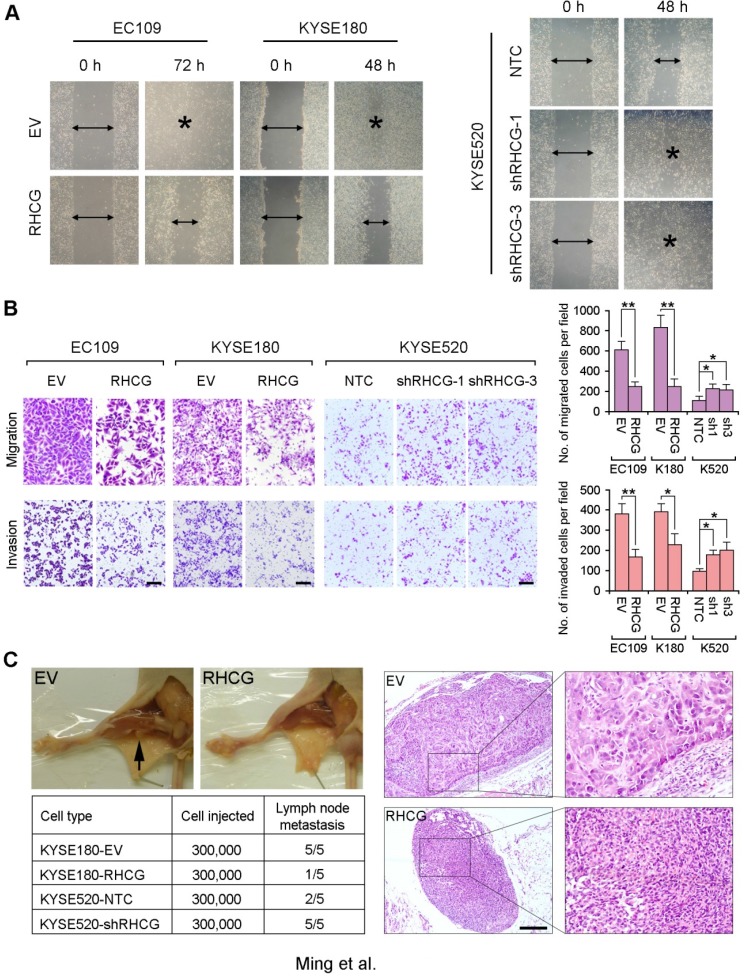
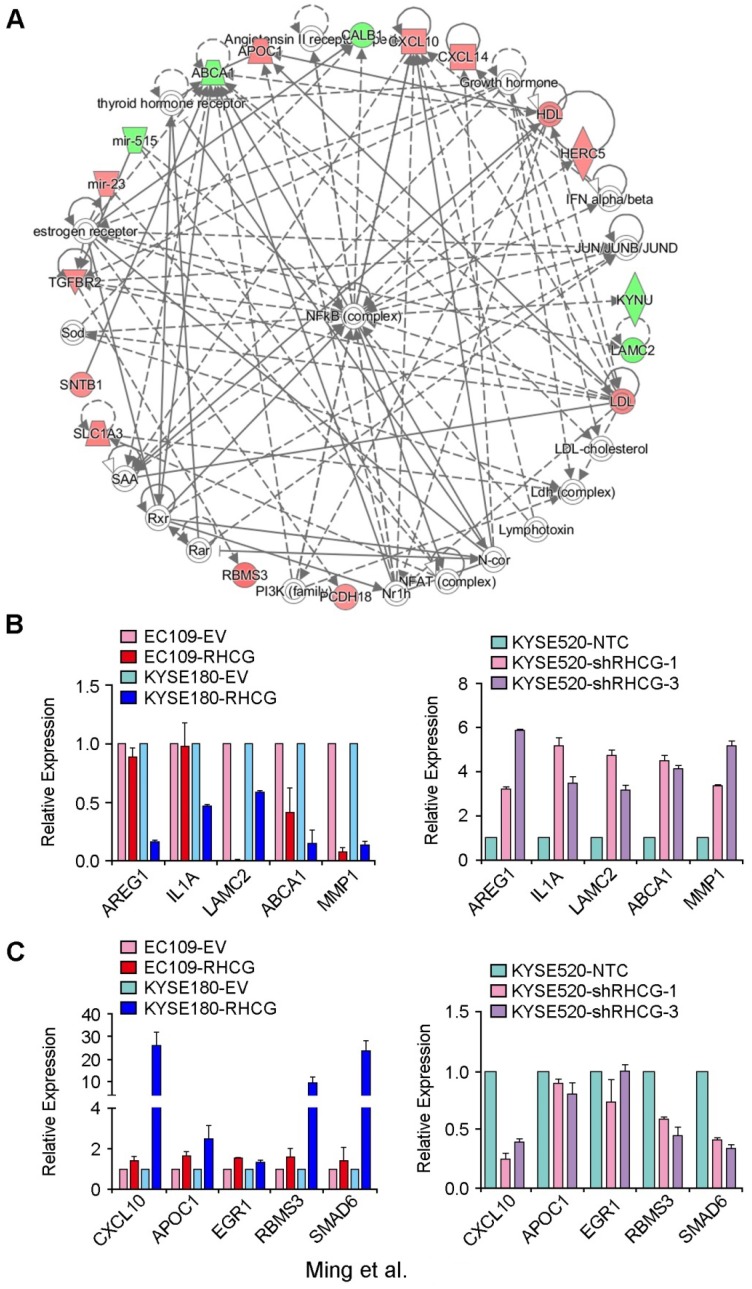
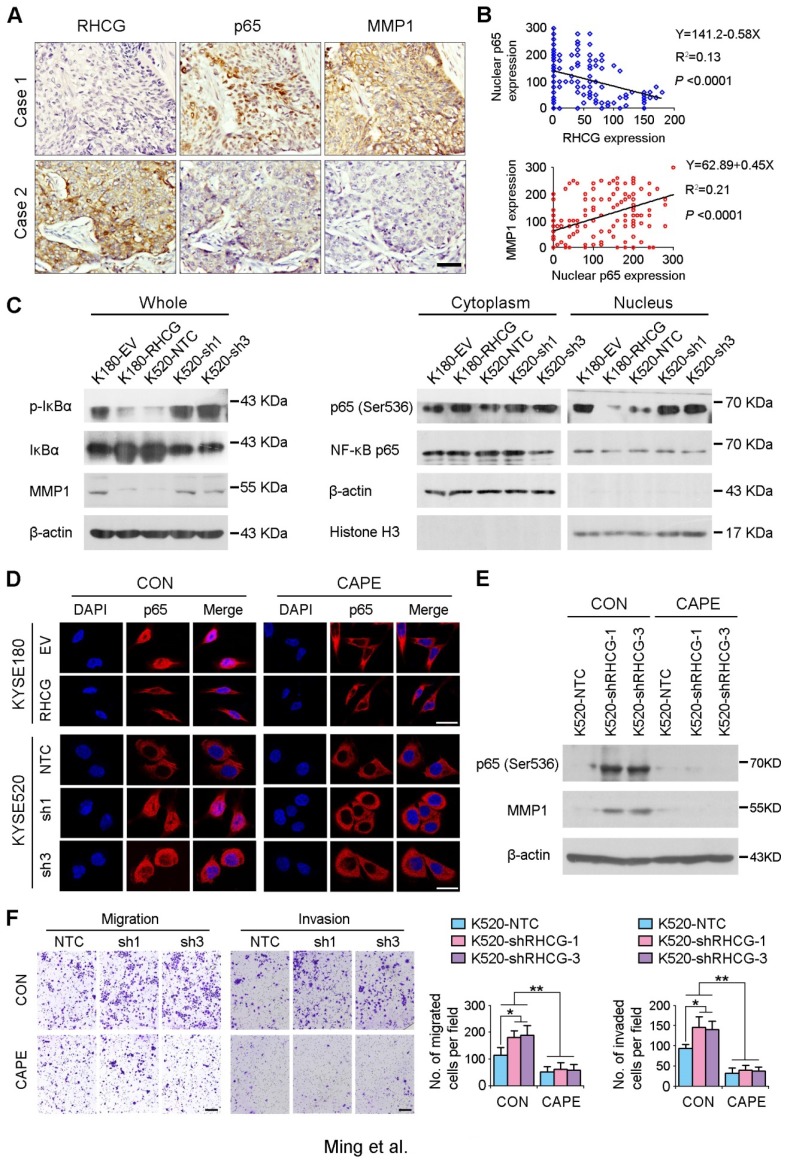
Esophageal squamous cell carcinoma (ESCC), a major histologic subtype of esophageal cancer, is increasing in incidence, but the genetic underpinnings of this disease remain unexplored. The aim of this study is to identify the recurrent genetic changes, elucidate their roles and discover new biomarkers for improving clinical management of ESCC. Western blotting and immunohistochemistry were performed to detect the expression level of RHCG. Bisulfite genomic sequencing (BGS) and methylation-specific PCR (MSP) were used to study the methylation status in the promoter region of RHCG. The tumor-suppressive effect of RHCG was determined by both and assays. Affymetrix cDNA microarray was used to identify the underlying molecular mechanism. was frequently downregulated in ESCCs, which was significantly correlated with poor differentiation ( = 0.001), invasion ( = 0.003), lymph node metastasis ( = 0.038) and poorer prognosis ( < 0.001). Demethylation treatment and bisulfite genomic sequencing analyses revealed that the downregulation of in both ESCC cell lines and clinical samples was associated with its promoter hypermethylation. Functional assays demonstrated that RHCG could inhibit clonogenicity, cell motility, tumor formation and metastasis in mice. Further study revealed that RHCG could stabilize IκB by decreasing its phosphorylation, and subsequently inhibit NF-κB/p65 activation by blocking the nuclear translocation of p65, where it acted as a transcription regulator for the upregulation of MMP1 expression. Our results support the notion that is a novel tumor suppressor gene that plays an important role in the development and progression of ESCC.
食管鳞状细胞癌(ESCC)是食管癌的主要组织学亚型,其发病率正在增加,但这种疾病的遗传基础仍未得到探索。本研究旨在鉴定复发性遗传变化,阐明其作用,并发现改善 ESCC 临床管理的新生物标志物。 Western blot 和免疫组织化学用于检测 RHCG 的表达水平。亚硫酸氢盐基因组测序(BGS)和甲基化特异性 PCR(MSP)用于研究 RHCG 启动子区域的甲基化状态。通过 和 测定法确定 RHCG 的肿瘤抑制作用。Affymetrix cDNA 微阵列用于鉴定潜在的分子机制。 在 ESCC 中经常下调,与低分化( = 0.001)、侵袭( = 0.003)、淋巴结转移( = 0.038)和预后不良( < 0.001)显著相关。去甲基化处理和亚硫酸氢盐基因组测序分析表明,ESCC 细胞系和临床样本中 的下调与其启动子高甲基化有关。功能测定表明,RHCG 可通过抑制克隆形成、细胞迁移、肿瘤形成和小鼠转移来抑制细胞活力。进一步的研究表明,RHCG 通过减少其磷酸化来稳定 IκB,从而通过阻止 p65 的核转位来抑制 NF-κB/p65 激活,在那里它作为 MMP1 表达上调的转录调节剂发挥作用。 我们的研究结果支持这样一种观点,即 是一种新的肿瘤抑制基因,在 ESCC 的发生和发展中起重要作用。