Stephenson David, Nahm Christopher, Chua Terence, Gill Anthony, Mittal Anubhav, de Reuver Philip, Samra Jaswinder
Sydney Medical School, University of Sydney, Camperdown, Sydney, Australia.
Upper GI Surgical Unit, Department of Gastrointestinal Surgery, Royal North Shore Hospital, St. Leonards, Sydney, Australia.
Oncotarget. 2017 Aug 4;8(63):107223-107236. doi: 10.18632/oncotarget.19928. eCollection 2017 Dec 5.
Disseminated tumor cells (DTCs) and circulating tumor cells (CTCs) have been postulated to seed metastases and contribute to poorer patient outcomes in many types of solid cancer. To date, no systematic reviews have examined the role of both DTCs and CTCs in pancreatic cancer. We aimed to determine the prognostic value of DTCs/CTCs in pancreatic cancer using a systematic review and meta-analysis.
A comprehensive literature search identified studies examining DTCs and CTCs in the bone marrow and blood of pancreatic cancer patients at diagnosis with follow-up to determine disease-free/progression-free survival (DFS/PFS) and overall survival (OS). Statistical analyses were performed to determine the hazard ratio (HR) of DTCs/CTCs on DFS/PFS and OS.
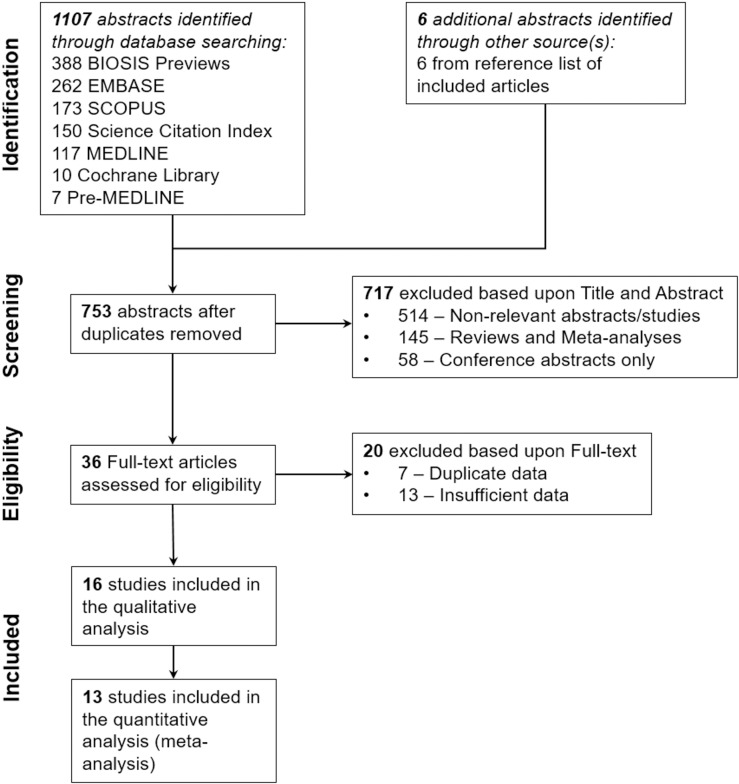
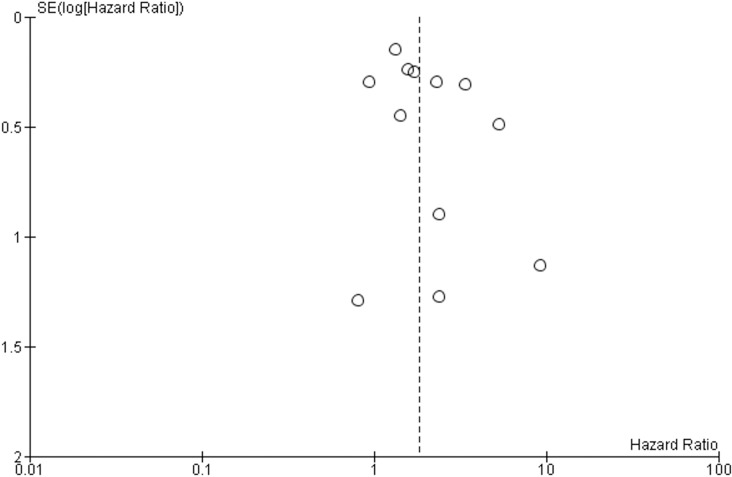
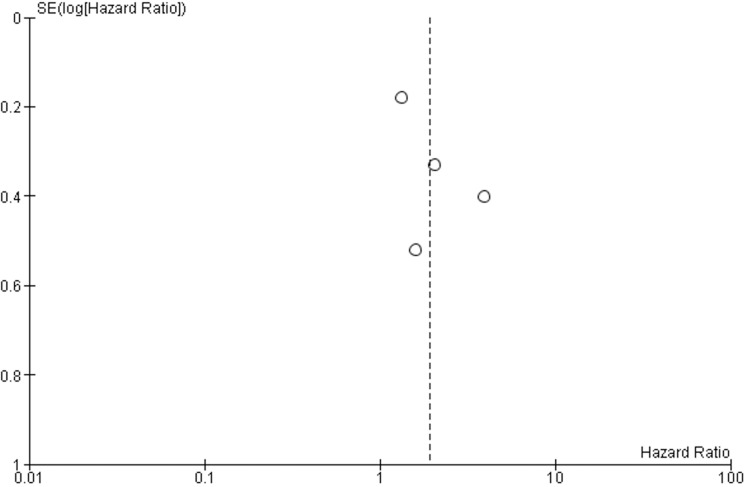
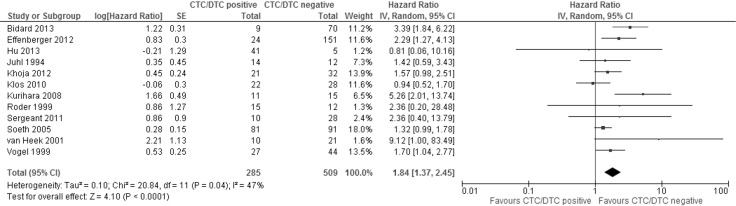
The literature search identified 16 articles meeting the inclusion criteria. The meta-analysis demonstrated statistically significant HR differences in DFS/PFS (HR = 1.93, 95% CI 1.19-3.11, = 0.007) and OS (HR = 1.84, 95% CI 1.37-2.45, =< 0.0001), indicating patients with detectable DTCs/CTCs at diagnosis have worse prognoses. Subgroup analyses suggested CTCs in the peripheral blood (HR =2.03) were more indicative of poor OS prognosis than DTCs in the bone marrow (HR = 1.91), although the difference between these was not statistically significant. Positivity of the CellSearch detection method for DTC/CTC had the highest correlation with decreased OS (HR = 2.79) while immunodetection (HR = 1.91) and RT-PCR (HR = 1.25) were less effective in determining prognosis.
The detection of DTCs/CTCs at diagnosis is associated with poorer DFS/PFS and OS in pancreatic cancer.
播散肿瘤细胞(DTCs)和循环肿瘤细胞(CTCs)被认为是实体瘤转移的种子,与多种实体癌患者的不良预后相关。迄今为止,尚无系统性综述研究DTCs和CTCs在胰腺癌中的作用。我们旨在通过系统性综述和荟萃分析确定DTCs/CTCs在胰腺癌中的预后价值。
全面的文献检索确定了在诊断时检测胰腺癌患者骨髓和血液中DTCs和CTCs并进行随访以确定无病生存期/无进展生存期(DFS/PFS)和总生存期(OS)的研究。进行统计分析以确定DTCs/CTCs对DFS/PFS和OS的风险比(HR)。
文献检索确定了16篇符合纳入标准的文章。荟萃分析显示,DFS/PFS(HR = 1.93,95%CI 1.19 - 3.11,P = 0.007)和OS(HR = 1.84,95%CI 1.37 - 2.45,P < 0.0001)的HR差异具有统计学意义,表明诊断时可检测到DTCs/CTCs的患者预后较差。亚组分析表明,外周血中的CTCs(HR = 2.03)比骨髓中的DTCs(HR = 1.91)更能预示OS预后不良,尽管两者之间的差异无统计学意义。CellSearch检测方法对DTC/CTC的阳性结果与OS降低的相关性最高(HR = 2.79),而免疫检测(HR = 1.91)和逆转录聚合酶链反应(RT-PCR,HR = 1.25)在确定预后方面效果较差。
诊断时检测到DTCs/CTCs与胰腺癌较差的DFS/PFS和OS相关。