The University of South Florida, Department of Molecular Pharmacology and Physiology, 12901 Bruce B. Downs Blvd, MDC 8, Tampa, FL 33612, United States.
Moffitt Cancer Center, H. Lee Moffitt Cancer Center and Research Institute, Department of Cancer Epidemiology, 12902 Magnolia Drive, MRC/CANCONT, Tampa, FL 22612-9497, United States.
Semin Cancer Biol. 2019 Jun;56:135-148. doi: 10.1016/j.semcancer.2017.12.011. Epub 2017 Dec 30.
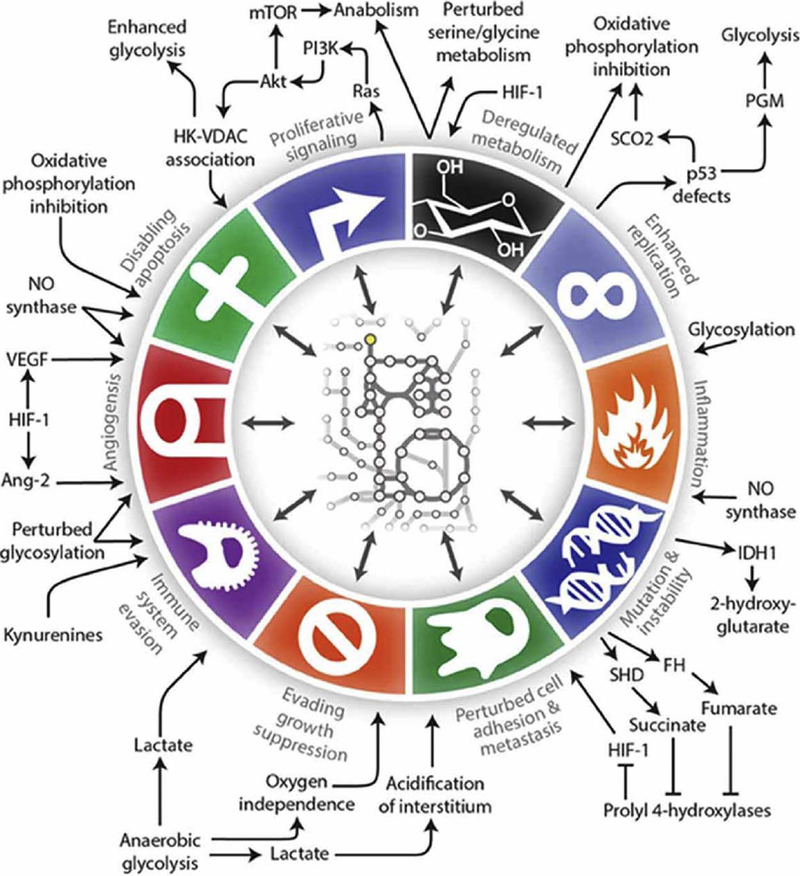
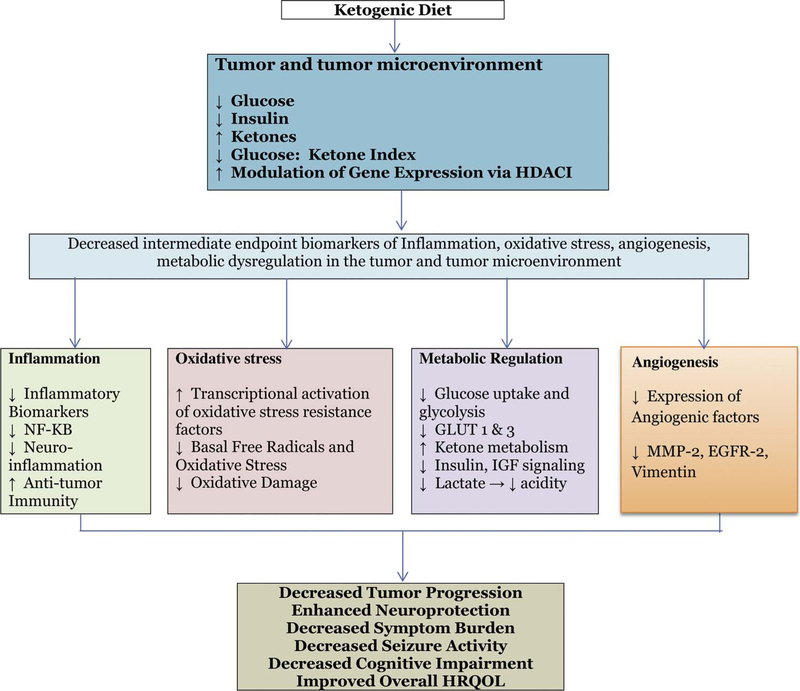
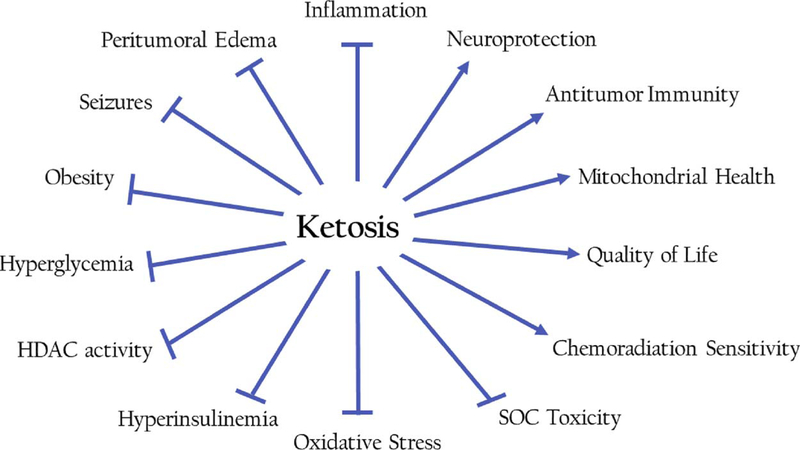
Gliomas are a highly heterogeneous tumor, refractory to treatment and the most frequently diagnosed primary brain tumor. Although the current WHO grading system (2016) demonstrates promise towards identifying novel treatment modalities and better prediction of prognosis over time, to date, existing targeted and mono therapy approaches have failed to elicit a robust impact on disease progression and patient survival. It is possible that tumor heterogeneity as well as specifically targeted agents fail because redundant molecular pathways in the tumor make it refractory to such approaches. Additionally, the underlying metabolic pathology, which is significantly altered during neoplastic transformation and tumor progression, is unaccounted for. With several molecular and metabolic pathways implicated in the carcinogenesis of CNS tumors, including glioma, we postulate that a systemic, broad spectrum approach to produce robust targeting of relevant and multiple molecular and metabolic regulation of growth and survival pathways, critical to the modulation of hallmarks of carcinogenesis, without clinically limiting toxicity, may provide a more sustained impact on clinical outcomes compared to the modalities of treatment evaluated to date. The objective of this review is to examine the emerging hallmark of reprogramming energy metabolism of the tumor cells and the tumor microenvironment during carcinogenesis, and to provide a rationale for exploiting this hallmark and its biological capabilities as a target for secondary chemoprevention and treatment of glioma. This review will primarily focus on interventions to induce ketosis to target the glycolytic phenotype of many cancers, with specific application to secondary chemoprevention of low grade glioma- to halt the progression of lower grade tumors to more aggressive subtypes, as evidenced by reduction in validated intermediate endpoints of disease progression including clinical symptoms.
神经胶质瘤是一种高度异质性的肿瘤,对治疗具有抗药性,是最常见的原发性脑肿瘤。尽管目前的世界卫生组织(WHO)分级系统(2016 年)在确定新的治疗方法和更好地预测长期预后方面显示出一定的前景,但迄今为止,现有的靶向和单一疗法方法未能对疾病进展和患者生存产生显著影响。肿瘤异质性以及特定的靶向药物可能会失效,因为肿瘤中冗余的分子途径使其对这些方法产生抗药性。此外,肿瘤发生和进展过程中显著改变的潜在代谢病理学也没有得到考虑。由于有几个分子和代谢途径与中枢神经系统肿瘤(包括神经胶质瘤)的癌变有关,我们假设,采用全身性、广谱方法来实现对相关分子和代谢调节生长和存活途径的强有力靶向,对于调节癌变的标志性特征至关重要,同时不会产生临床上限制毒性,可能会对临床结果产生比迄今为止评估的治疗方法更持久的影响。本综述的目的是研究肿瘤细胞和肿瘤微环境在癌变过程中重新编程能量代谢的新兴标志性特征,并为利用这一标志性特征及其生物学功能作为治疗神经胶质瘤的二级化学预防和治疗靶点提供理论依据。本综述将主要侧重于诱导酮症的干预措施,以针对许多癌症的糖酵解表型,特别是用于二级化学预防低级别神经胶质瘤,以阻止低级别肿瘤向更具侵袭性的亚型进展,这一点已通过减少验证的疾病进展中间终点得到证明,包括临床症状。