Division of Molecular and Systems Toxicology, Department of Pharmaceutical Sciences, University of Basel, Basel, Switzerland.
FASEB J. 2018 May;32(5):2690-2705. doi: 10.1096/fj.201700870RR. Epub 2018 Jan 2.
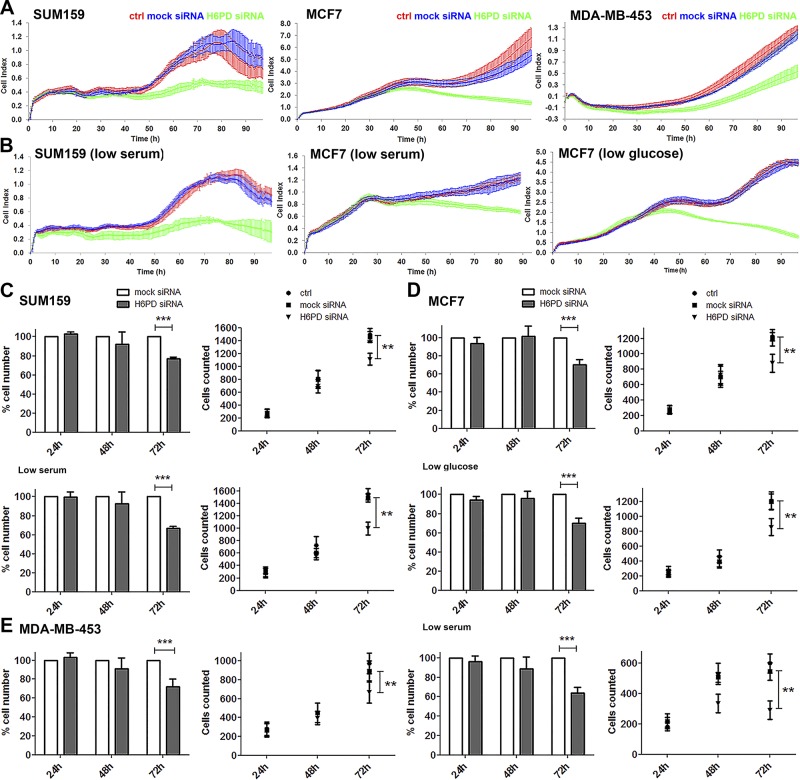
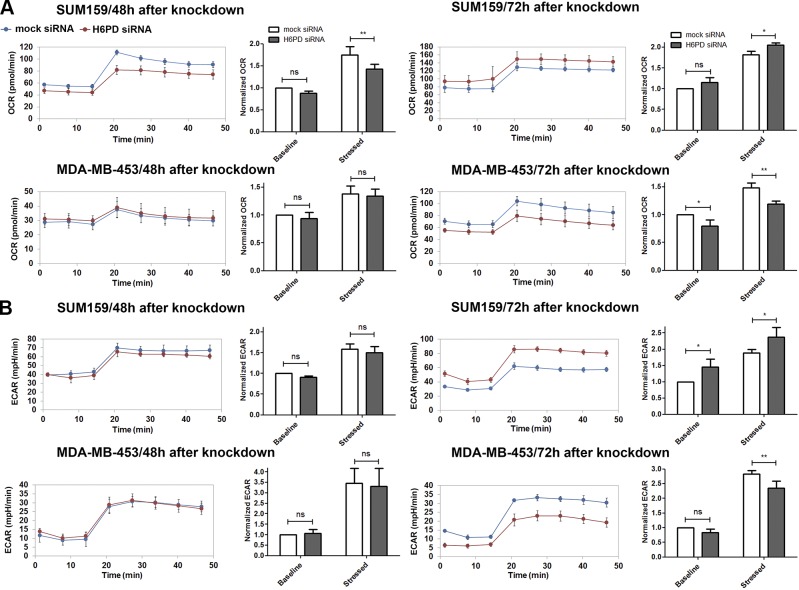
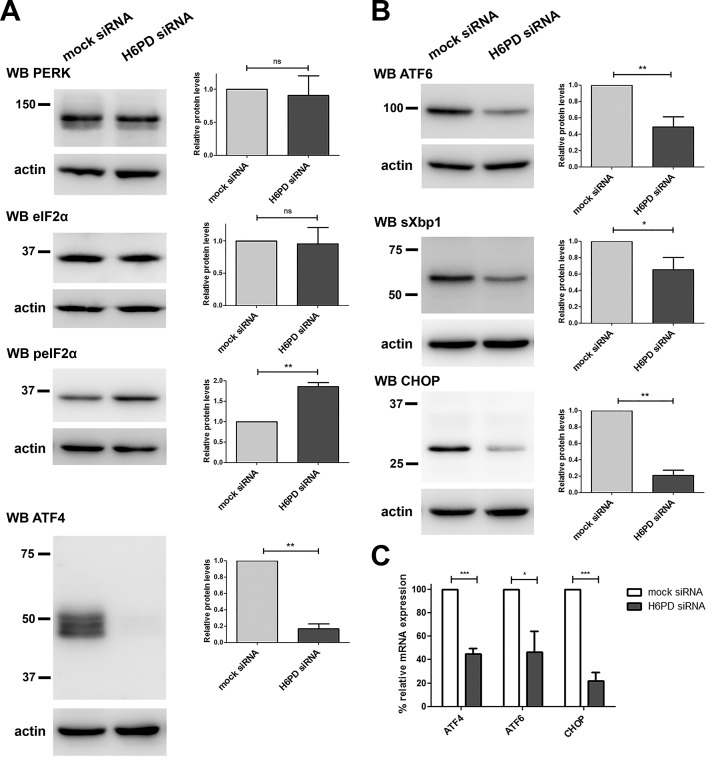
Hexose-6-phosphate dehydrogenase (H6PD) produces reduced NADPH in the endoplasmic reticulum (ER) lumen. NADPH constitutes a cofactor for many reducing enzymes, and its inability to traverse biologic membranes makes in situ synthesis of NADPH in the ER lumen indispensable. The H6PD gene is amplified in several types of malignancies, and earlier work pointed toward a potential involvement of the enzyme in cancer cell growth. In the present study, we demonstrated a pivotal role of H6PD in proliferation and migratory potential of 3 human breast cancer cell lines. Knockdown of H6PD decreased proliferation and migration in SUM159, MCF7, and MDA-MB-453 cells. To understand the mechanism through which H6PD exerts its effects, we investigated the cellular changes after H6PD silencing in SUM159 cells. Knockdown of H6PD resulted in an increase in ER lumen oxidation, and down-regulation of many components of the unfolded protein response, including the transcription factors activating transcription factor-4, activating transcription factor-6, split X-box binding protein-1, and CCAAT/enhancer binding protein homologous protein. This effect was accompanied by an increase in sarco/endoplasmic reticulum Ca-ATPase-2 pump expression and an decrease in inositol trisphosphate receptor-III, which led to augmented levels of calcium in the ER. Further characterization of the molecular pathways involving H6PD could greatly broaden our understanding of how the ER microenvironment sustains malignant cell growth.-Tsachaki, M., Mladenovic, N., Štambergová, H., Birk, J., Odermatt, A. Hexose-6-phosphate dehydrogenase controls cancer cell proliferation and migration through pleiotropic effects on the unfolded protein response, calcium homeostasis, and redox balance.
己糖-6-磷酸脱氢酶(H6PD)在内质网(ER)腔中产生还原型 NADPH。NADPH 是许多还原酶的辅助因子,由于其不能穿过生物膜,因此 ER 腔中 NADPH 的原位合成是必不可少的。H6PD 基因在几种类型的恶性肿瘤中扩增,早期研究表明该酶可能参与癌细胞生长。在本研究中,我们证明了 H6PD 在 3 种人乳腺癌细胞系的增殖和迁移潜能中起着关键作用。H6PD 的敲低降低了 SUM159、MCF7 和 MDA-MB-453 细胞的增殖和迁移。为了了解 H6PD 发挥作用的机制,我们研究了 SUM159 细胞中 H6PD 沉默后的细胞变化。H6PD 的敲低导致 ER 腔氧化增加,未折叠蛋白反应的许多成分下调,包括转录因子激活转录因子-4、激活转录因子-6、分裂 X 盒结合蛋白-1 和 CCAAT/增强子结合蛋白同源蛋白。这种效应伴随着肌浆/内质网 Ca-ATPase-2 泵表达的增加和肌醇三磷酸受体-III 的减少,导致 ER 中钙水平升高。进一步阐明涉及 H6PD 的分子途径可以大大拓宽我们对 ER 微环境如何维持恶性细胞生长的理解。-Tsachaki, M., Mladenovic, N., Štambergová, H., Birk, J., Odermatt, A. 己糖-6-磷酸脱氢酶通过对未折叠蛋白反应、钙稳态和氧化还原平衡的多效性作用控制癌细胞增殖和迁移。