Gholami Somayeh, Nedaie Hassan Ali, Longo Francesco, Ay Mohammad Reza, Dini Sharifeh A, Meigooni Ali S
Department of Medical Physics and Biomedical Engineering, Radiotherapy Oncology Research Center, Cancer Institute, Tehran University of Medical Sciences, Tehran, Iran.
Department of Physics, University of Trieste and INFN Trieste, Italy.
J Med Phys. 2017 Oct-Dec;42(4):213-221. doi: 10.4103/jmp.JMP_38_17.
The clinical efficacy of Grid therapy has been examined by several investigators. In this project, the hole diameter and hole spacing in Grid blocks were examined to determine the optimum parameters that give a therapeutic advantage.
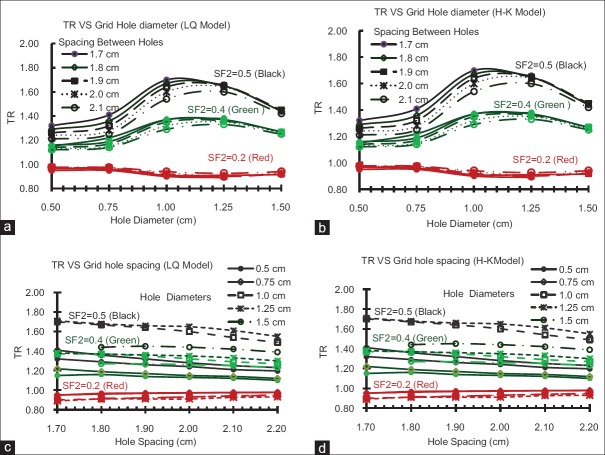
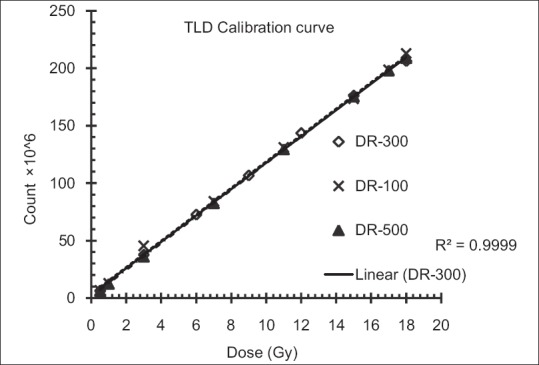
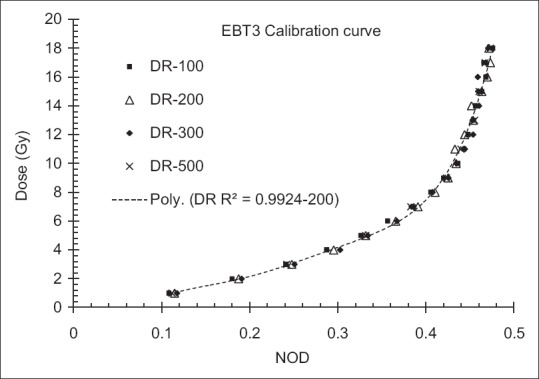
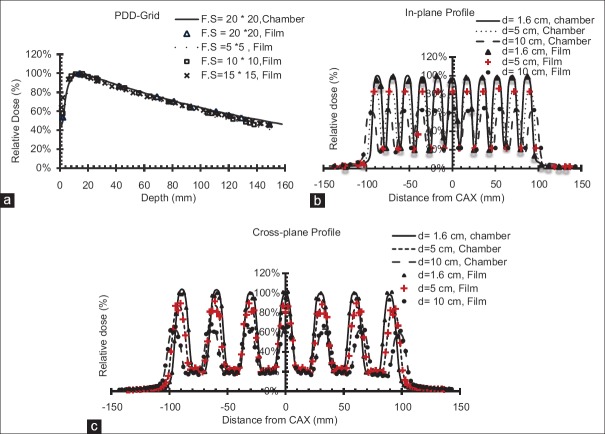
The evaluations were performed using Monte Carlo (MC) simulation and commonly used radiobiological models. The Geant4 MC code was used to simulate the dose distributions for 25 different Grid blocks with different hole diameters and center-to-center spacing. The therapeutic parameters of these blocks, namely, the therapeutic ratio (TR) and geometrical sparing factor (GSF) were calculated using two different radiobiological models, including the linear quadratic and Hug-Kellerer models. In addition, the ratio of the open to blocked area (ROTBA) is also used as a geometrical parameter for each block design. Comparisons of the TR, GSF, and ROTBA for all of the blocks were used to derive the parameters for an optimum Grid block with the maximum TR, minimum GSF, and optimal ROTBA. A sample of the optimum Grid block was fabricated at our institution. Dosimetric characteristics of this Grid block were measured using an ionization chamber in water phantom, Gafchromic film, and thermoluminescent dosimeters in Solid Water™ phantom materials.
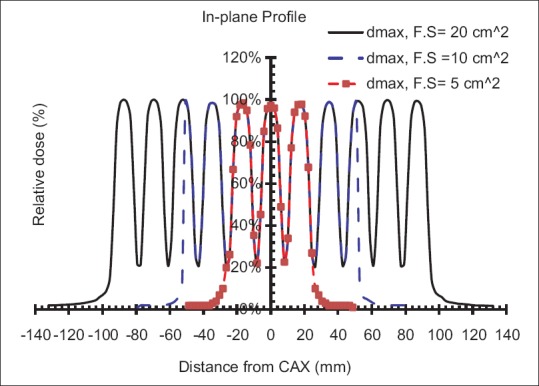
The results of these investigations indicated that Grid blocks with hole diameters between 1.00 and 1.25 cm and spacing of 1.7 or 1.8 cm have optimal therapeutic parameters (TR > 1.3 and GSF~0.90). The measured dosimetric characteristics of the optimum Grid blocks including dose profiles, percentage depth dose, dose output factor (cGy/MU), and valley-to-peak ratio were in good agreement (±5%) with the simulated data.
In summary, using MC-based dosimetry, two radiobiological models, and previously published clinical data, we have introduced a method to design a Grid block with optimum therapeutic response. The simulated data were reproduced by experimental data.
多位研究人员已对格栅疗法的临床疗效进行了研究。在本项目中,对格栅挡块的孔径和孔间距进行了研究,以确定具有治疗优势的最佳参数。
使用蒙特卡罗(MC)模拟和常用的放射生物学模型进行评估。采用Geant4 MC代码模拟25种不同孔径和中心距的格栅挡块的剂量分布。使用包括线性二次模型和胡格 - 凯勒勒模型在内的两种不同放射生物学模型计算这些挡块的治疗参数,即治疗比(TR)和几何 sparing 因子(GSF)。此外,开放面积与阻挡面积之比(ROTBA)也用作每个挡块设计的几何参数。通过比较所有挡块的TR、GSF和ROTBA,得出具有最大TR、最小GSF和最佳ROTBA的最佳格栅挡块的参数。在我们机构制作了一个最佳格栅挡块样本。使用水模体中的电离室、Gafchromic 胶片以及固体水™模体材料中的热释光剂量计测量了该格栅挡块的剂量学特征。
这些研究结果表明,孔径在1.00至1.25厘米之间且间距为1.7或1.8厘米的格栅挡块具有最佳治疗参数(TR > 1.3且GSF约为0.90)。最佳格栅挡块的测量剂量学特征,包括剂量分布、百分深度剂量、剂量输出因子(cGy/MU)和谷峰比,与模拟数据吻合良好(±5%)。
总之,利用基于MC的剂量学、两种放射生物学模型以及先前发表的临床数据,我们引入了一种设计具有最佳治疗反应的格栅挡块的方法。模拟数据得到了实验数据的重现。