Lee Tack, Lim U-Sung, Kang Dong Hyuk, Jung Hae-Do, Kim Hyunzu, Choi Bo-Hwa, Kang Ju-Hee, Yoon Sang-Min, Park Chang-Shin
Department of Urology, Inha University College of Medicine, Incheon, Korea.
Department of Urology, Yongin Severance Hospital, Yonsei University College of Medicine, Yongin, Korea.
Int Neurourol J. 2017 Dec;21(4):247-258. doi: 10.5213/inj.1732774.387. Epub 2017 Dec 31.
The pathophysiological role of detrusor overactivity (DO) in the bladder, which is commonly observed in various bladder diseases, is not well understood. DO appears in bladder outlet obstruction (BOO), and may continue even after subsequent deobstruction. DO therefore provides an excellent opportunity to observe molecular biological changes.
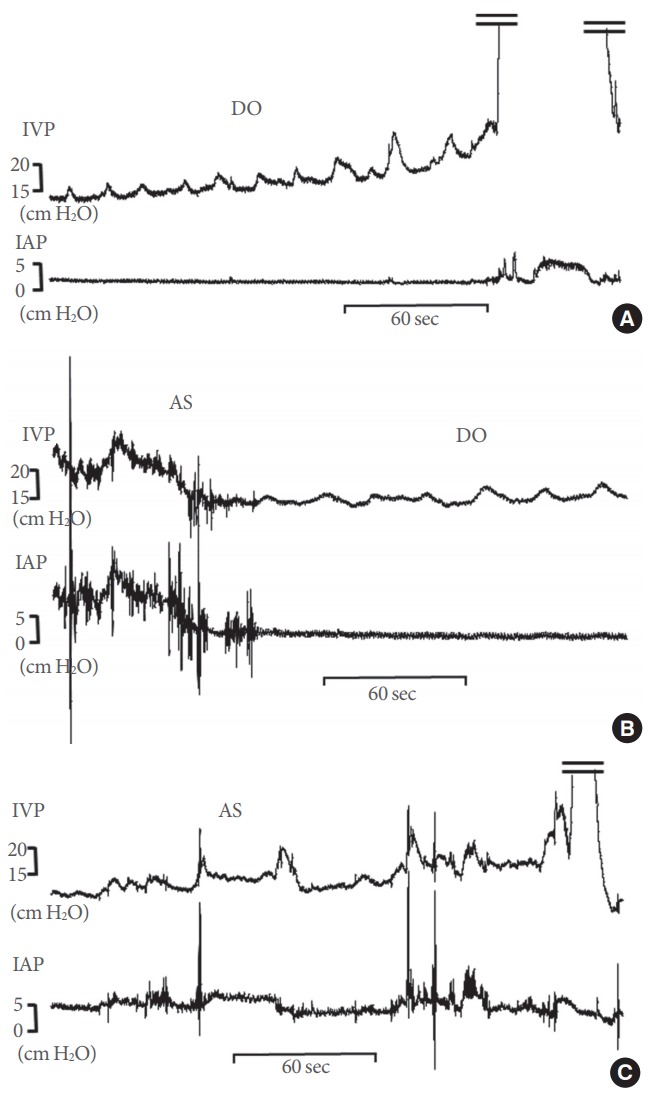
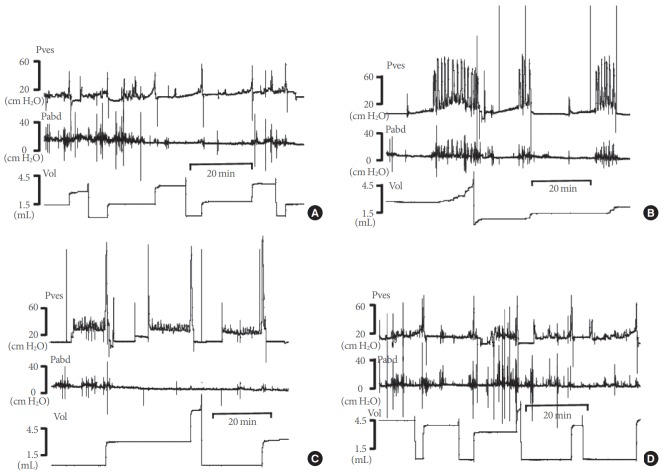
In this study, to understand the molecular effects of persistent DO after BOO induction and deobstruction, we performed awake cystometry on female Sprague-Dawley rats divided into 4 groups: a sham group, a BOO group, a deobstructed group with DO after BOO (DDO), and a deobstructed group without DO after BOO (non-DDO). Total RNA was extracted from the bladder samples, and gene expression profiles were compared between the sham and model groups.
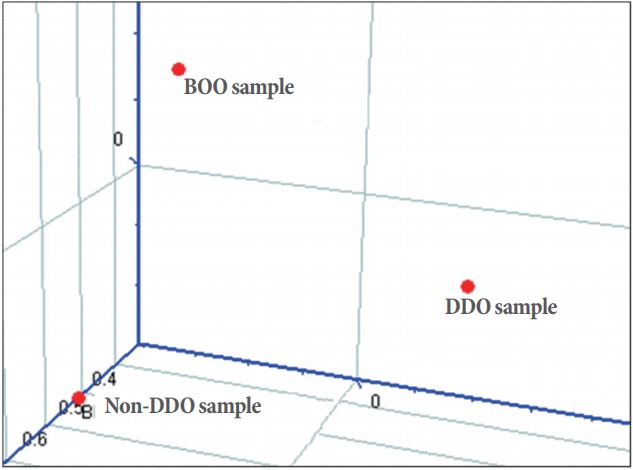
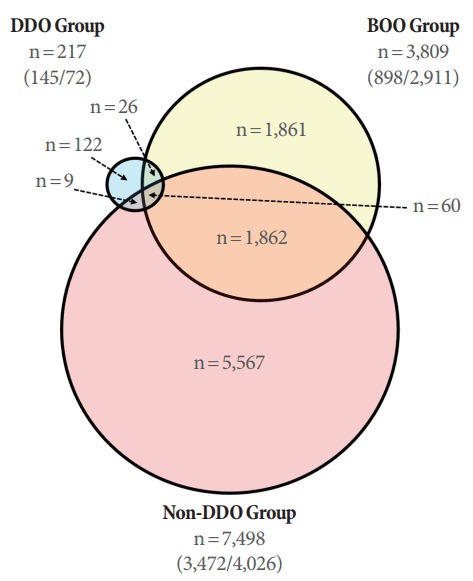
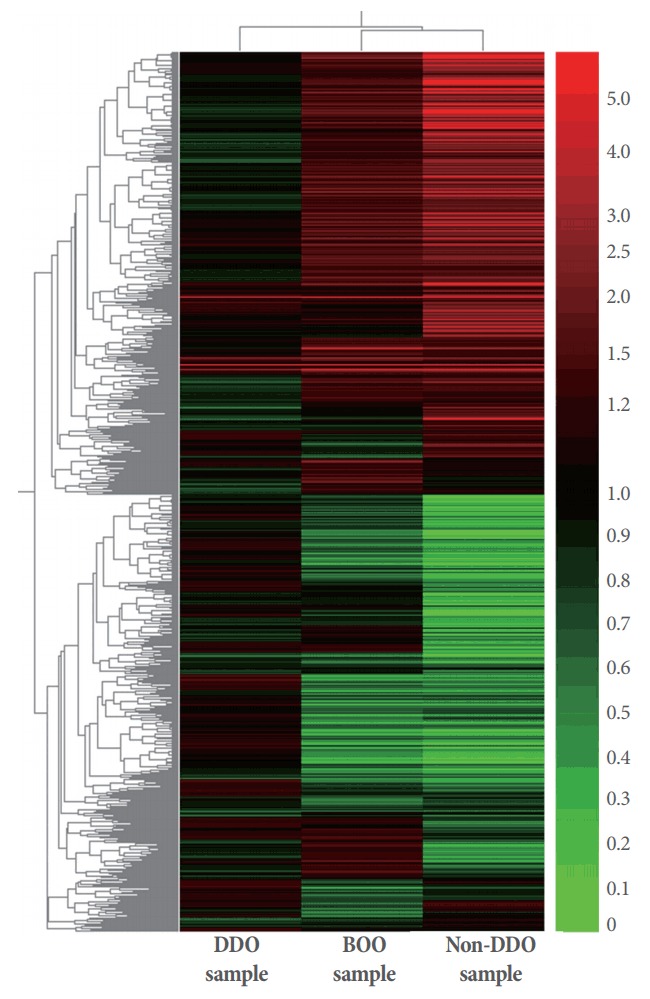
DO was observed in 5 of the 6 rats (83%) in the BOO group, and in 6 of the 13 rats (46%) in the deobstructed group. The non-DDO group showed a significantly greater residual volume than the DDO group. Through a clustering analysis of gene expression profiles, we identified 7,532 common upregulated and downregulated genes, the expression of which changed by more than 2 fold. In the BOO group, 898 upregulated and 2,911 downregulated genes were identified. The non-DDO group showed 3,472 upregulated and 4,025 downregulated genes, whereas in the DDO group, only 145 and 72 genes were upregulated and downregulated, respectively.
Abnormal function and gene expression profiles in bladders after BOO were normalized in the BOO rats with DO after deobstruction, whereas in those without DO, abnormal function persisted and the gene expression profile became more abnormal. DO may play a protective role against the stress to the bladder induced by BOO and deobstruction as a form of adaptive neuroplasticity.
逼尿肌过度活动(DO)在膀胱中的病理生理作用尚未完全明确,DO常见于多种膀胱疾病。DO出现在膀胱出口梗阻(BOO)时,甚至在解除梗阻后仍可能持续存在。因此,DO为观察分子生物学变化提供了绝佳机会。
在本研究中,为了解BOO诱导及解除梗阻后持续性DO的分子效应,我们对雌性Sprague-Dawley大鼠进行清醒膀胱测压,并将其分为4组:假手术组、BOO组、BOO后有DO的解除梗阻组(DDO)和BOO后无DO的解除梗阻组(非DDO)。从膀胱样本中提取总RNA,比较假手术组和模型组的基因表达谱。
BOO组6只大鼠中有5只(83%)出现DO,解除梗阻组13只大鼠中有6只(46%)出现DO。非DDO组的残余尿量显著高于DDO组。通过对基因表达谱进行聚类分析,我们鉴定出7532个上调和下调的共同基因,其表达变化超过2倍。在BOO组中,鉴定出898个上调基因和2911个下调基因。非DDO组有3472个上调基因和4025个下调基因,而在DDO组中,分别只有145个上调基因和72个下调基因。
BOO后膀胱的异常功能和基因表达谱在解除梗阻后有DO的BOO大鼠中恢复正常,而在无DO的大鼠中,异常功能持续存在且基因表达谱变得更加异常。DO可能作为一种适应性神经可塑性形式,对BOO和解除梗阻引起的膀胱应激起到保护作用。