Division of Genomics and RNomics, Biocenter, Medical University of Innsbruck, 6020 Innsbruck, Austria.
Institute of Organic Chemistry and Center for Molecular Biosciences, University of Innsbruck, 6020 Innsbruck, Austria.
Proc Natl Acad Sci U S A. 2018 Jan 16;115(3):E382-E389. doi: 10.1073/pnas.1714554115. Epub 2018 Jan 3.
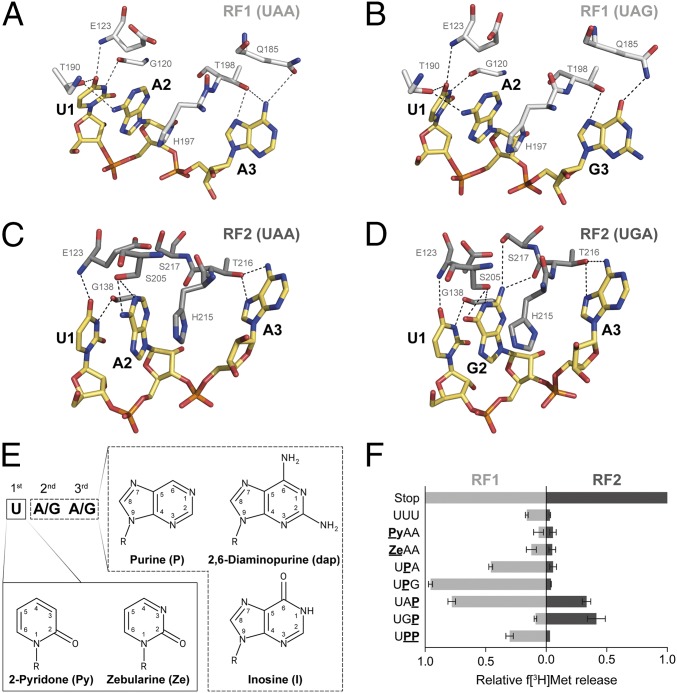
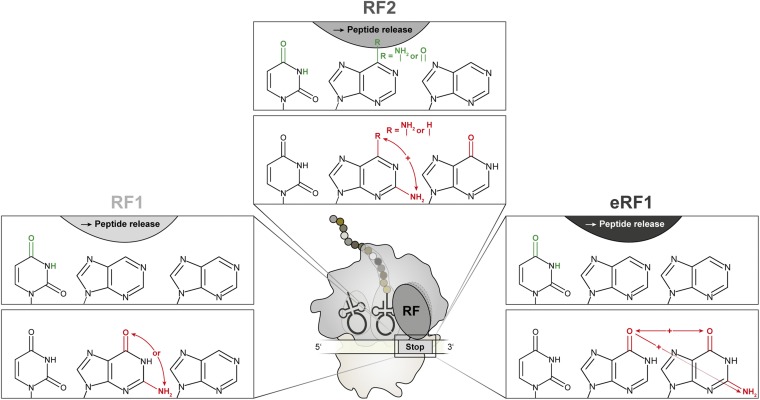
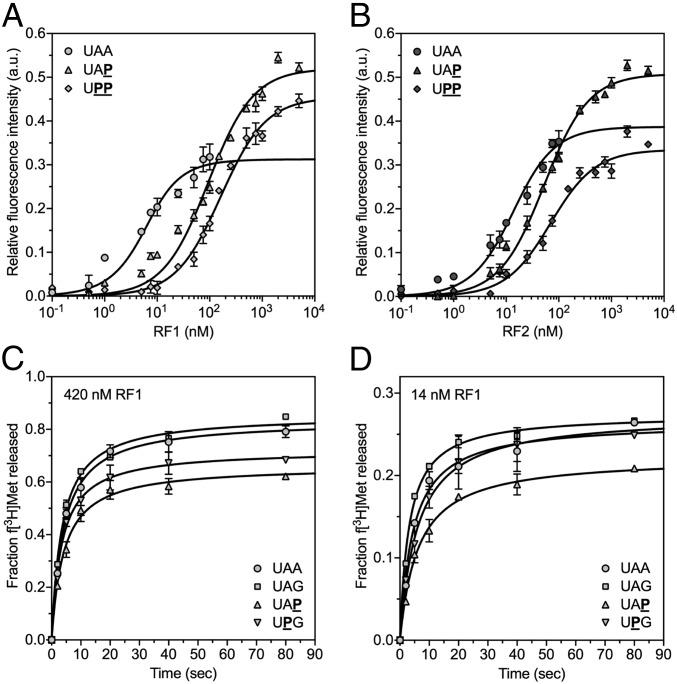
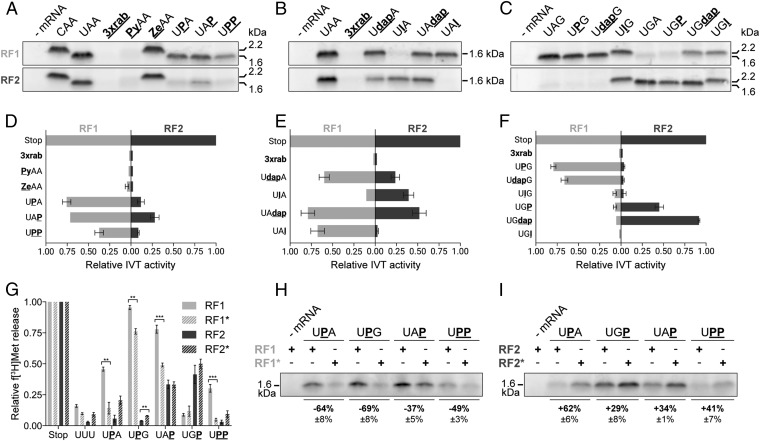
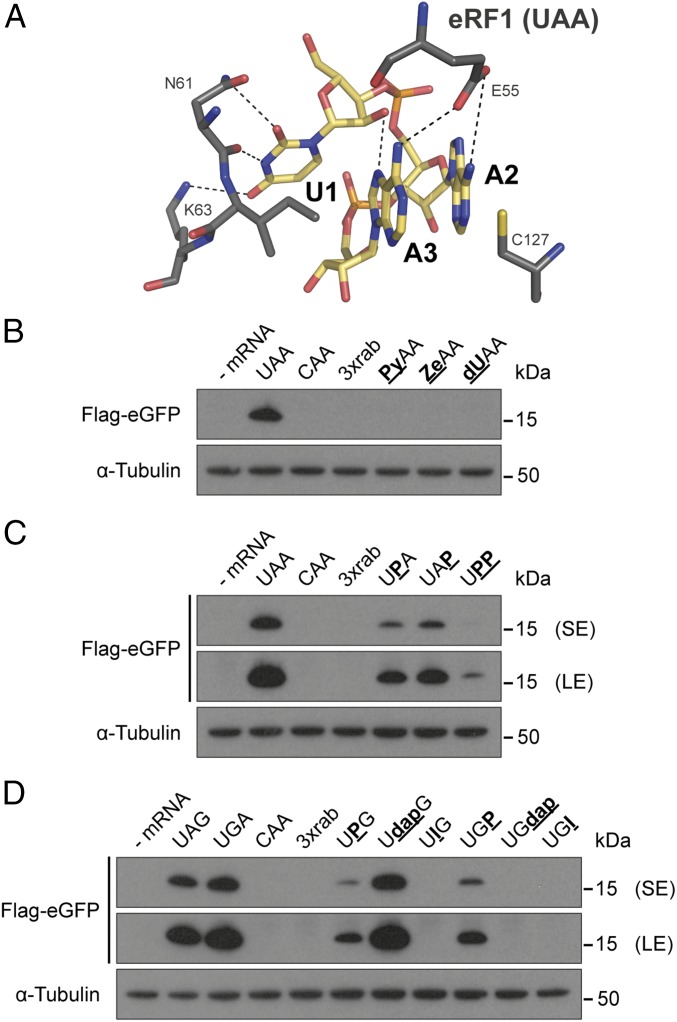
Termination of protein synthesis is triggered by the recognition of a stop codon at the ribosomal A site and is mediated by class I release factors (RFs). Whereas in bacteria, RF1 and RF2 promote termination at UAA/UAG and UAA/UGA stop codons, respectively, eukaryotes only depend on one RF (eRF1) to initiate peptide release at all three stop codons. Based on several structural as well as biochemical studies, interactions between mRNA, tRNA, and rRNA have been proposed to be required for stop codon recognition. In this study, the influence of these interactions was investigated by using chemically modified stop codons. Single functional groups within stop codon nucleotides were substituted to weaken or completely eliminate specific interactions between the respective mRNA and RFs. Our findings provide detailed insight into the recognition mode of bacterial and eukaryotic RFs, thereby revealing the chemical groups of nucleotides that define the identity of stop codons and provide the means to discriminate against noncognate stop codons or UGG sense codons.
蛋白质合成的终止是由核糖体 A 位上终止密码子的识别引发的,并由 I 类释放因子(RFs)介导。在细菌中,RF1 和 RF2 分别促进 UAA/UAG 和 UAA/UGA 终止密码子的终止,而真核生物仅依赖一种 RF(eRF1)在所有三个终止密码子上启动肽释放。基于几项结构和生化研究,已经提出了 mRNA、tRNA 和 rRNA 之间的相互作用对于终止密码子识别是必需的。在这项研究中,通过使用化学修饰的终止密码子来研究这些相互作用的影响。在终止密码子核苷酸中取代单个功能基团,以削弱或完全消除相应的 mRNA 和 RFs 之间的特定相互作用。我们的研究结果提供了对细菌和真核 RFs 识别模式的详细了解,从而揭示了定义终止密码子身份的核苷酸的化学基团,并提供了区分非同源终止密码子或 UGG 有义密码子的手段。