Fujii Nakanori, Hirata Hiroshi, Ueno Koji, Mori Junichi, Oka Shintaro, Shimizu Kosuke, Kawai Yoshihisa, Inoue Ryo, Yamamoto Yoshiaki, Matsumoto Hiroaki, Shimabukuro Tomoyuki, Udoh Koichi, Hoshii Yoshinobu, Dahiya Rajvir, Matsuyama Hideyasu
Department of Urology, Graduate School of Medicine, Yamaguchi University, Ube, Yamaguchi 755-8505, Japan.
Department of Urology, Ube Memorial Hospital, Ube, Yamaguchi 755-0051, Japan.
Oncotarget. 2017 Nov 15;8(66):109877-109888. doi: 10.18632/oncotarget.22436. eCollection 2017 Dec 15.
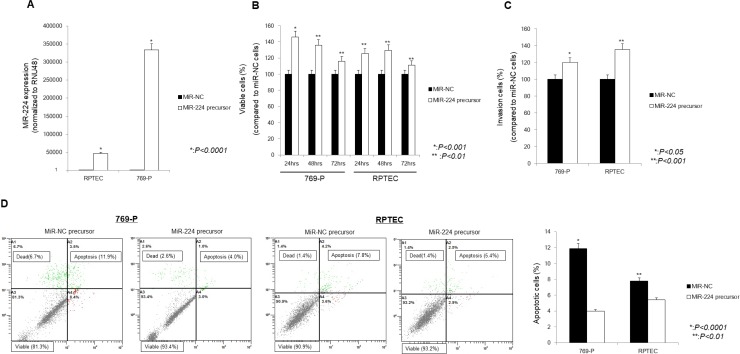
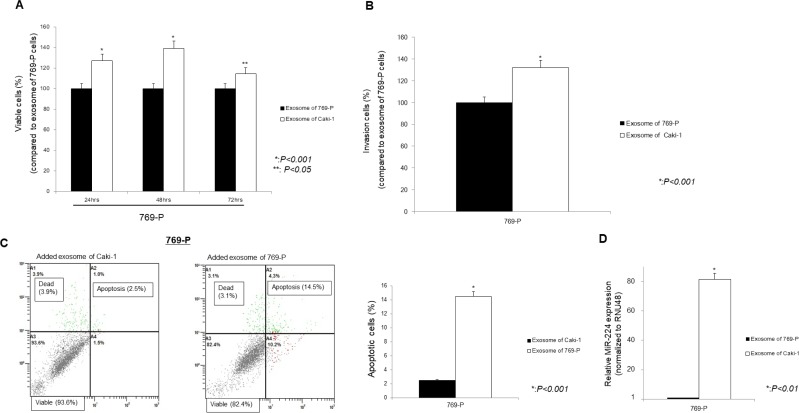
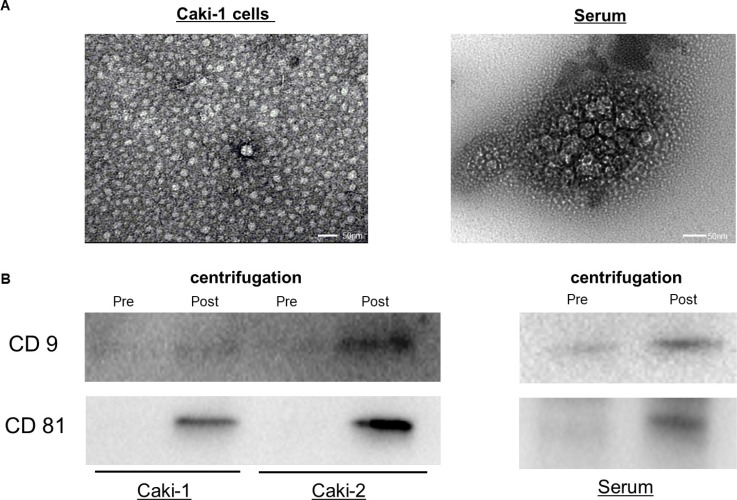
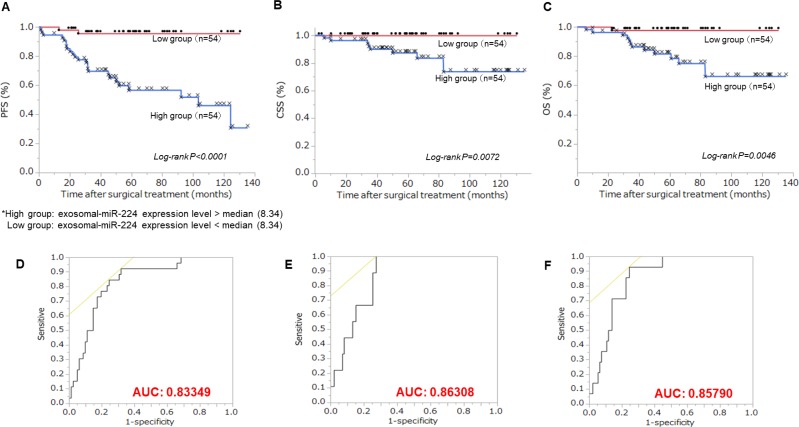
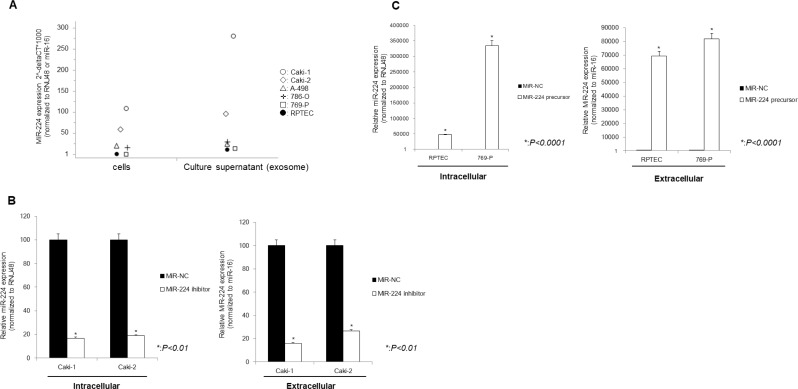
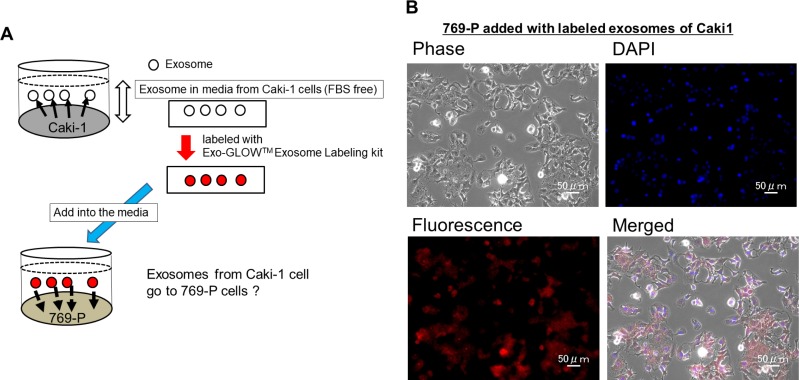
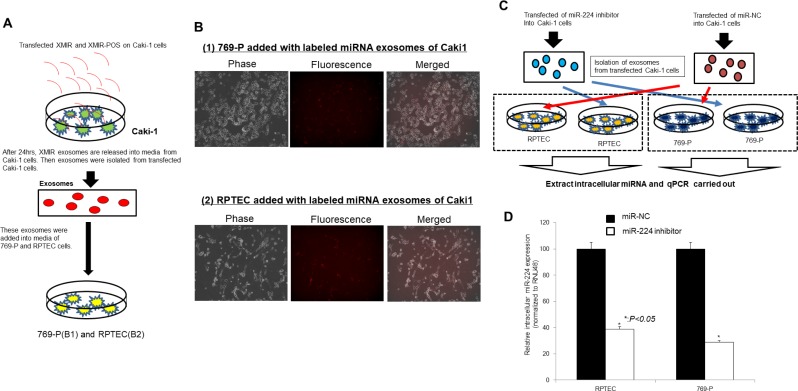
Exosome-miRNAs (exo-miR) have recently been identified as modulators of cancer progression and distant metastasis. We previously found that intracellular miR-224 is up-regulated and significantly related to cancer invasion and metastasis in clear cell renal cell carcinoma (ccRCC). We therefore investigated the role of exosome miR-224 in ccRCC and explored the interaction between intra- and extracellular miR-224 in renal cell carcinoma. To validate the method for isolating exosomes from blood samples or cell culture media, we examined exosome morphology using transmission electron microscope (TEM). We investigated the relationship between exo-miR-224 expression and patient prognosis in 108 ccRCC patients. We isolated exosomes from a metastatic renal cancer cell line and tested their effects on a primary renal cancer cell line with several functional analyses. We found that the high expression level exo-miR-224 group has significantly shorter progression-free survival, cancer-specific survival, and overall survival compared with the low expression group. In multivariate analysis, a high level of exo-miR-224 was a significant risk factor related to all prognoses investigated. After adding exosomes from a metastatic RCC cell line to a primary RCC cell line, cell proliferation and invasion were increased while the percentage of apoptotic cells was significantly decreased. Intracellular levels of miR-224 were significantly up-regulated in the primary renal cancer cell line. Extracellular miR-224 in exosomes impacts on patient prognosis and is a potential prognostic biomarker for ccRCC patients.
外泌体微小RNA(exo-miR)最近被确定为癌症进展和远处转移的调节因子。我们之前发现,在透明细胞肾细胞癌(ccRCC)中,细胞内miR-224上调,且与癌症侵袭和转移显著相关。因此,我们研究了外泌体miR-224在ccRCC中的作用,并探讨了肾细胞癌中细胞内和细胞外miR-224之间的相互作用。为了验证从血液样本或细胞培养基中分离外泌体的方法,我们使用透射电子显微镜(TEM)检查了外泌体形态。我们调查了108例ccRCC患者中exo-miR-224表达与患者预后之间的关系。我们从转移性肾癌细胞系中分离出外泌体,并通过多项功能分析测试了它们对原发性肾癌细胞系的影响。我们发现,与低表达组相比,高表达水平的exo-miR-224组的无进展生存期、癌症特异性生存期和总生存期明显更短。在多变量分析中,高水平的exo-miR-224是与所有研究的预后相关的显著危险因素。将转移性肾癌细胞系的外泌体添加到原发性肾癌细胞系后,细胞增殖和侵袭增加,而凋亡细胞的百分比显著降低。原发性肾癌细胞系中miR-224的细胞内水平显著上调。外泌体中的细胞外miR-224影响患者预后,是ccRCC患者潜在的预后生物标志物。