Liu Kwei-Yan, Wang Li-Ting, Hsu Shih-Hsien
Graduate Institute of Medicine, College of Medicine, Kaohsiung Medical University, Kaohsiung 80708, Taiwan.
Department of Medical Research, Kaohsiung Medical University Hospital, Kaohsiung 80708, Taiwan.
Cancers (Basel). 2018 Jan 3;10(1):8. doi: 10.3390/cancers10010008.
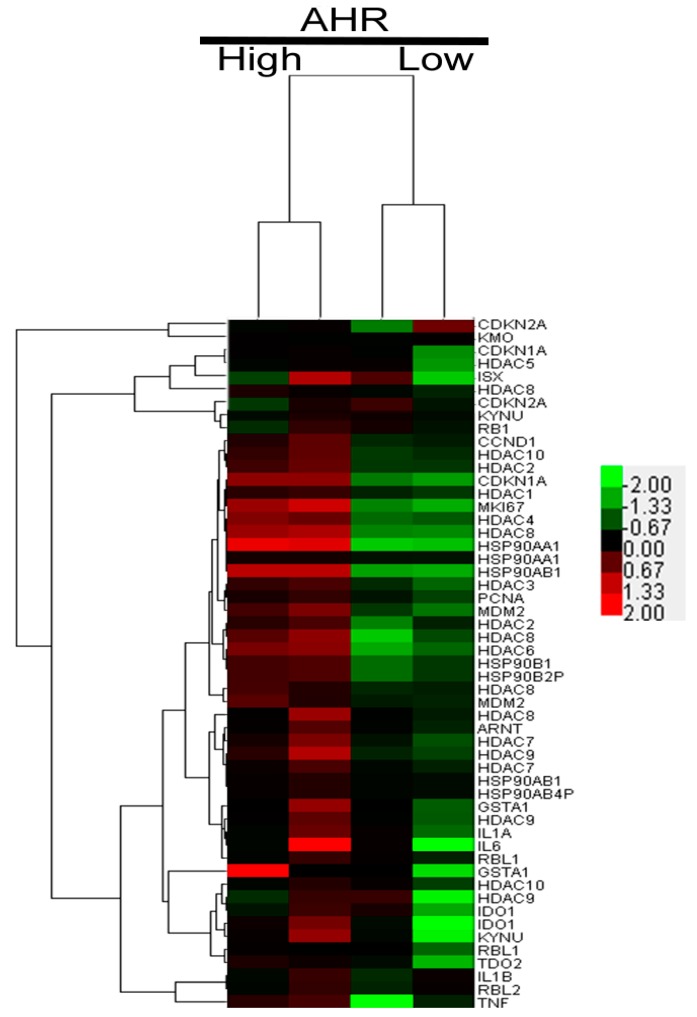
Cells respond to various environmental factors such as nutrients, food intake, and drugs or toxins by undergoing dynamic epigenetic changes. An imbalance in dynamic epigenetic changes is one of the major causes of disease, oncogenic activities, and immunosuppressive effects. The aryl hydrocarbon receptor (AHR) is a unique cellular chemical sensor present in most organs, and its dysregulation has been demonstrated in multiple stages of tumor progression in humans and experimental models; however, the effects of the pathogenic mechanisms of AHR on epigenetic regulation remain unclear. Apart from proto-oncogene activation, epigenetic repressions of tumor suppressor genes are involved in tumor initiation, procession, and metastasis. Reverse epigenetic repression of the tumor suppressor genes by epigenetic enzyme activity inhibition and epigenetic enzyme level manipulation is a potential path for tumor therapy. Current evidence and our recent work on deacetylation of histones on tumor-suppressive genes suggest that histone deacetylase (HDAC) is involved in tumor formation and progression, and treating hepatocellular carcinoma with HDAC inhibitors can, at least partially, repress tumor proliferation and transformation by recusing the expression of tumor-suppressive genes such as and .
细胞通过经历动态表观遗传变化来响应各种环境因素,如营养物质、食物摄入以及药物或毒素。动态表观遗传变化的失衡是疾病、致癌活性和免疫抑制作用的主要原因之一。芳烃受体(AHR)是一种存在于大多数器官中的独特细胞化学传感器,其失调已在人类肿瘤进展的多个阶段以及实验模型中得到证实;然而,AHR致病机制对表观遗传调控的影响仍不清楚。除了原癌基因激活外,肿瘤抑制基因的表观遗传抑制也参与肿瘤的起始、进展和转移。通过抑制表观遗传酶活性和操纵表观遗传酶水平来逆转肿瘤抑制基因的表观遗传抑制是肿瘤治疗的一条潜在途径。目前的证据以及我们最近关于肿瘤抑制基因上组蛋白去乙酰化的研究表明,组蛋白去乙酰化酶(HDAC)参与肿瘤的形成和进展,用HDAC抑制剂治疗肝细胞癌至少可以部分地通过恢复肿瘤抑制基因如 和 的表达来抑制肿瘤增殖和转化。