Department of Life Sciences, Faculty of Science and Technology University of Westminster, London W1W 6UW, UK.
School of Sport, Exercise and Rehabilitation Sciences, University of Birmingham, Birmingham B15 2TT, UK.
Nutrients. 2018 Jan 3;10(1):37. doi: 10.3390/nu10010037.
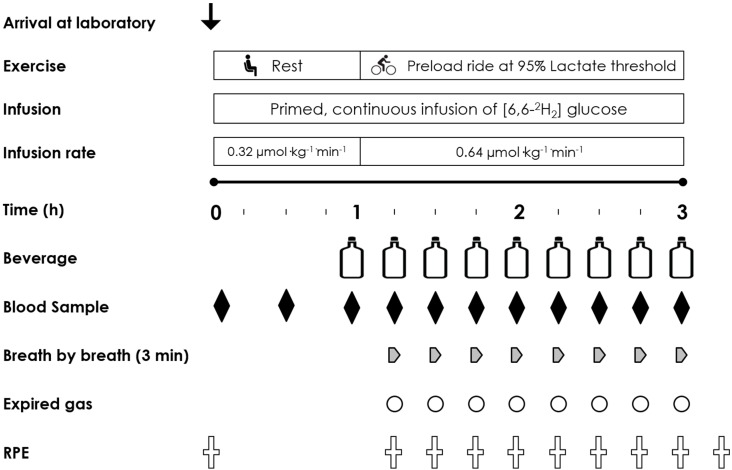
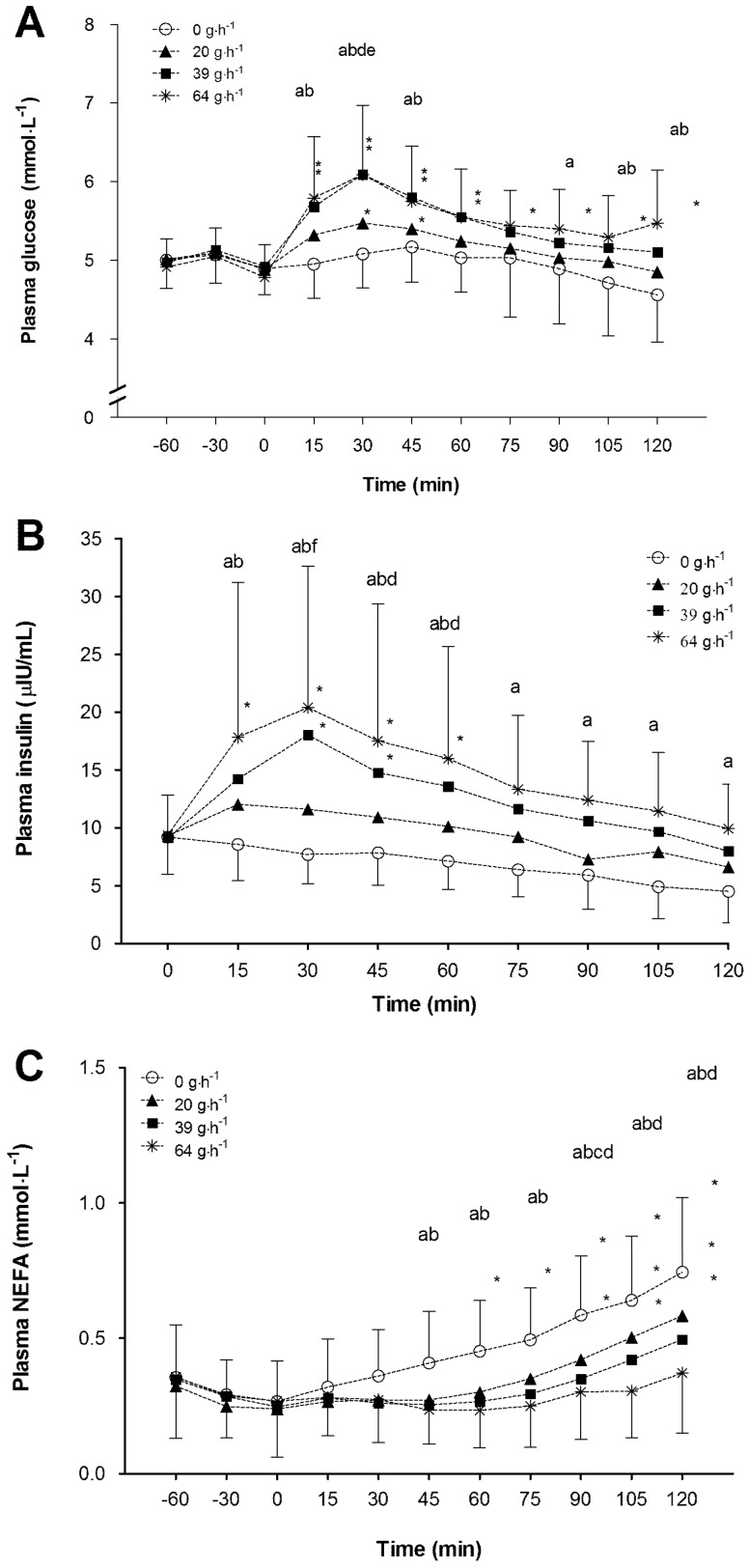
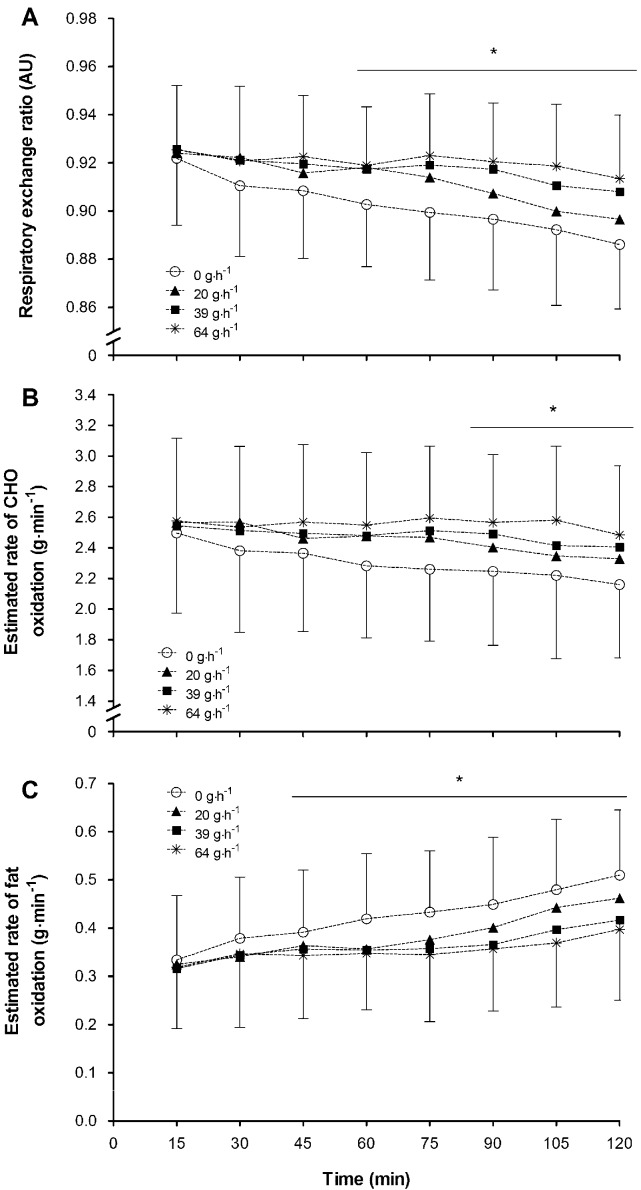
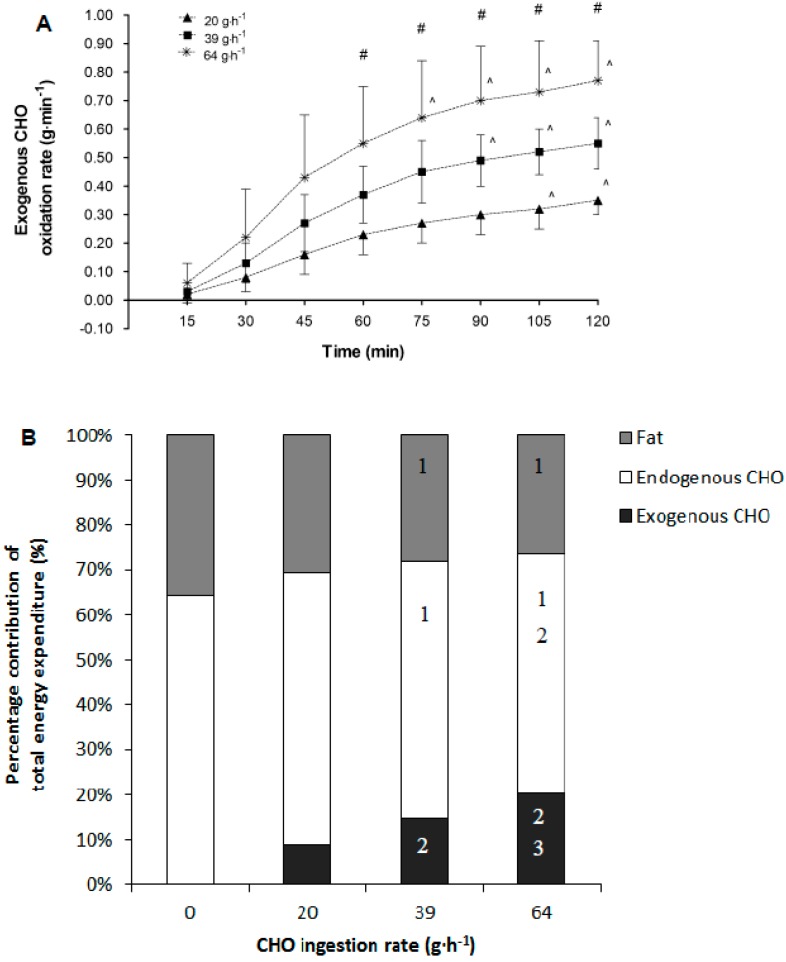
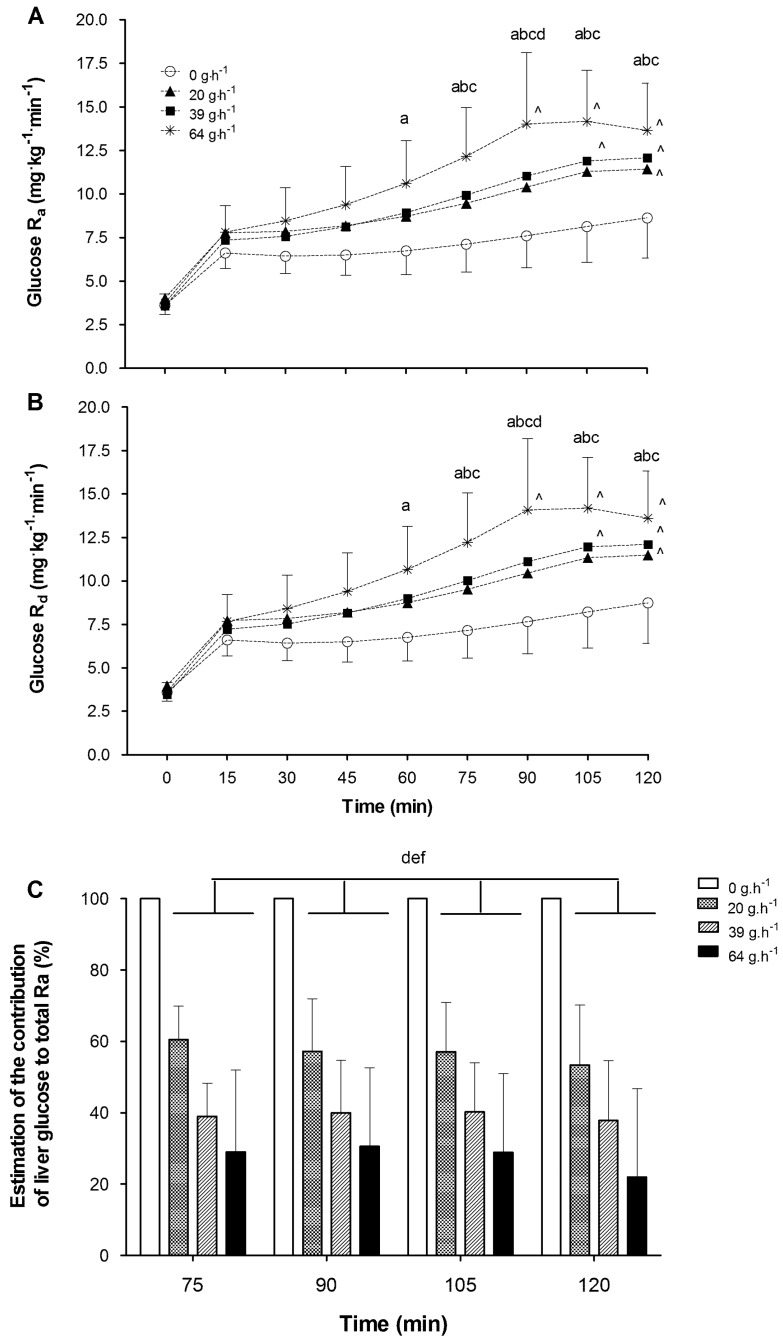
Carbohydrate (CHO) ingestion during exercise lasting less than three hours improves endurance exercise performance but there is still debate about the optimal dose. We utilised stable isotopes and blood metabolite profiles to further examine metabolic responses to CHO (glucose only) ingestion in the 20-64 g·h range, and to determine the association with performance outcome. In a double-blind, randomized cross-over design, male cyclists ( = 20, mean ± SD, age 34 ± 10 years, mass 75.8 ± 9 kg, peak power output 394 ± 36 W, VO 62 ± 9 mL·kg·min) completed four main experimental trials. Each trial involved a two-hour constant load ride (185 ± 25 W) followed by a time trial, where one of three CHO beverages, or a control (water), were administered every 15 min, providing 0, 20, 39 or 64 g CHO·h. Dual glucose tracer techniques, indirect calorimetry and blood analyses were used to determine glucose kinetics, exogenous CHO oxidation (EXO), endogenous CHO and fat oxidation; and metabolite responses. Regression analysis revealed that total exogenous CHO oxidised in the second hour of exercise, and suppression of serum NEFA concentration provided the best prediction model of performance outcome. However, the model could only explain ~19% of the variance in performance outcome. The present data demonstrate that consuming ~40 g·h of CHO appears to be the minimum ingestion rate required to induce metabolic effects that are sufficient to impact upon performance outcome. These data highlight a lack of performance benefit and few changes in metabolic outcomes beyond an ingestion rate of 39 g·h. Further work is required to explore dose-response effects of CHO feeding and associations between multiple metabolic parameters and subsequent performance outcome.
碳水化合物(CHO)在持续时间少于三小时的运动中摄入可提高耐力运动表现,但关于最佳剂量仍存在争议。我们利用稳定同位素和血液代谢物谱进一步研究了 CHO(仅葡萄糖)摄入在 20-64g·h 范围内的代谢反应,并确定了其与运动表现结果的关联。在一项双盲、随机交叉设计中,男性自行车运动员(n=20,平均值±标准差,年龄 34±10 岁,体重 75.8±9kg,最大功率输出 394±36W,VO 62±9mL·kg·min)完成了四项主要的实验试验。每个试验都涉及两个小时的恒负荷骑行(185±25W),随后进行时间试验,其中三种 CHO 饮料中的一种或对照(水)每 15 分钟服用一次,提供 0、20、39 或 64gCHO·h。双葡萄糖示踪技术、间接测热法和血液分析用于确定葡萄糖动力学、外源性 CHO 氧化(EXO)、内源性 CHO 和脂肪氧化;以及代谢物反应。回归分析显示,运动后第二个小时内氧化的总外源性 CHO 以及血清 NEFA 浓度的抑制提供了对运动表现结果的最佳预测模型。然而,该模型只能解释运动表现结果变化的约 19%。本研究数据表明,摄入约 40g·h 的 CHO 似乎是诱导足以影响运动表现结果的代谢效应所需的最低摄入速率。这些数据突出表明,除了 39g·h 的摄入速率外,摄入率超过该值不会带来额外的性能优势和代谢结果的变化。需要进一步研究 CHO 喂养的剂量反应效应以及多个代谢参数与随后的运动表现结果之间的关联。