FAFU and UIUC-SIB Joint Center for Genomics and Biotechnology; Fujian Provincial Key Laboratory of Haixia Applied Plant Systems Biology; Key Laboratory of Genetics, Breeding and Multiple Utilization of Corps, Ministry of Education; College of Life Science; Fujian Agriculture and Forestry University, Fuzhou, 350002, Fujian, China.
Texas A&M AgriLife Research Center at Dallas, Texas A&M University System, Dallas, TX, 75252, USA.
BMC Genomics. 2018 Jan 6;19(1):26. doi: 10.1186/s12864-017-4394-y.
Papain-like cysteine proteases (PLCPs), a large group of cysteine proteases structurally related to papain, play important roles in plant development, senescence, and defense responses. Papain, the first cysteine protease whose structure was determined by X-ray crystallography, plays a crucial role in protecting papaya from herbivorous insects. Except the four major PLCPs purified and characterized in papaya latex, the rest of the PLCPs in papaya genome are largely unknown.
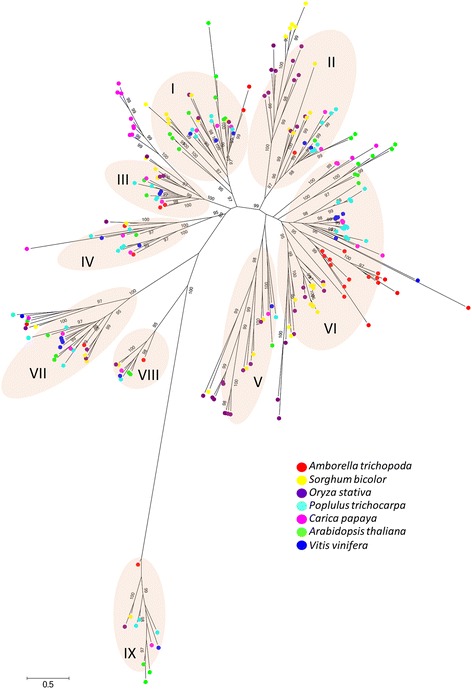
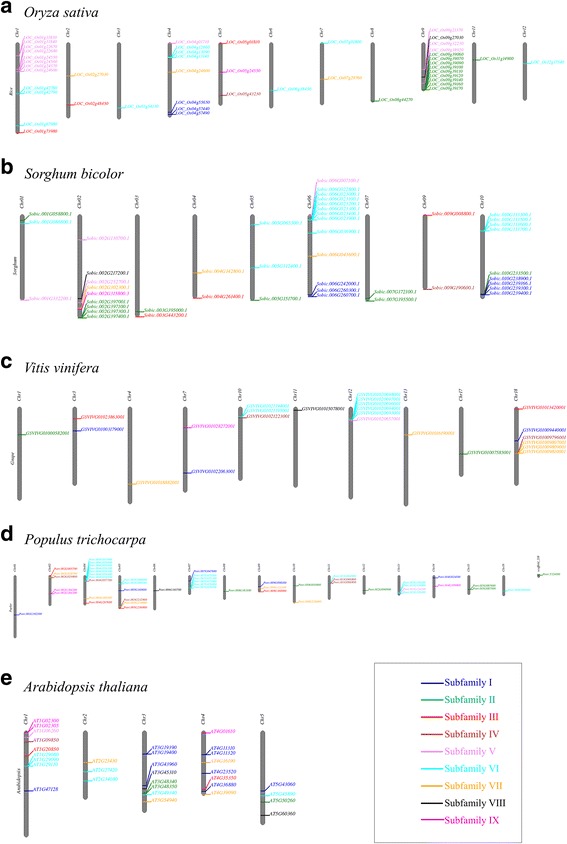
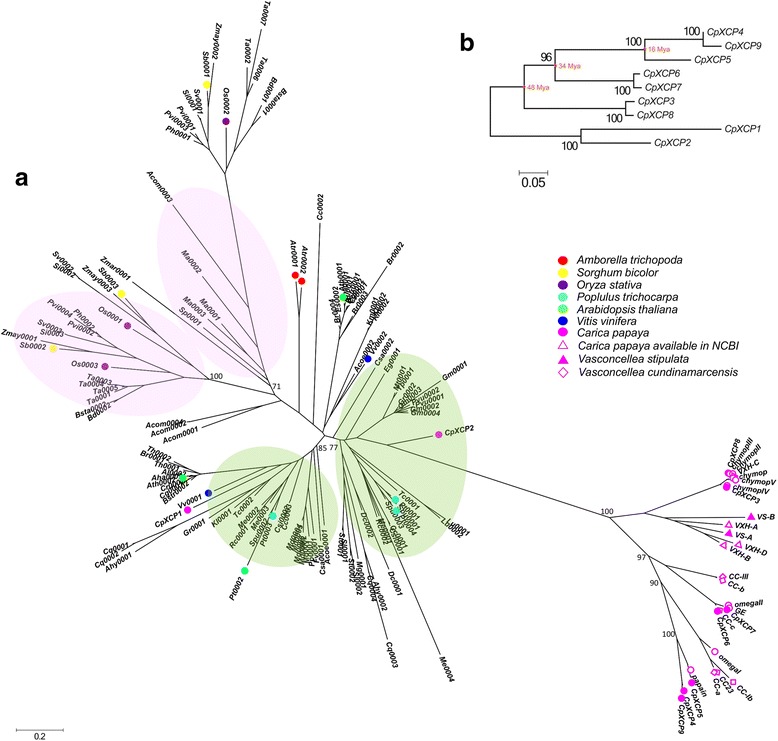
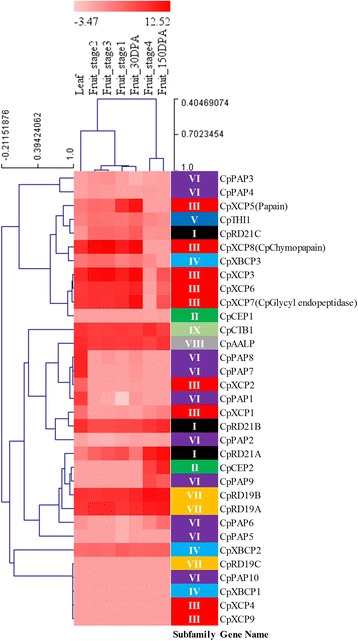
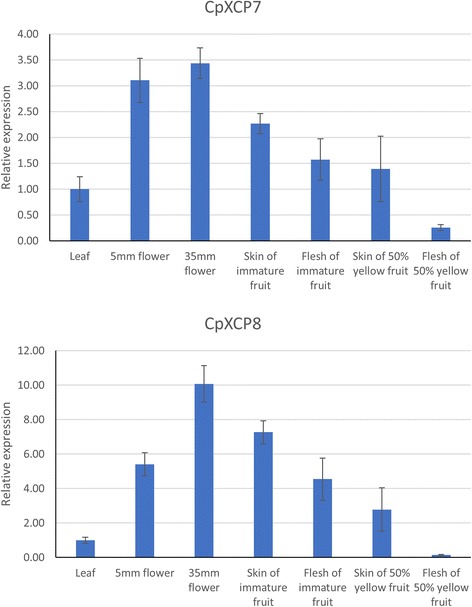
We identified 33 PLCP genes in papaya genome. Phylogenetic analysis clearly separated plant PLCP genes into nine subfamilies. PLCP genes are not equally distributed among the nine subfamilies and the number of PLCPs in each subfamily does not increase or decrease proportionally among the seven selected plant species. Papaya showed clear lineage-specific gene expansion in the subfamily III. Interestingly, all four major PLCPs purified from papaya latex, including papain, chymopapain, glycyl endopeptidase and caricain, were grouped into the lineage-specific expansion branch in the subfamily III. Mapping PLCP genes on chromosomes of five plant species revealed that lineage-specific expansions of PLCP genes were mostly derived from tandem duplications. We estimated divergence time of papaya PLCP genes of subfamily III. The major duplication events leading to lineage-specific expansion of papaya PLCP genes in subfamily III were estimated at 48 MYA, 34 MYA, and 16 MYA. The gene expression patterns of the papaya PLCP genes in different tissues were assessed by transcriptome sequencing and qRT-PCR. Most of the papaya PLCP genes of subfamily III expressed at high levels in leaf and green fruit tissues.
Tandem duplications played the dominant role in affecting copy number of PLCPs in plants. Significant variations in size of the PLCP subfamilies among species may reflect genetic adaptation of plant species to different environments. The lineage-specific expansion of papaya PLCPs of subfamily III might have been promoted by the continuous reciprocal selective effects of herbivore attack and plant defense.
木瓜样半胱氨酸蛋白酶(PLCPs)是一大类结构上与木瓜蛋白酶相关的半胱氨酸蛋白酶,在植物发育、衰老和防御反应中发挥重要作用。木瓜蛋白酶是第一个通过 X 射线晶体学确定结构的半胱氨酸蛋白酶,在保护木瓜免受草食性昆虫侵害方面发挥着至关重要的作用。除了在木瓜乳胶中纯化和表征的四种主要 PLCP 外,木瓜基因组中的其余 PLCP 大部分仍不清楚。
我们在木瓜基因组中鉴定了 33 个 PLCP 基因。系统发育分析清楚地将植物 PLCP 基因分为九个亚家族。PLCP 基因在这九个亚家族中的分布并不均等,并且每个亚家族中的 PLCP 数量在七个选定的植物物种中也没有成比例地增加或减少。木瓜在亚家族 III 中表现出明显的谱系特异性基因扩张。有趣的是,从木瓜乳胶中纯化的四种主要 PLCP,包括木瓜蛋白酶、木瓜凝乳蛋白酶、甘氨酰内肽酶和卡里卡因,都被归为亚家族 III 的谱系特异性扩张分支。将 PLCP 基因映射到五个植物物种的染色体上表明,PLCP 基因的谱系特异性扩张主要来自串联重复。我们估计了亚家族 III 中木瓜 PLCP 基因的分歧时间。导致亚家族 III 中木瓜 PLCP 基因谱系特异性扩张的主要复制事件估计发生在 4800 万年前、3400 万年前和 1600 万年前。通过转录组测序和 qRT-PCR 评估了不同组织中木瓜 PLCP 基因的表达模式。亚家族 III 中的大多数木瓜 PLCP 基因在叶片和绿色果实组织中表达水平较高。
串联重复在影响植物 PLCP 拷贝数方面起着主导作用。物种间 PLCP 亚家族大小的显著差异可能反映了植物物种对不同环境的遗传适应。亚家族 III 中木瓜 PLCP 的谱系特异性扩张可能是由草食性动物攻击和植物防御的持续相互选择作用所促进的。