van Wyk Stefan George, Du Plessis Magdeleen, Cullis Christoper Ashley, Kunert Karl Josef, Vorster Barend Juan
BMC Plant Biol. 2014 Nov 18;14:294. doi: 10.1186/s12870-014-0294-3.
Nodules play an important role in fixing atmospheric nitrogen for soybean growth. Premature senescence of nodules can negatively impact on nitrogen availability for plant growth and, as such, we need a better understanding of nodule development and senescence. Cysteine proteases are known to play a role in nodule senescence, but knowledge is still fragmented regarding the function their inhibitors (cystatins) during the development and senescence of soybean nodules. This study provides the first data with regard to cystatin expression during nodule development combined with biochemical characterization of their inhibition strength.
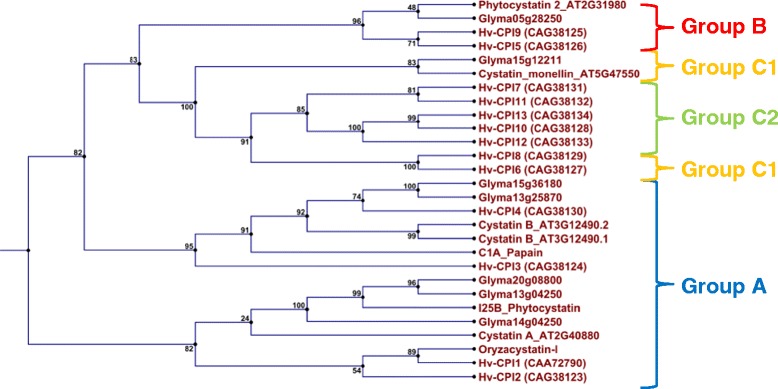
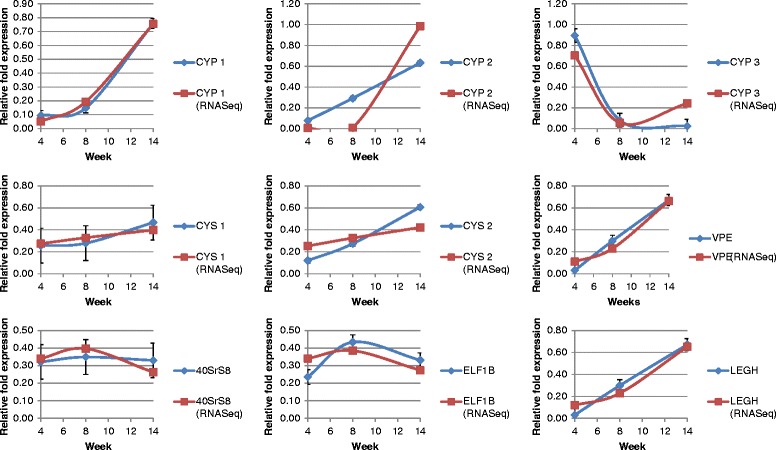
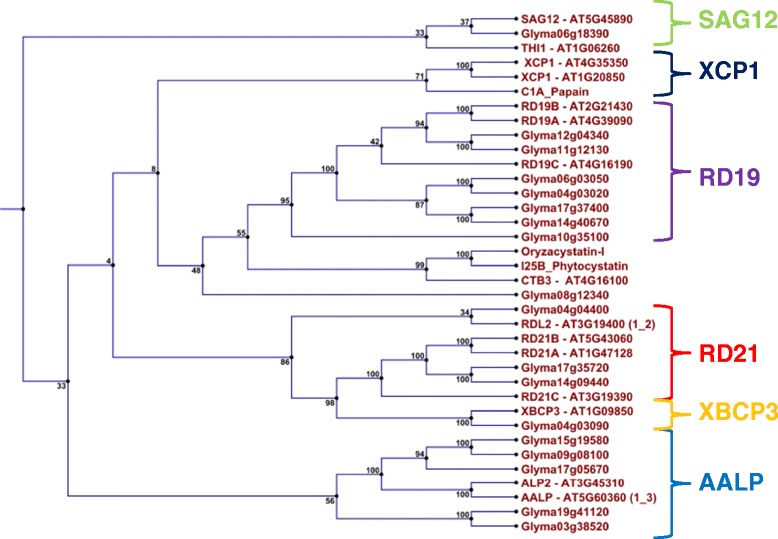
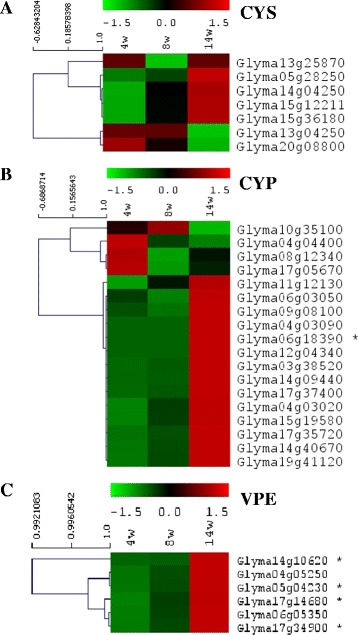
Seventy nine non-redundant cysteine protease gene sequences with homology to papain, belonging to different subfamilies, and several legumain-like cysteine proteases (vacuole processing enzymes) were identified from the soybean genome assembly with eighteen of these cysteine proteases actively transcribed during nodule development and senescence. In addition, nineteen non-redundant cystatins similar to oryzacystatin-I and belonging to cystatin subgroups A and C were identified from the soybean genome assembly with seven actively transcribed in nodules. Most cystatins had preferential affinity to cathepsin L-like cysteine proteases. Transcription of cystatins Glyma05g28250, Glyma15g12211, Glyma15g36180 particularly increased during onset of senescence, possibly regulating proteolysis when nodules senesce and undergo programmed cell death. Both actively transcribed and non-actively transcribed nodule cystatins inhibited cathepsin-L- and B-like activities in different age nodules and they also inhibited papain and cathepsin-L activity when expressed and purified from bacterial cells.
Overlap in activities and specificities of actively and non-actively transcribed cystatins raises the question if non-transcribed cystatins provide a reservoir for response to particular environments. This data might be applicable to the development of strategies to extend the active life span of nodules or prevent environmentally induced senescence.
根瘤在大豆生长过程中固定大气氮方面发挥着重要作用。根瘤过早衰老会对植物生长所需的氮素供应产生负面影响,因此,我们需要更好地了解根瘤的发育和衰老过程。已知半胱氨酸蛋白酶在根瘤衰老中起作用,但关于其抑制剂(胱抑素)在大豆根瘤发育和衰老过程中的功能,相关知识仍然零散。本研究首次提供了根瘤发育过程中胱抑素表达的数据,并结合了其抑制强度的生化特性。
从大豆基因组组装中鉴定出79个与木瓜蛋白酶同源、属于不同亚家族的非冗余半胱氨酸蛋白酶基因序列,以及几个豆球蛋白样半胱氨酸蛋白酶(液泡加工酶),其中18个半胱氨酸蛋白酶在根瘤发育和衰老过程中活跃转录。此外,从大豆基因组组装中鉴定出19个与水稻胱抑素-I相似、属于胱抑素A和C亚组的非冗余胱抑素,其中7个在根瘤中活跃转录。大多数胱抑素对组织蛋白酶L样半胱氨酸蛋白酶具有优先亲和力。胱抑素Glyma05g28250、Glyma15g12211、Glyma15g36180的转录在衰老开始时尤其增加,可能在根瘤衰老和经历程序性细胞死亡时调节蛋白水解。活跃转录和非活跃转录的根瘤胱抑素均能抑制不同年龄根瘤中的组织蛋白酶L和B样活性,并且当从细菌细胞中表达和纯化时,它们也能抑制木瓜蛋白酶和组织蛋白酶L的活性。
活跃转录和非活跃转录的胱抑素在活性和特异性上的重叠提出了一个问题,即非转录的胱抑素是否为应对特定环境提供了一个储备库。这些数据可能适用于制定延长根瘤活性寿命或防止环境诱导衰老的策略。