O'Mara M Teague, Rikker Sebastian, Wikelski Martin, Ter Maat Andries, Pollock Henry S, Dechmann Dina K N
Department of Migration and Immuno-Ecology, Max Planck Institute for Ornithology, Radolfzell, Germany.
Department of Biology, University of Konstanz, Konstanz, Germany.
R Soc Open Sci. 2017 Dec 20;4(12):171359. doi: 10.1098/rsos.171359. eCollection 2017 Dec.
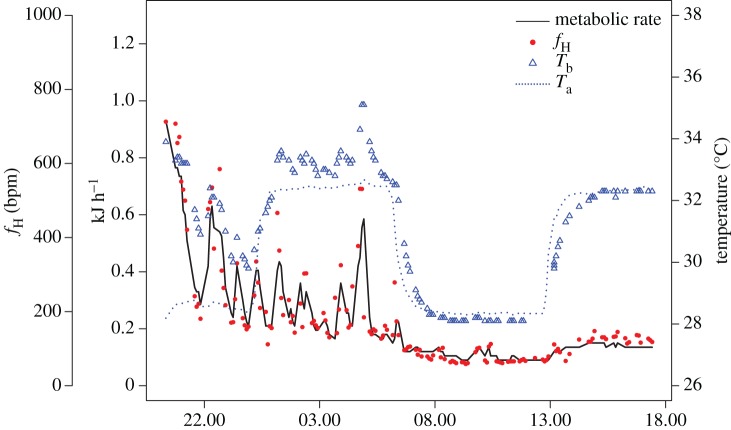
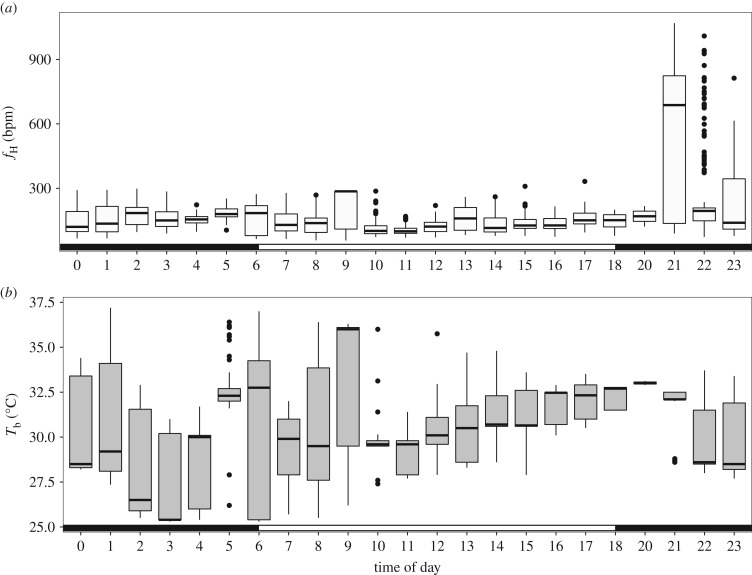
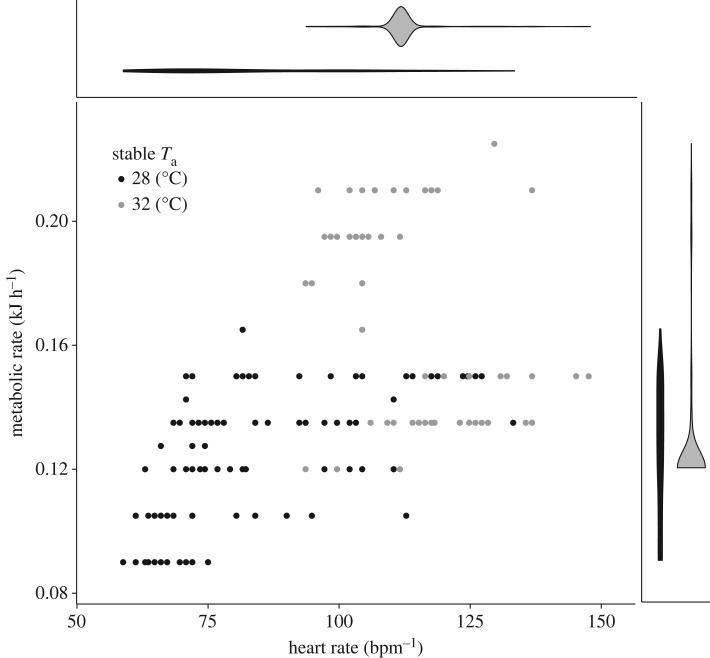
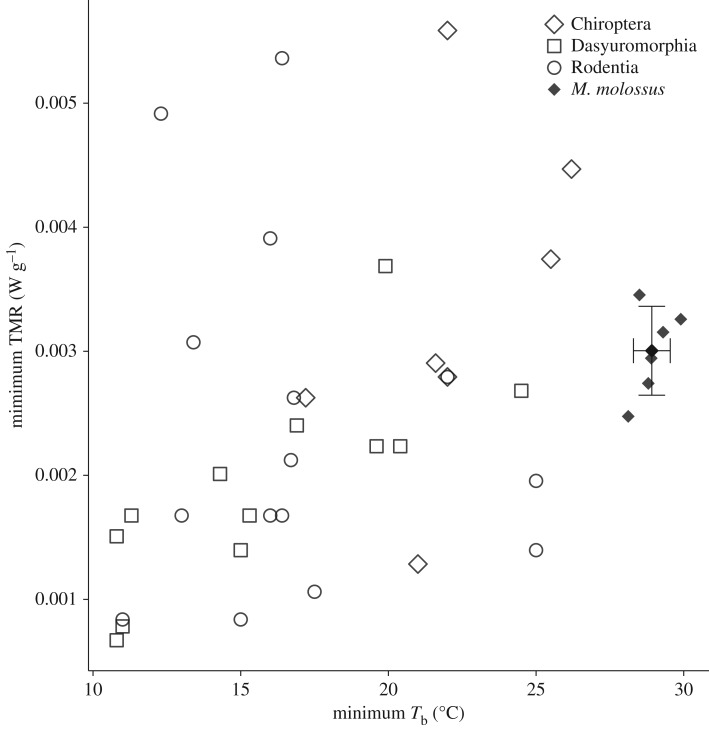
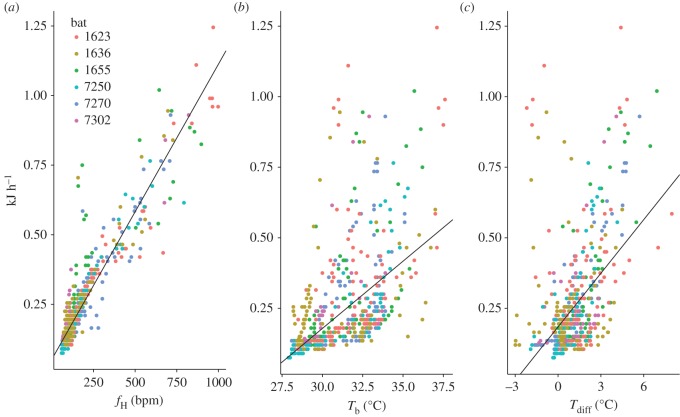
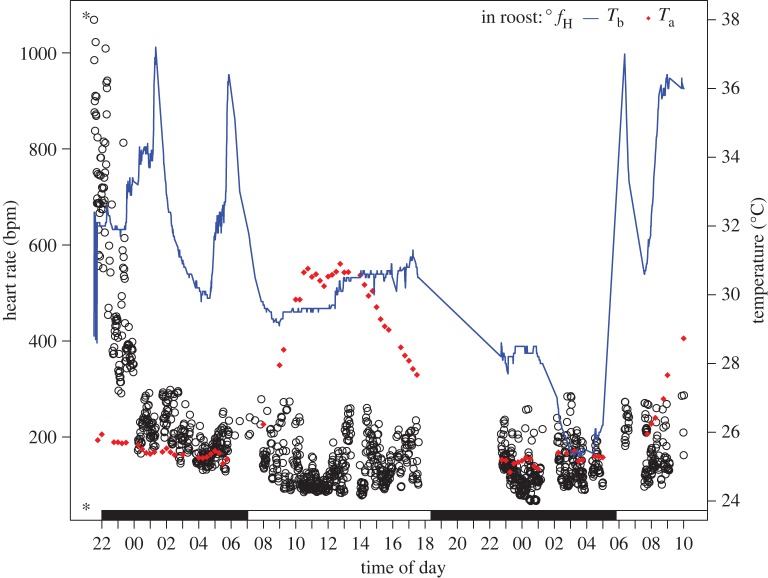
Reduction in metabolic rate and body temperature is a common strategy for small endotherms to save energy. The daily reduction in metabolic rate and heterothermy, or torpor, is particularly pronounced in regions with a large variation in daily ambient temperature. This applies most strongly in temperate bat species (order Chiroptera), but it is less clear how tropical bats save energy if ambient temperatures remain high. However, many subtropical and tropical species use some daily heterothermy on cool days. We recorded the heart rate and the body temperature of free-ranging Pallas' mastiff bats () in Gamboa, Panamá, and showed that these individuals have low field metabolic rates across a wide range of body temperatures that conform to high ambient temperature. Importantly, low metabolic rates in controlled respirometry trials were best predicted by heart rate, and not body temperature enter torpor-like states characterized by low metabolic rate and heart rates at body temperatures of 32°C, and thermoconform across a range of temperatures. Flexible metabolic strategies may be far more common in tropical endotherms than currently known.
代谢率和体温的降低是小型恒温动物节省能量的常见策略。在日环境温度变化较大的地区,代谢率的每日降低以及异温性(即蛰伏)尤为明显。这在温带蝙蝠物种(翼手目)中最为显著,但尚不清楚热带蝙蝠在环境温度持续较高的情况下如何节省能量。然而,许多亚热带和热带物种在凉爽的日子里会出现一些每日异温现象。我们记录了巴拿马甘博阿自由放养的獒蝠()的心率和体温,结果表明,这些个体在符合高环境温度的广泛体温范围内具有较低的野外代谢率。重要的是,在控制呼吸测定试验中,低代谢率最好由心率预测,而非体温。在体温为32°C时进入以低代谢率和心率为特征的类似蛰伏状态,并在一定温度范围内进行体温顺应。灵活的代谢策略在热带恒温动物中可能比目前所知的更为普遍。