Key Laboratory of Animal Physiology and Biochemistry, College of Veterinary Medicine, Nanjing Agricultural University, Nanjing, 210095, China.
BMC Genomics. 2018 Jan 8;19(1):29. doi: 10.1186/s12864-017-4427-6.
Chicken embryos are widely used as a model for studies of obesity; however, no detailed information is available about the dynamic changes of proteins during the regulation of adipose biology and metabolism. Thus, the present study used an isobaric tags for relative and absolute quantitation (iTRAQ)-based proteomic approach to identify the changes in protein abundance at different stages of chicken embryonic development.
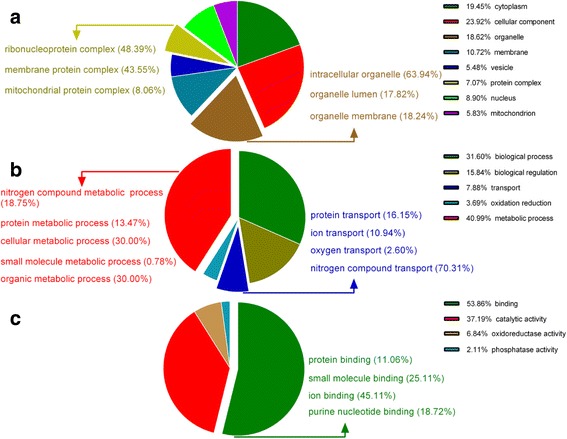
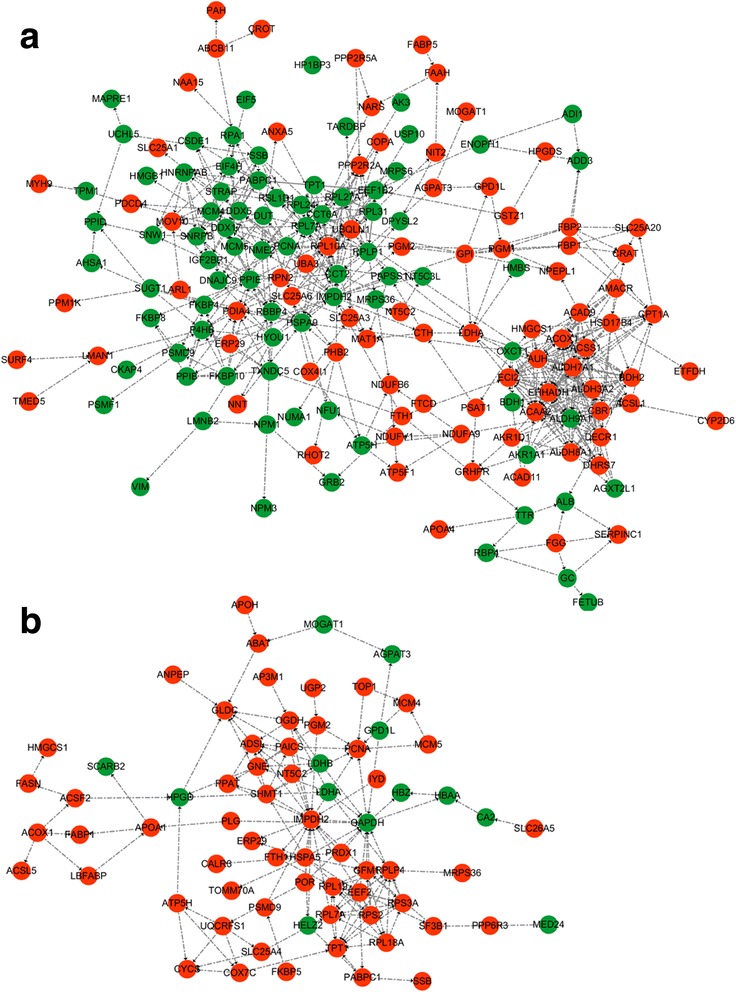
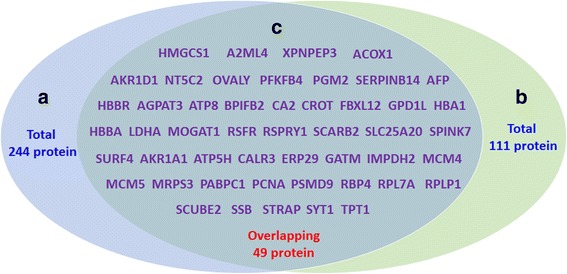
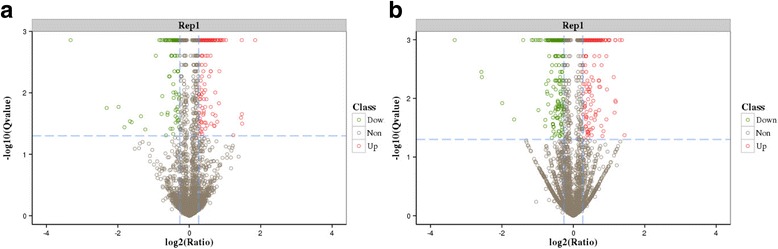
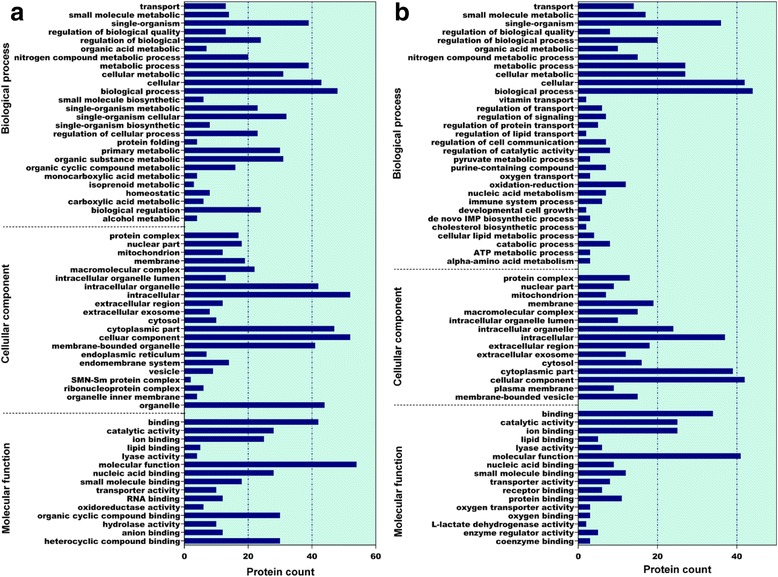
In this study, the abundances of 293 hepatic proteins in 19-day old of chicken embryos compared with 14-day old and 160 hepatic proteins at hatching compared with 19-day old embryos were significantly changed. Pathway analysis showed that fatty acid degradation (upregulated ACAA2, CPT1A, and ACOX1), protein folding (upregulated PDIs, CALR3, LMAN1, and UBQLN1) and gluconeogenesis (upregulated ACSS1, AKR1A1, ALDH3A2, ALDH7A1, and FBP2) were enhanced from embryonic day 14 (E14) to E19 of chicken embryo development. Analysis of the differentially abundant proteins indicated that glycolysis was not the main way to produce energy from E19 to hatching day during chicken embryo development. In addition, purine metabolism was enhanced, as deduced from increased IMPDH2, NT5C, PGM2, and XDH abundances, and the decrease of growth rate could be overcome by increasing the abundance of ribosomal proteins from E19 to the hatching day.
The levels of certain proteins were coordinated with each other to regulate the changes in metabolic pathways to satisfy the requirement for growth and development at different stages of chicken embryo development. Importantly, ACAA2, CPT1A, and ACOX1 might be key factors to control fat deposition during chicken embryonic development. These results provided information showing that chicken is a useful model to further investigate the mechanism of obesity and insulin resistance in humans.
鸡胚胎被广泛用作肥胖研究的模型,但关于脂肪生物学和代谢调节过程中蛋白质的动态变化,尚无详细信息。因此,本研究采用基于同位素标记相对和绝对定量(iTRAQ)的蛋白质组学方法来鉴定鸡胚胎发育不同阶段蛋白质丰度的变化。
在这项研究中,与 14 日龄和 160 日龄孵化相比,19 日龄鸡胚胎肝脏中 293 种蛋白质的丰度发生了显著变化,孵化时肝脏中 160 种蛋白质的丰度发生了显著变化。通路分析表明,脂肪酸降解(上调 ACAA2、CPT1A 和 ACOX1)、蛋白质折叠(上调 PDIs、CALR3、LMAN1 和 UBQLN1)和糖异生(上调 ACSS1、AKR1A1、ALDH3A2、ALDH7A1 和 FBP2)在鸡胚胎发育从 E14 日龄到 E19 日龄增强。差异丰度蛋白分析表明,从 E19 日龄到孵化日,糖酵解不是鸡胚胎发育过程中产生能量的主要方式。此外,嘌呤代谢增强,推断来自于 IMPDH2、NT5C、PGM2 和 XDH 丰度的增加,以及核糖体蛋白丰度从 E19 日龄到孵化日的增加,可以克服生长速度的降低。
某些蛋白质的水平相互协调,调节代谢途径的变化,以满足鸡胚胎发育不同阶段生长和发育的需要。重要的是,ACAA2、CPT1A 和 ACOX1 可能是控制鸡胚胎发育过程中脂肪沉积的关键因素。这些结果提供的信息表明,鸡是一个有用的模型,可以进一步研究人类肥胖和胰岛素抵抗的机制。