Grissmann Sebastian, Faller Josef, Scharinger Christian, Spüler Martin, Gerjets Peter
LEAD Graduate School, University of Tübingen, Tübingen, Germany.
Laboratory for Intelligent Imaging and Neural Computing, Columbia University, New York, NY, United States.
Front Hum Neurosci. 2017 Dec 19;11:616. doi: 10.3389/fnhum.2017.00616. eCollection 2017.
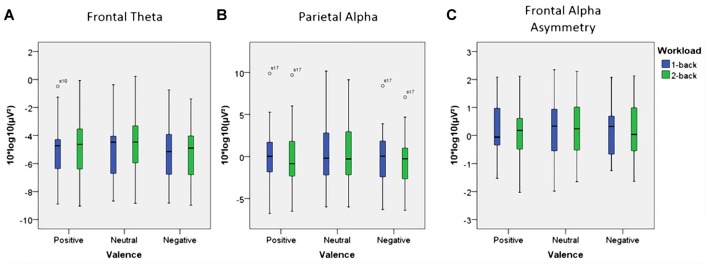
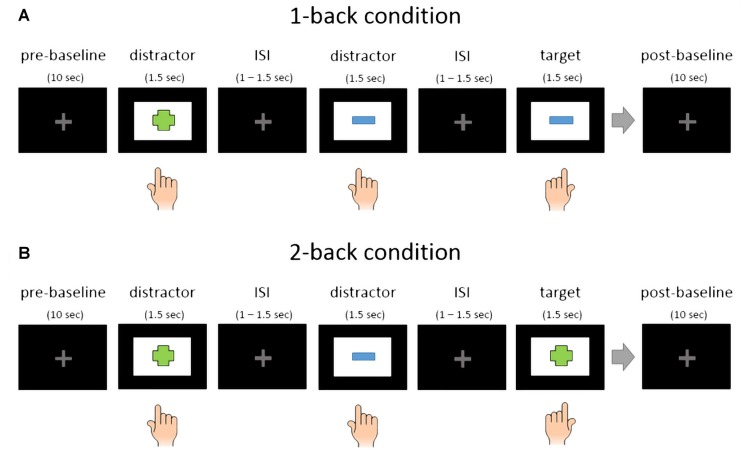
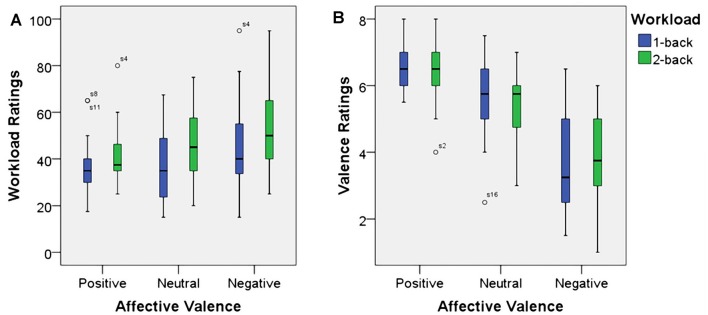
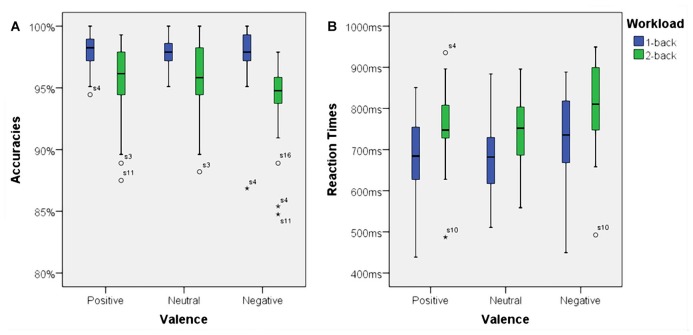
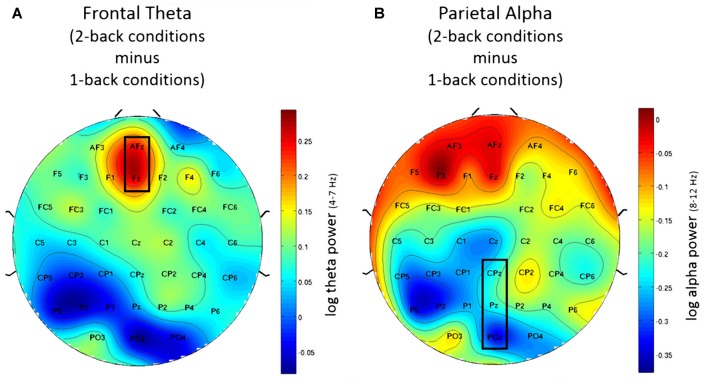
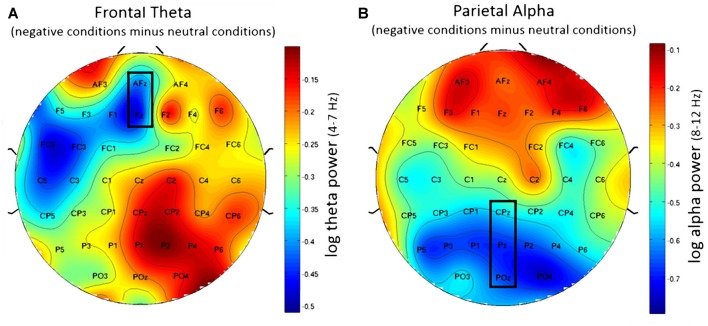
Most brain-based measures of the electroencephalogram (EEG) are used in highly controlled lab environments and only focus on narrow mental states (e.g., working memory load). However, we assume that outside the lab complex multidimensional mental states are evoked. This could potentially create interference between EEG signatures used for identification of specific mental states. In this study, we aimed to investigate more realistic conditions and therefore induced a combination of working memory load and affective valence to reveal potential interferences in EEG measures. To induce changes in working memory load and affective valence, we used a paradigm which combines an N-back task (for working memory load manipulation) with a standard method to induce affect (affective pictures taken from the International Affective Picture System (IAPS) database). Subjective ratings showed that the experimental task was successful in inducing working memory load as well as affective valence. Additionally, performance measures were analyzed and it was found that behavioral performance decreased with increasing workload as well as negative valence, showing that affective valence can have an effect on cognitive processing. These findings are supported by changes in frontal theta and parietal alpha power, parameters used for measuring of working memory load in the EEG. However, these EEG measures are influenced by the negative valence condition as well and thereby show that detection of working memory load is sensitive to affective contexts. Unexpectedly, we did not find any effects for EEG measures typically used for affective valence detection (Frontal Alpha Asymmetry (FAA)). Therefore we assume that the FAA measure might not be usable if cognitive workload is induced simultaneously. We conclude that future studies should account for potential context-specifity of EEG measures.
大多数基于脑电图(EEG)的大脑测量方法都用于高度受控的实验室环境,并且只关注狭窄的心理状态(例如,工作记忆负荷)。然而,我们假设在实验室之外会诱发复杂的多维心理状态。这可能会在用于识别特定心理状态的EEG特征之间产生干扰。在本研究中,我们旨在研究更现实的条件,因此诱导了工作记忆负荷和情感效价的组合,以揭示EEG测量中的潜在干扰。为了诱导工作记忆负荷和情感效价的变化,我们使用了一种范式,该范式将N-back任务(用于工作记忆负荷操纵)与诱导情感的标准方法(从国际情感图片系统(IAPS)数据库中选取的情感图片)相结合。主观评分表明,实验任务成功地诱导了工作记忆负荷以及情感效价。此外,对绩效指标进行了分析,发现行为绩效随着工作量和负性效价的增加而下降,表明情感效价会对认知加工产生影响。这些发现得到了额叶θ波和顶叶α波功率变化的支持,这两个参数用于测量EEG中的工作记忆负荷。然而,这些EEG测量也受到负性效价条件的影响,从而表明工作记忆负荷的检测对情感背景敏感。出乎意料的是,我们没有发现通常用于情感效价检测的EEG测量方法(额叶α波不对称性(FAA))有任何影响。因此,我们假设如果同时诱发认知工作量,FAA测量方法可能不可用。我们得出结论,未来的研究应该考虑EEG测量方法潜在的情境特异性。