Paprocki Rafal, Lenskiy Artem
Korea University of Technology and Education, Cheonan, South Korea.
Front Hum Neurosci. 2017 Dec 19;11:620. doi: 10.3389/fnhum.2017.00620. eCollection 2017.
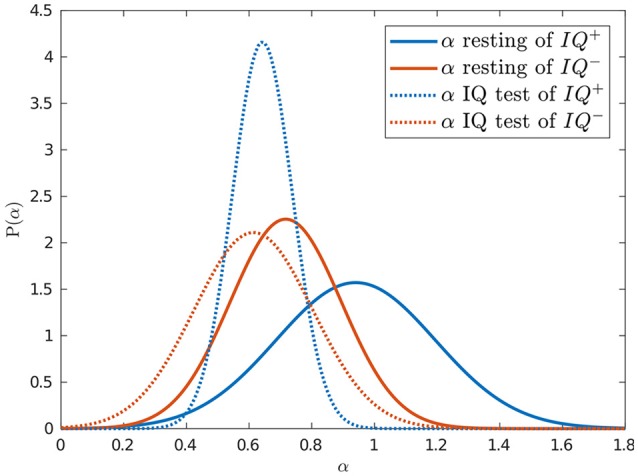
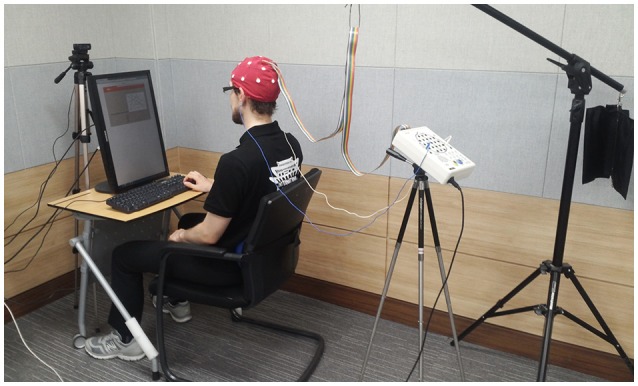
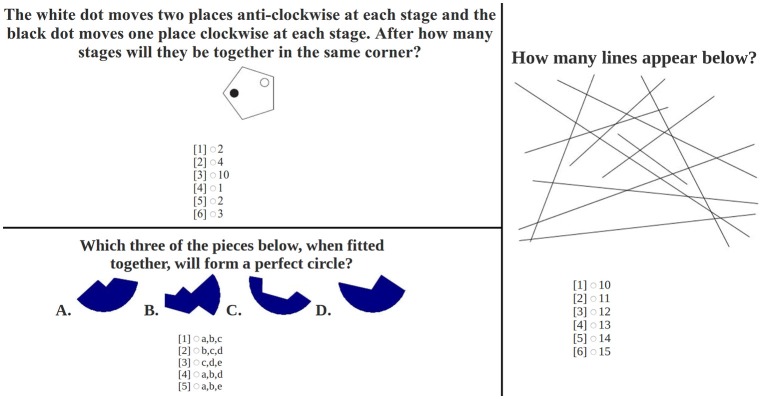
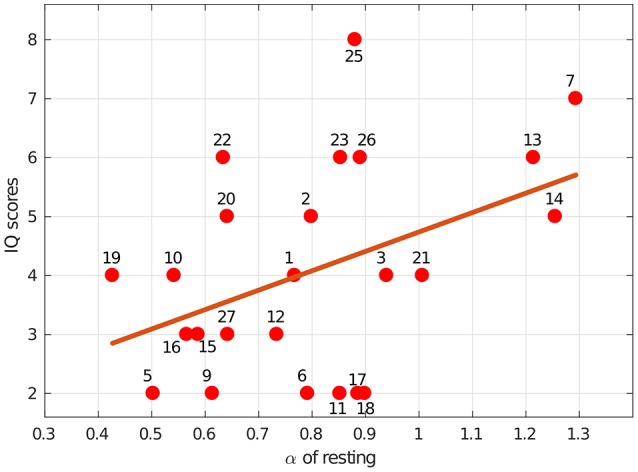
Cognitive performance is defined as the ability to utilize knowledge, attention, memory, and working memory. In this study, we briefly discuss various markers that have been proposed to predict cognitive performance. Next, we develop a novel approach to characterize cognitive performance by analyzing eye-blink rate variability dynamics. Our findings are based on a sample of 24 subjects. The subjects were given a 5-min resting period prior to a 10-min IQ test. During both stages, eye blinks were recorded from Fp1 and Fp2 electrodes. We found that scale exponents estimated for blink rate variability during rest were correlated with subjects' performance on the subsequent IQ test. This surprising phenomenon could be explained by the person to person variation in concentrations of dopamine in PFC and accumulation of GABA in the visual cortex, as both neurotransmitters play a key role in cognitive processes and affect blinking. This study demonstrates the possibility that blink rate variability dynamics at rest carry information about cognitive performance and can be employed in the assessment of cognitive abilities without taking a test.
认知表现被定义为运用知识、注意力、记忆力和工作记忆的能力。在本研究中,我们简要讨论了已被提出用于预测认知表现的各种标志物。接下来,我们开发了一种通过分析眨眼率变异性动态来表征认知表现的新方法。我们的研究结果基于24名受试者的样本。在进行10分钟的智商测试之前,受试者有5分钟的休息时间。在这两个阶段,均从Fp1和Fp2电极记录眨眼情况。我们发现,休息期间为眨眼率变异性估计的标度指数与受试者在随后智商测试中的表现相关。这种令人惊讶的现象可以用前额叶皮质中多巴胺浓度的个体差异以及视觉皮质中γ-氨基丁酸的积累来解释,因为这两种神经递质在认知过程中都起着关键作用并影响眨眼。本研究证明了休息时眨眼率变异性动态携带有关认知表现的信息且可用于在不进行测试的情况下评估认知能力的可能性。