Fairbairn Samantha, McKinnon Alexander, Musarurwa Hannibal T, Ferreira António C, Bauer Florian F
Department of Viticulture and Oenology, Institute for Wine Biotechnology, University of Stellenbosch, Stellenbosch, South Africa.
Escola Superior de Biotecnologia, Universidad Católica Portuguesa, Porto, Portugal.
Front Microbiol. 2017 Dec 19;8:2554. doi: 10.3389/fmicb.2017.02554. eCollection 2017.
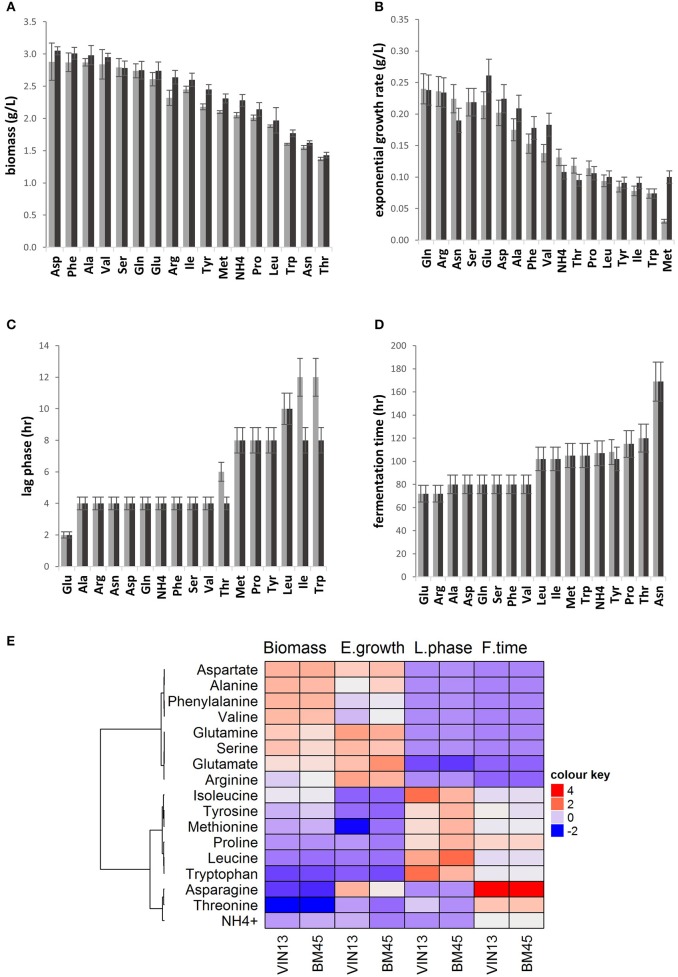
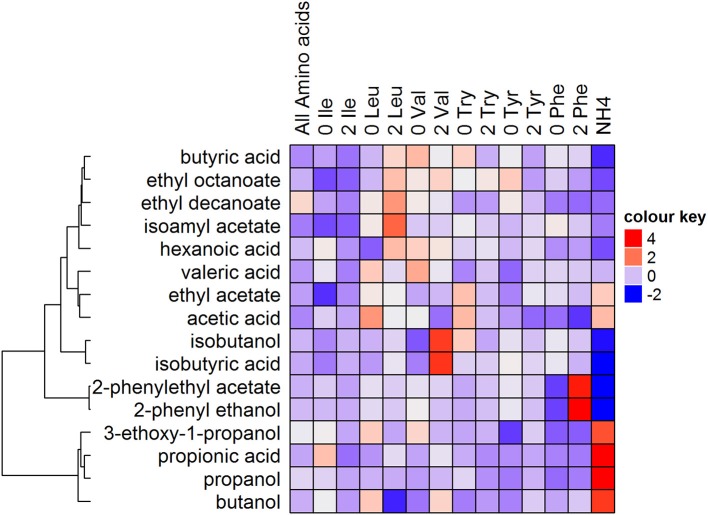
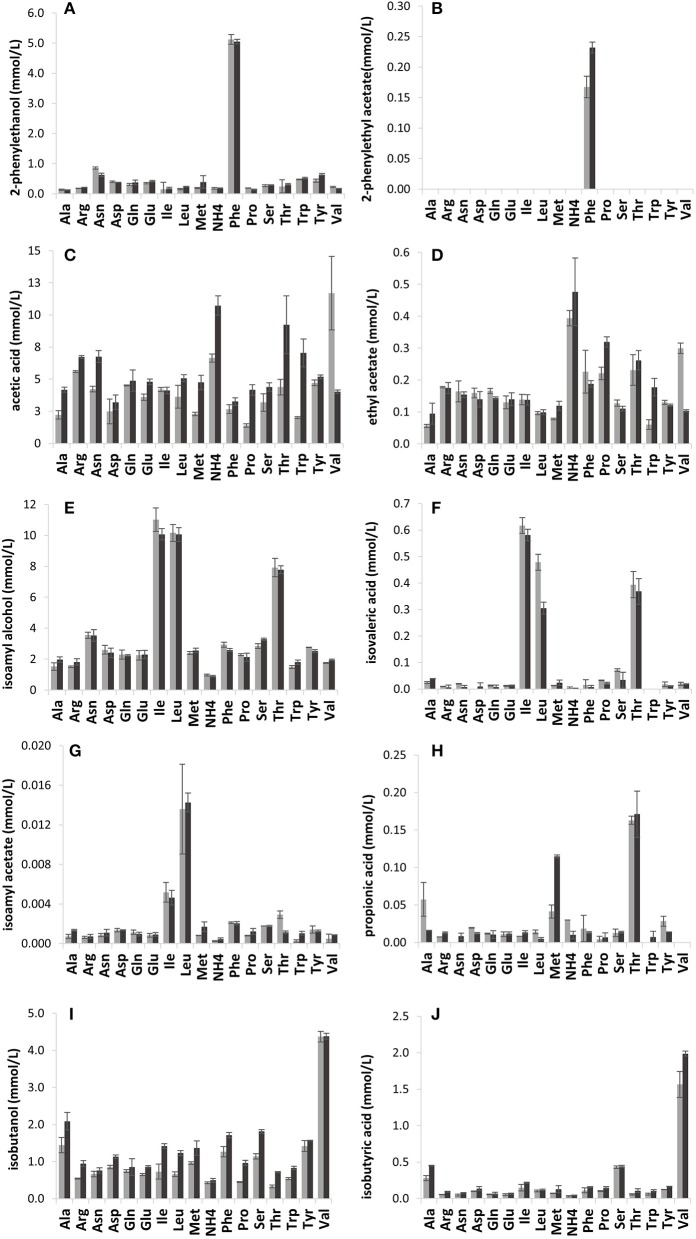
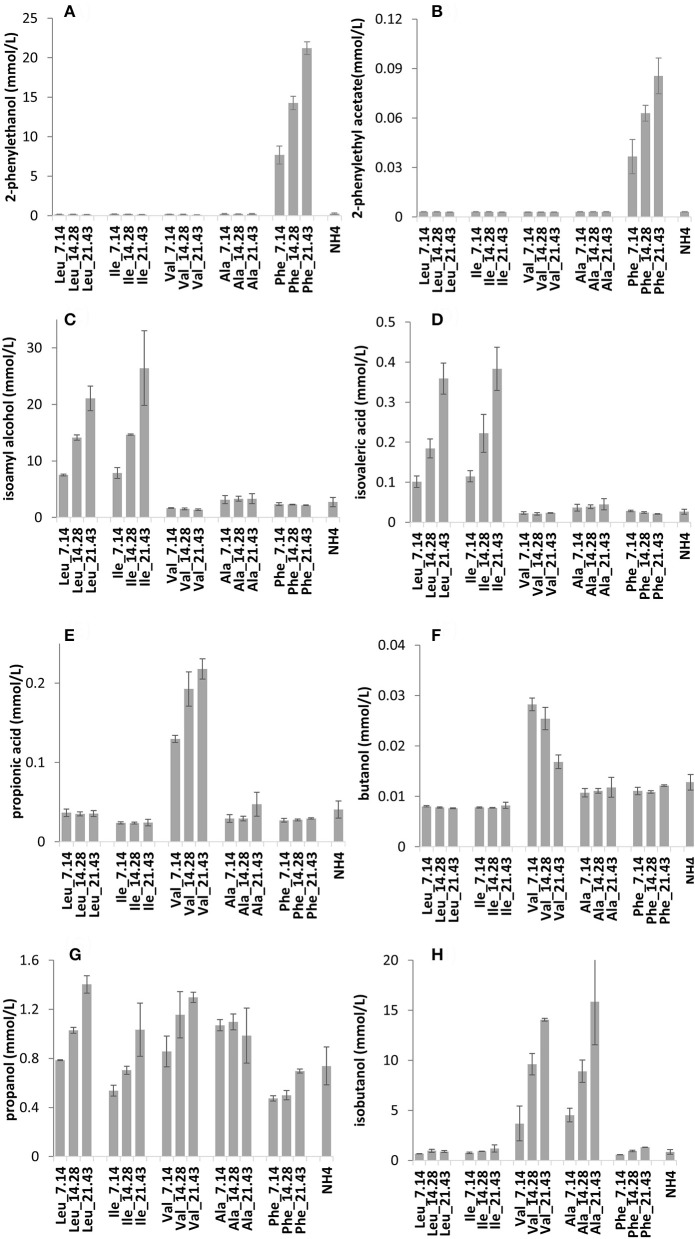
Nitrogen availability and utilization by significantly influence fermentation kinetics and the production of volatile compounds important for wine aroma. Amino acids are the most important nitrogen source and have been classified based on how well they support growth. This study evaluated the effect of single amino acids on growth kinetics and major volatile production of two phenotypically different commercial wine yeast strains in synthetic grape must. Four growth parameters, lag phase, maximum growth rate, total biomass formation and time to complete fermentation were evaluated. In contrast with previous findings, in fermentative conditions, phenylalanine and valine supported growth well and asparagine supported it poorly. The four parameters showed good correlations for most amino acid treatments, with some notable exceptions. Single amino acid treatments resulted in the predictable production of aromatic compounds, with a linear correlation between amino acid concentration and the concentration of aromatic compounds that are directly derived from these amino acids. With the increased complexity of nitrogen sources, linear correlations were lost and aroma production became unpredictable. However, even in complex medium minor changes in amino acid concentration continued to directly impact the formation of aromatic compounds, suggesting that the relative concentration of individual amino acids remains a predictor of aromatic outputs, independently of the complexity of metabolic interactions between carbon and nitrogen metabolism and between amino acid degradation and utilization pathways.
氮的有效性及其利用对发酵动力学以及葡萄酒香气中重要挥发性化合物的产生有显著影响。氨基酸是最重要的氮源,并已根据它们对生长的支持程度进行了分类。本研究评估了单一氨基酸对合成葡萄汁中两种表型不同的商业葡萄酒酵母菌株的生长动力学和主要挥发性物质产生的影响。评估了四个生长参数,即延迟期、最大生长速率、总生物量形成和发酵完成时间。与先前的研究结果相反,在发酵条件下,苯丙氨酸和缬氨酸对生长的支持良好,而天冬酰胺对生长的支持较差。对于大多数氨基酸处理,这四个参数显示出良好的相关性,但也有一些显著的例外。单一氨基酸处理导致了可预测的芳香化合物产生,氨基酸浓度与直接源自这些氨基酸的芳香化合物浓度之间存在线性关系。随着氮源复杂性的增加,线性关系消失,香气产生变得不可预测。然而,即使在复杂培养基中,氨基酸浓度的微小变化仍继续直接影响芳香化合物的形成,这表明单个氨基酸的相对浓度仍然是芳香物质产量的一个预测指标,与碳氮代谢之间以及氨基酸降解和利用途径之间代谢相互作用的复杂性无关。