Filippis Christodoulos, Arens Katharina, Noubissi Nzeteu Gaetan Aime, Reichmann Gabriele, Waibler Zoe, Crauwels Peter, van Zandbergen Ger
Division of Immunology, Paul-Ehrlich-Institut, Langen, Germany.
Immunology, Johannes Gutenberg University of Mainz, Mainz, Germany.
Front Immunol. 2017 Dec 22;8:1880. doi: 10.3389/fimmu.2017.01880. eCollection 2017.
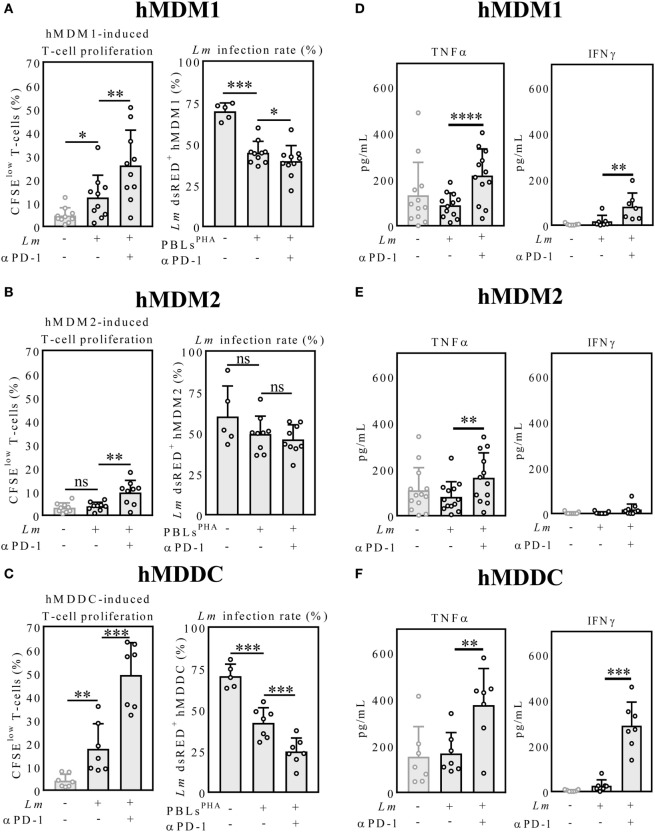
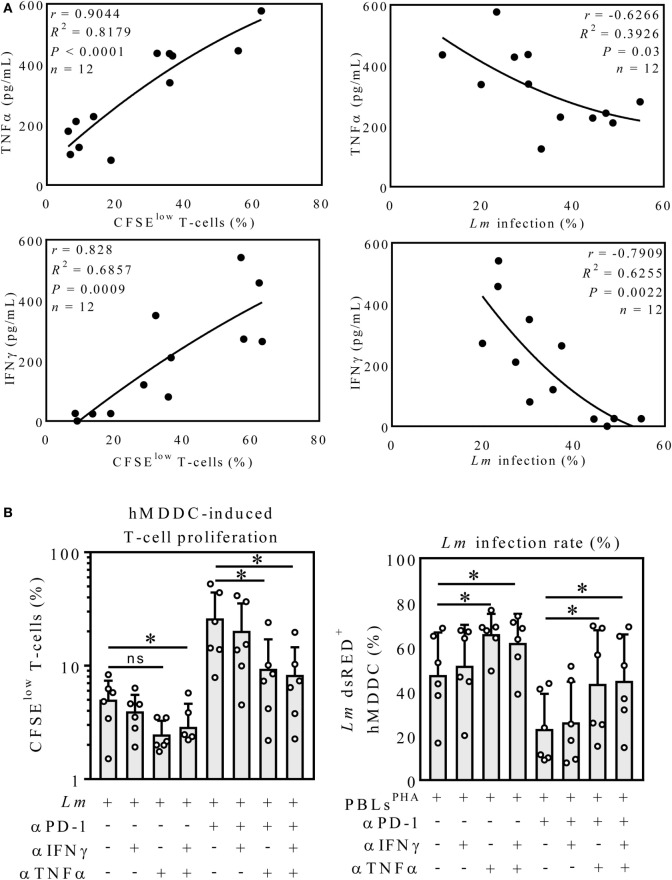
Functional impairment of T-cells and a concomitant augmented expression of programmed death-1 (PD-1) have been observed in visceral leishmaniasis patients, as well as in experimental models for visceral and cutaneous leishmaniasis. The PD-1/PD-1-ligand (PD-1/PD-L) interaction negatively regulates T-cell effector functions, which are required for parasite control during leishmaniasis. The aim of this study was to elucidate the impact of the PD-1/PD-L axis in a human primary infection model of (). Blocking the PD-1/PD-L interaction with nivolumab increased T-cell proliferation and release of the proinflammatory cytokines TNFα and IFNγ during the cocultivation of infected human monocyte-derived macrophages (hMDMs) or dendritic cells (hMDDC) with autologous PD-1-lymphocytes. As a consequence infection decreased, being the most pronounced in hMDDC, compared to proinflammatory hMDM1 and anti-inflammatory hMDM2. Focusing on hMDDC, we could partially reverse effects mediated by PD-1 blockade by neutralizing TNFα but not by neutralizing IFNγ. Furthermore, PD-1 blockade increased intracellular expression of perforin, granulysin, and granzymes in proliferating CD4-T-cells, which might be implicated in reduction of -infected cells. In all, our data describe an important role for the PD-1/PD-L axis upon infection using a human primary cell system. These data contribute to a better understanding of the PD-1-induced T-cell impairment during disease and its influence on immune effector mechanisms to combat infection.
在内脏利什曼病患者以及内脏和皮肤利什曼病的实验模型中,均观察到T细胞功能受损以及程序性死亡-1(PD-1)表达的同时增加。PD-1/PD-1配体(PD-1/PD-L)相互作用对T细胞效应功能产生负调节,而T细胞效应功能是利什曼病期间控制寄生虫所必需的。本研究的目的是阐明PD-1/PD-L轴在人类原发性()感染模型中的影响。在用纳武单抗阻断PD-1/PD-L相互作用后,在感染的人类单核细胞衍生巨噬细胞(hMDM)或树突状细胞(hMDDC)与自体PD-1淋巴细胞共培养期间,T细胞增殖以及促炎细胞因子TNFα和IFNγ的释放增加。结果,感染减少,与促炎性hMDM1和抗炎性hMDM2相比,在hMDDC中最为明显。聚焦于hMDDC,我们可以通过中和TNFα而非中和IFNγ来部分逆转由PD-1阻断介导的效应。此外,PD-1阻断增加了增殖的CD4-T细胞中穿孔素、颗粒溶素和颗粒酶的细胞内表达,这可能与减少感染细胞有关。总之,我们的数据描述了PD-1/PD-L轴在使用人类原代细胞系统进行感染时的重要作用。这些数据有助于更好地理解疾病期间PD-1诱导的T细胞损伤及其对对抗感染的免疫效应机制的影响。