Fukusumi Hayato, Handa Yukako, Shofuda Tomoko, Kanemura Yonehiro
Division of Stem Cell Research, Institute for Clinical Research, Osaka National Hospital, National Hospital Organization, Osaka, Japan.
Division of Regenerative Medicine, Institute for Clinical Research, Osaka National Hospital, National Hospital Organization, Osaka, Japan.
PeerJ. 2018 Jan 4;6:e4187. doi: 10.7717/peerj.4187. eCollection 2018.
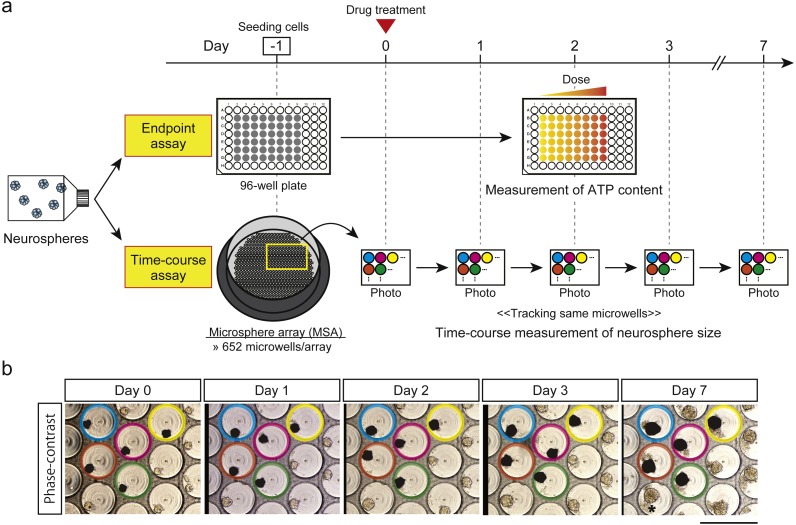
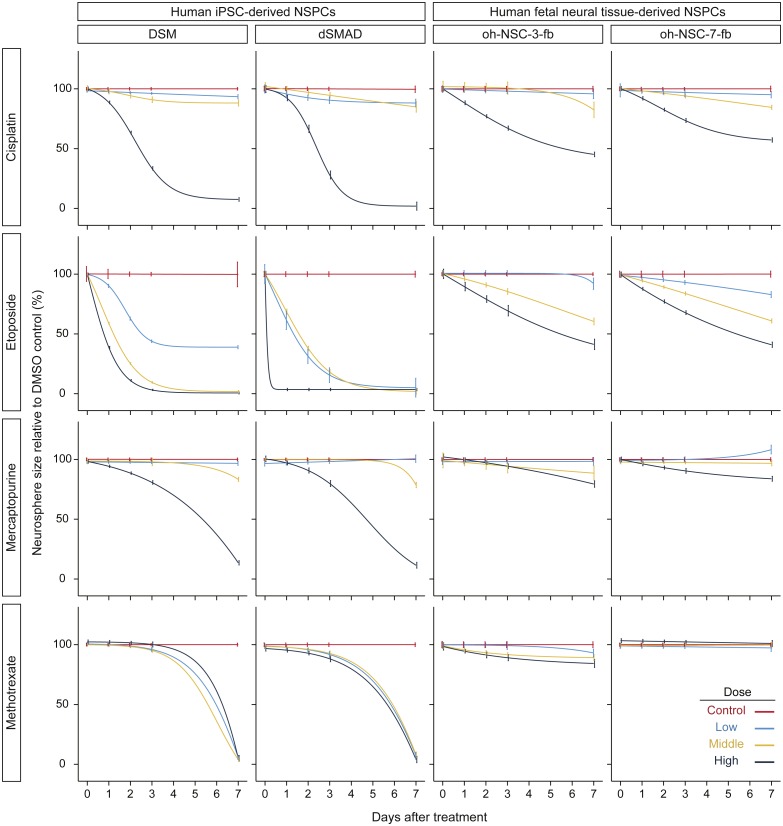
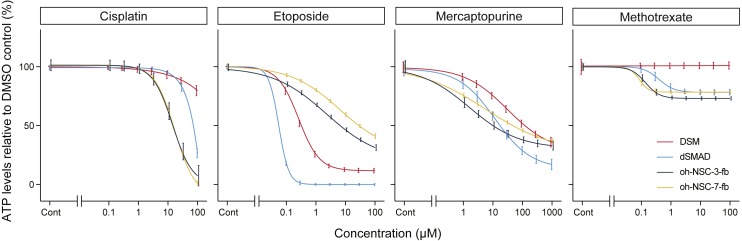
Since the development of human-induced pluripotent stem cells (hiPSCs), various types of hiPSC-derived cells have been established for regenerative medicine and drug development. Neural stem/progenitor cells (NSPCs) derived from hiPSCs (hiPSC-NSPCs) have shown benefits for regenerative therapy of the central nervous system. However, owing to their intrinsic proliferative potential, therapies using transplanted hiPSC-NSPCs carry an inherent risk of undesired growth . Therefore, it is important to find cytotoxic drugs that can specifically target overproliferative transplanted hiPSC-NSPCs without damaging the intrinsic stem-cell system. Here, we examined the chemosensitivity of hiPSC-NSPCs and human neural tissue-derived NSPCs (hN-NSPCs) to the general anticancer drugs cisplatin, etoposide, mercaptopurine, and methotrexate. A time-course analysis of neurospheres in a microsphere array identified cisplatin and etoposide as fast-acting drugs, and mercaptopurine and methotrexate as slow-acting drugs. Notably, the slow-acting drugs were eventually cytotoxic to hiPSC-NSPCs but not to hN-NSPCs, a phenomenon not evident in the conventional endpoint assay on day 2 of treatment. Our results indicate that slow-acting drugs can distinguish hiPSC-NSPCs from hN-NSPCs and may provide an effective backup safety measure in stem-cell transplant therapies.
自从人类诱导多能干细胞(hiPSC)被开发以来,已建立了多种源自hiPSC的细胞用于再生医学和药物开发。源自hiPSC的神经干/祖细胞(NSPC,即hiPSC-NSPC)已显示出对中枢神经系统再生治疗的益处。然而,由于其固有的增殖潜力,使用移植的hiPSC-NSPC进行治疗存在不期望生长的内在风险。因此,找到能够特异性靶向过度增殖的移植hiPSC-NSPC而不损害内在干细胞系统的细胞毒性药物很重要。在这里,我们检测了hiPSC-NSPC和人神经组织来源的NSPC(hN-NSPC)对常用抗癌药物顺铂、依托泊苷、巯嘌呤和甲氨蝶呤的化学敏感性。对微球阵列中的神经球进行的时间进程分析确定顺铂和依托泊苷为速效药物,巯嘌呤和甲氨蝶呤为慢效药物。值得注意的是,慢效药物最终对hiPSC-NSPC具有细胞毒性,但对hN-NSPC没有,这一现象在治疗第2天的传统终点分析中并不明显。我们的结果表明,慢效药物可以区分hiPSC-NSPC和hN-NSPC,并可能在干细胞移植治疗中提供有效的备用安全措施。