Falade-Nwulia O, Sulkowski M S, Merkow A, Latkin C, Mehta S H
Johns Hopkins University School of Medicine, Baltimore, MD, USA.
Johns Hopkins Bloomberg School of Public Health, Baltimore, MD, USA.
J Viral Hepat. 2018 Mar;25(3):220-227. doi: 10.1111/jvh.12859.
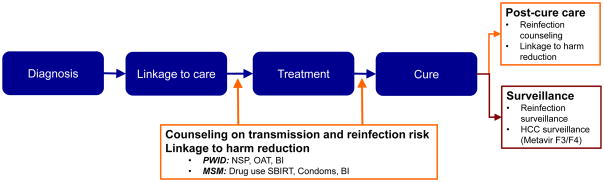
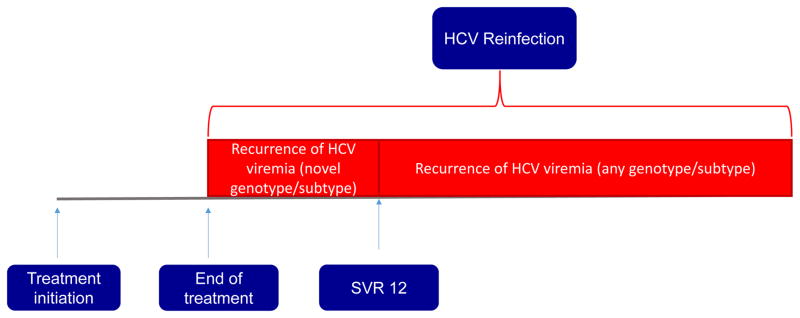
The availability of effective, simple, well-tolerated oral direct-acting antiviral (DAA) hepatitis C regimens has raised optimism for hepatitis C virus (HCV) elimination at the population level. HCV reinfection in key populations such as people who inject drugs (PWID) and HIV-infected men who have sex with men (MSM) however threatens the achievement of this goal from a patient, provider and population perspective. The goal of this review was to synthesize our current understanding of estimated rates and factors associated with HCV reinfection. This review also proposes interventions to aid understanding of and reduce hepatitis C reinfection among PWID and HIV-infected MSM in the oral direct-acting antiviral era.
有效的、简单的、耐受性良好的口服直接抗病毒(DAA)丙肝治疗方案的出现,让人们对在人群层面消除丙型肝炎病毒(HCV)充满了乐观情绪。然而,从患者、医疗服务提供者和人群的角度来看,注射吸毒者(PWID)和感染艾滋病毒的男男性行为者(MSM)等重点人群中的HCV再感染,对实现这一目标构成了威胁。本综述的目的是综合我们目前对HCV再感染的估计率及相关因素的理解。本综述还提出了一些干预措施,以帮助理解并减少口服直接抗病毒时代PWID和感染艾滋病毒的MSM中的丙型肝炎再感染情况。