Department of Biomedical Engineering, Boston University, Boston, MA 02215, USA; The Wyss Institute for Biologically Inspired Engineering at Harvard University, Boston, MA 02115, USA.
Department of Genetics, Harvard Medical School, Boston, MA 02115, USA.
Dev Cell. 2018 Jan 8;44(1):87-96.e5. doi: 10.1016/j.devcel.2017.12.012.
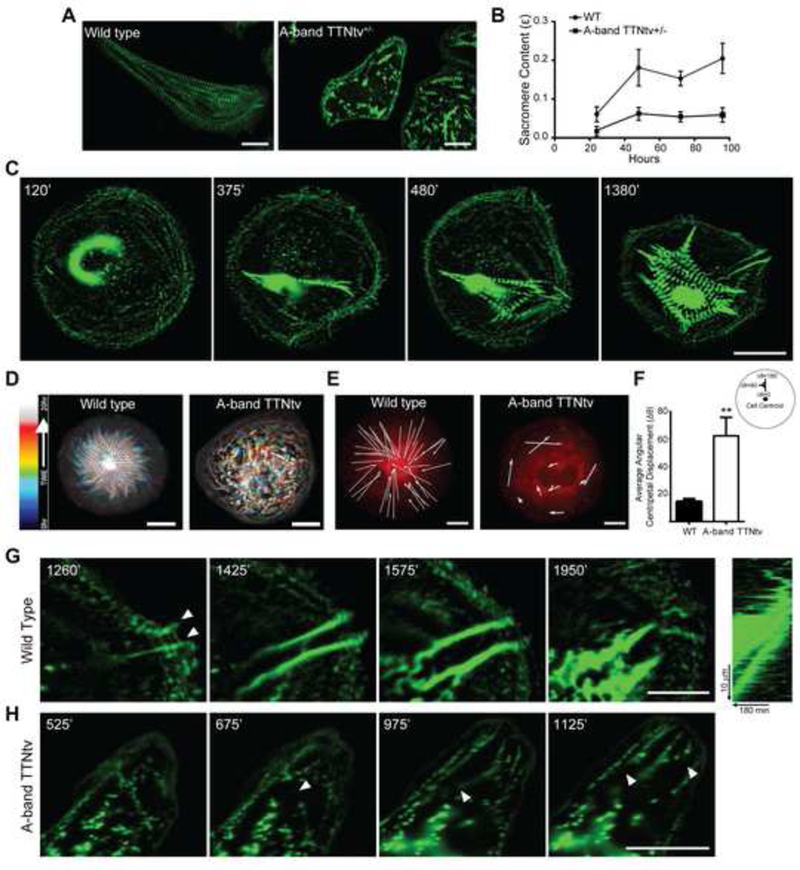
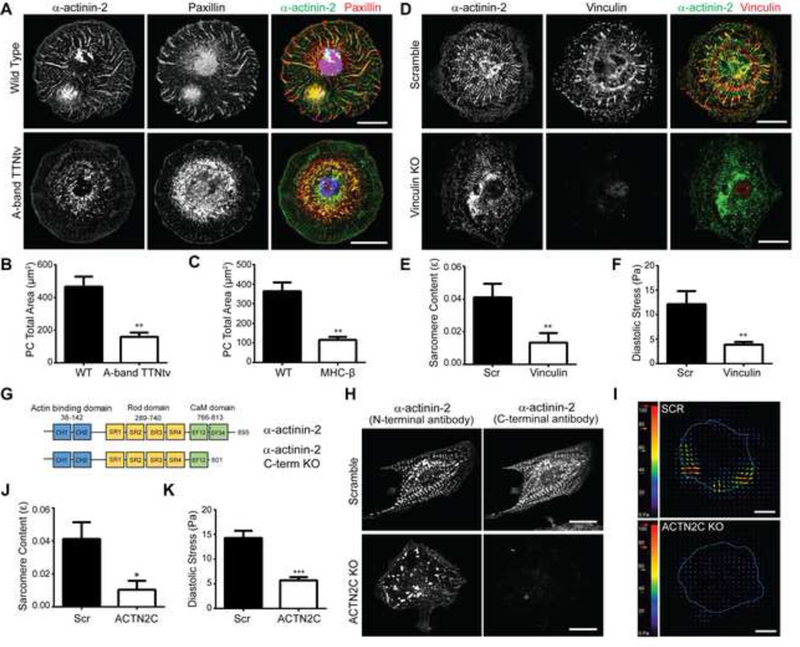
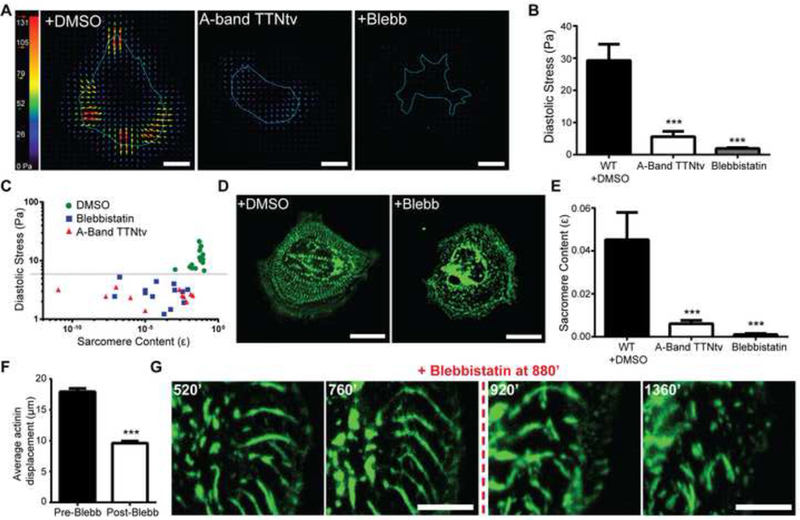
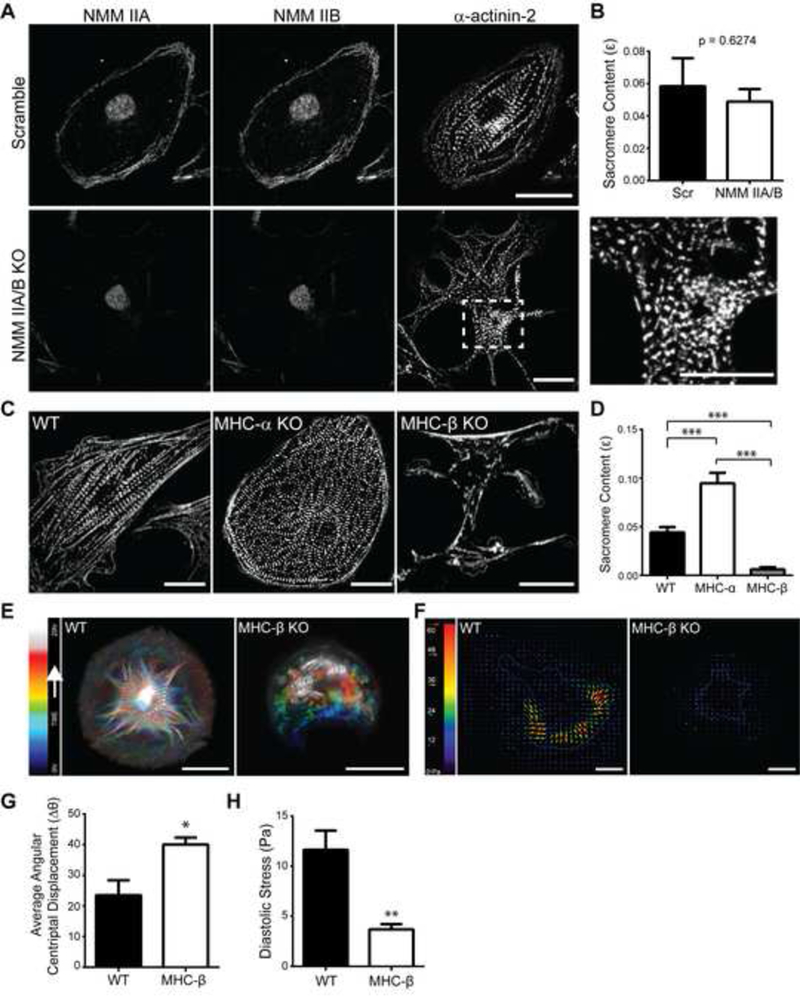
Truncating mutations in the sarcomere protein titin cause dilated cardiomyopathy due to sarcomere insufficiency. However, it remains mechanistically unclear how these mutations decrease sarcomere content in cardiomyocytes. Utilizing human induced pluripotent stem cell-derived cardiomyocytes, CRISPR/Cas9, and live microscopy, we characterize the fundamental mechanisms of human cardiac sarcomere formation. We observe that sarcomerogenesis initiates at protocostameres, sites of cell-extracellular matrix adhesion, where nucleation and centripetal assembly of α-actinin-2-containing fibers provide a template for the fusion of Z-disk precursors, Z bodies, and subsequent striation. We identify that β-cardiac myosin-titin-protocostamere form an essential mechanical connection that transmits forces required to direct α-actinin-2 centripetal fiber assembly and sarcomere formation. Titin propagates diastolic traction stresses from β-cardiac myosin, but not α-cardiac myosin or non-muscle myosin II, to protocostameres during sarcomerogenesis. Ablating protocostameres or decoupling titin from protocostameres abolishes sarcomere assembly. Together these results identify the mechanical and molecular components critical for human cardiac sarcomerogenesis.
肌节蛋白 titin 的截断突变导致肌节不足引起的扩张型心肌病。然而,这些突变如何减少心肌细胞中的肌节含量在机制上仍不清楚。利用人类诱导多能干细胞衍生的心肌细胞、CRISPR/Cas9 和活细胞显微镜,我们描述了人类心肌肌节形成的基本机制。我们观察到肌节发生始于原细胞黏附斑,即细胞-细胞外基质黏附的部位,在这里,含α-辅肌动蛋白-2 的纤维的成核和向心组装为 Z 盘前体、Z 体和随后的条纹形成提供了模板。我们发现β-心肌肌球蛋白-肌联蛋白-原细胞黏附斑形成了一个重要的机械连接,它传递了引导α-辅肌动蛋白-2 向心纤维组装和肌节形成所需的力。在肌节发生过程中,titin 将舒张牵张应力从β-心肌肌球蛋白传递到原细胞黏附斑,但不能传递到α-心肌肌球蛋白或非肌肉肌球蛋白 II。原细胞黏附斑的消融或 titin 与原细胞黏附斑的解耦会导致肌节组装的缺失。这些结果共同确定了人类心肌肌节发生的关键机械和分子成分。