1 Division of Neurosurgery and Spine Program, University of Toronto , Toronto, Ontario, Canada .
2 Department of Neurological Surgery, University of California Davis School of Medicine , Sacramento, California.
J Neurotrauma. 2018 May 1;35(9):1049-1056. doi: 10.1089/neu.2017.5434. Epub 2018 Mar 1.
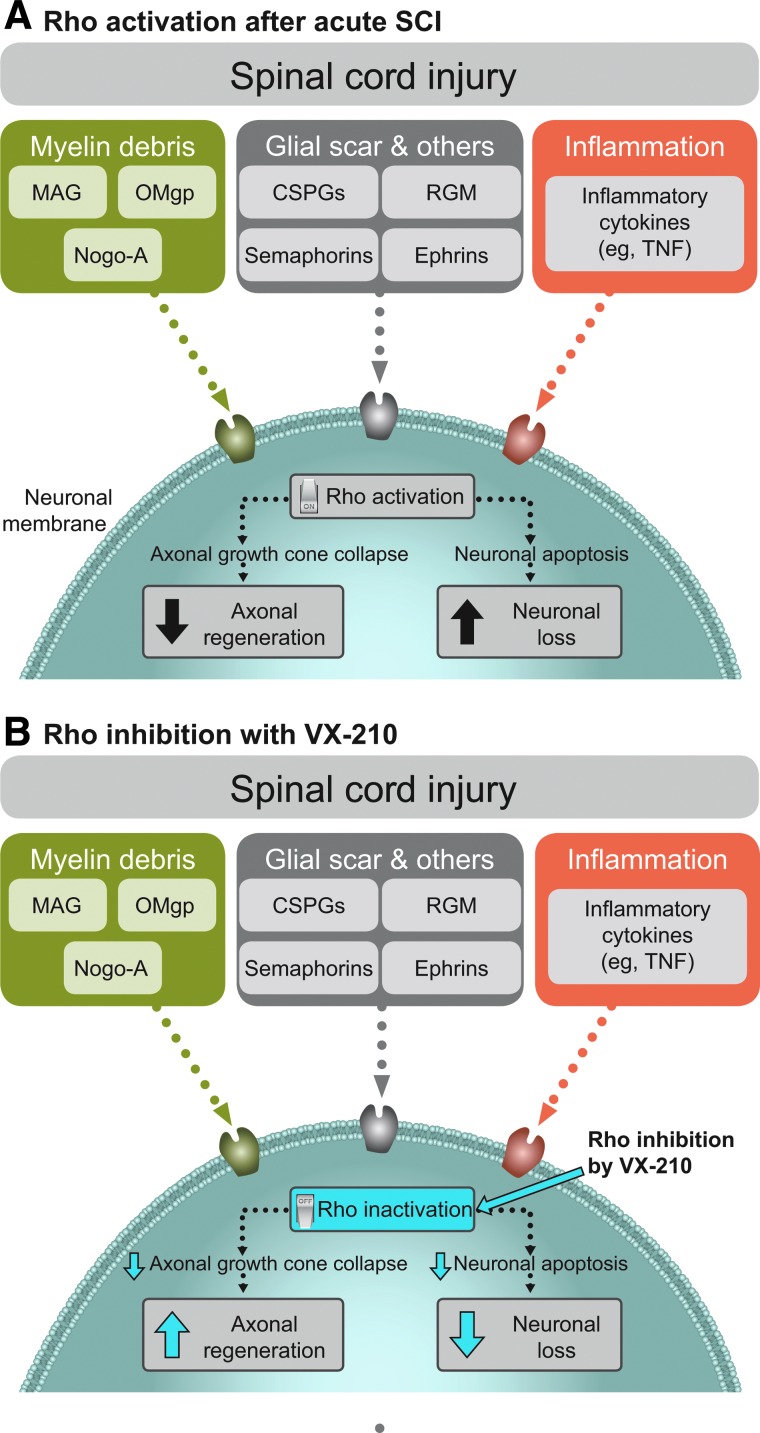
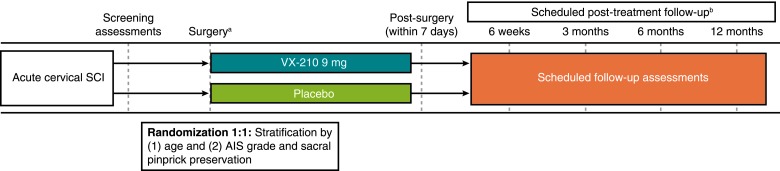
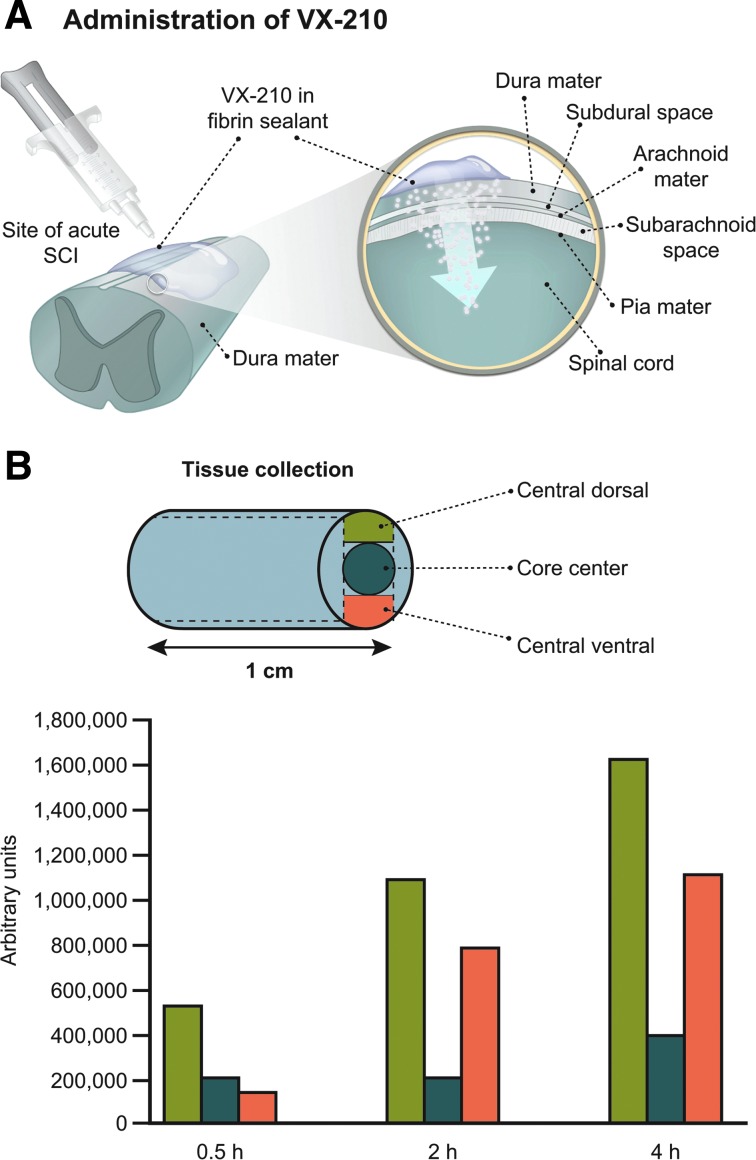
Traumatic spinal cord injury (SCI) is associated with a lifetime of disability stemming from loss of motor, sensory, and autonomic functions; these losses, along with increased comorbid sequelae, negatively impact health outcomes and quality of life. Early decompression surgery post-SCI can enhance patient outcomes, but does not directly facilitate neural repair and regeneration. Currently, there are no U.S. Food and Drug Administration-approved pharmacological therapies to augment motor function and functional recovery in individuals with traumatic SCI. After an SCI, the enzyme, Rho, is activated by growth-inhibitory factors and regulates events that culminate in collapse of the neuronal growth cone, failure of axonal regeneration, and, ultimately, failure of motor and functional recovery. Inhibition of Rho activation is a potential treatment for injuries such as traumatic SCI. VX-210, an investigational agent, inhibits Rho. When administered extradurally after decompression (corpectomy or laminectomy) and stabilization surgery in a phase 1/2a study, VX-210 was well tolerated. Here, we describe the design of the SPRING trial, a multicenter, phase 2b/3, randomized, double-blind, placebo-controlled clinical trial to evaluate the efficacy and safety of VX-210 (NCT02669849). A subset of patients with acute traumatic cervical SCI is currently being enrolled in the United States and Canada. Medical, neurological, and functional changes are evaluated at 6 weeks and at 3, 6, and 12 months after VX-210 administration. Efficacy will be assessed by the primary outcome measure, change in upper extremity motor score at 6 months post-treatment, and by secondary outcomes that include question-based and task-based evaluations of functional recovery.
创伤性脊髓损伤 (SCI) 会导致终身残疾,丧失运动、感觉和自主功能;这些丧失以及增加的合并症后果,对健康结果和生活质量产生负面影响。SCI 后早期减压手术可以改善患者的预后,但不能直接促进神经修复和再生。目前,尚无美国食品和药物管理局批准的药理学疗法可增强创伤性 SCI 患者的运动功能和功能恢复。SCI 后,酶 Rho 被生长抑制因子激活,并调节导致神经元生长锥崩溃、轴突再生失败以及最终运动和功能恢复失败的事件。Rho 激活的抑制可能是治疗创伤性 SCI 等损伤的一种潜在方法。VX-210 是一种研究性药物,可抑制 Rho。在一项 1/2a 期的研究中,在减压(椎体切除术或椎板切除术)和稳定手术后硬膜外给予 VX-210 时,其具有良好的耐受性。在这里,我们描述了 SPRING 试验的设计,这是一项多中心、2b/3 期、随机、双盲、安慰剂对照临床试验,旨在评估 VX-210 的疗效和安全性(NCT02669849)。目前正在美国和加拿大招募一组急性创伤性颈 SCI 患者。在 VX-210 给药后 6 周以及 3、6 和 12 个月时评估医学、神经和功能变化。疗效将通过主要终点(治疗后 6 个月上肢运动评分的变化)和包括基于问题和基于任务的功能恢复评估的次要终点来评估。