Wu Xiaoyuan, Yang Daya, Fan Wendong, Fan Chunyue, Wu Guifu
Inpatient Department, Guangdong Prevention and Treatment Center for Occupational Diseases, Shenzhen, China.
Division of Cardiology, First Affiliated Hospital of Sun Yat-Sen University, Guangzhou, China.
Noise Health. 2017 Nov-Dec;19(91):245-253. doi: 10.4103/nah.NAH_56_16.
The aim of the present study was to evaluate whether there are changes in cardiovascular risk factors among noise-exposed workers and to explore the possible mechanisms of a long-term noise exposure leading to cardiovascular disease and the sex differences of cardiovascular risk factors in this population.
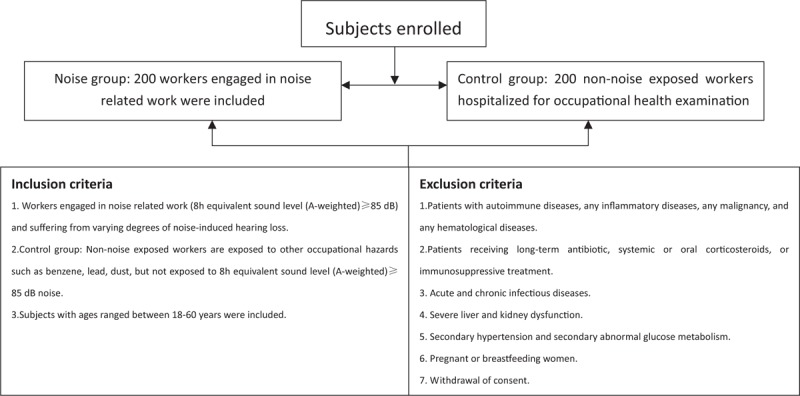
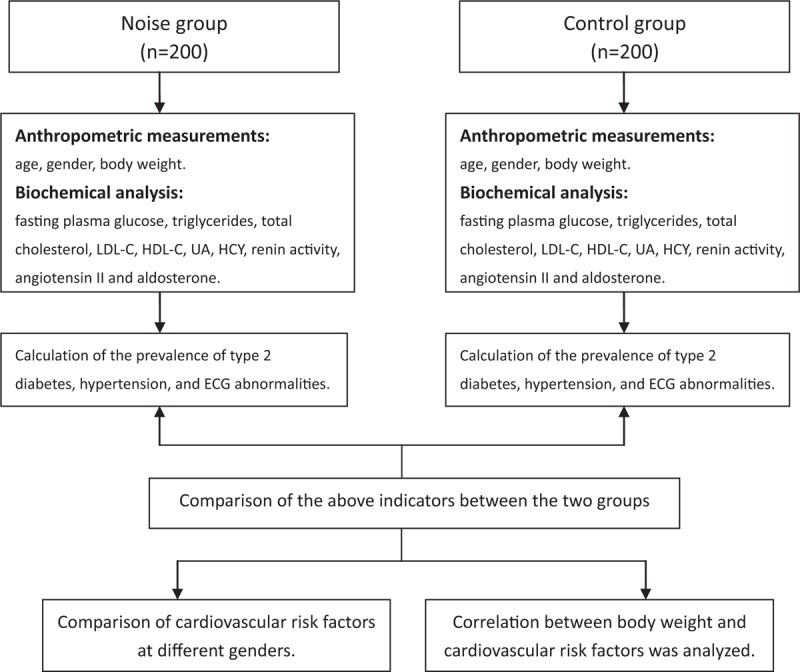
Two hundred workers engaged in noise-related work, and a control group of 200 nonnoise-exposed workers hospitalized for occupational health examination were assigned into the study. All workers underwent a medical examination, electrocardiogram recording, blood pressure test, other blood tests, and audiometry. The collected blood was used to detect homocysteine (HCY), renin, angiotensin II, and other markers of cardiovascular risk factors.
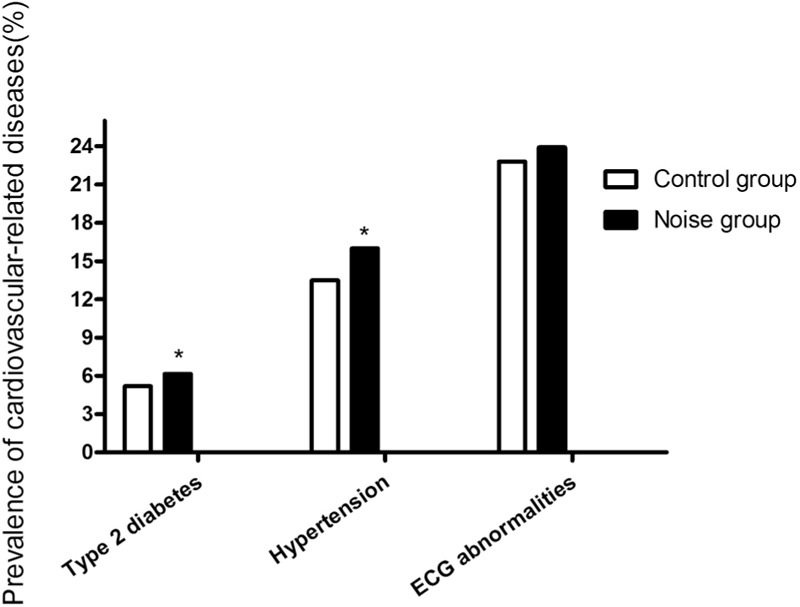
Our study suggests that the type of work with long-term exposure to noise might pose a cardiovascular risk, as evidenced by associated increases in plasma HCY levels, incidence of type 2 diabetes, and incidence of hypertension.
Our research also reveals that among male workers, the levels of triglycerides, uric acid, HCY, renin activity, and the incidence of hypertension are higher than female, while high-density lipoprotein cholesterol is lower than female workers had. Additionally, the study emphasizes again the importance of weight control for reducing cardiovascular risk.
Our study suggests that noise is a cardiovascular risk factor. Interventions in the work environment could be a preventable and controllable manner for reducing the incidence of cardiovascular disease.
本研究的目的是评估噪声暴露工人的心血管危险因素是否存在变化,并探讨长期噪声暴露导致心血管疾病的可能机制以及该人群中心血管危险因素的性别差异。
将200名从事与噪声相关工作的工人以及200名因职业健康检查住院的非噪声暴露工人作为对照组纳入研究。所有工人均接受了医学检查、心电图记录、血压测试、其他血液检查和听力测定。采集的血液用于检测同型半胱氨酸(HCY)、肾素、血管紧张素II以及其他心血管危险因素标志物。
我们的研究表明,长期接触噪声的工作类型可能会带来心血管风险,血浆HCY水平升高、2型糖尿病发病率和高血压发病率的增加证明了这一点。
我们的研究还表明,在男性工人中,甘油三酯、尿酸、HCY、肾素活性水平以及高血压发病率均高于女性,而高密度脂蛋白胆固醇水平低于女性工人。此外,该研究再次强调了控制体重对降低心血管风险的重要性。
我们的研究表明,噪声是一种心血管危险因素。对工作环境进行干预可能是降低心血管疾病发病率的一种可预防和可控方式。