Department of Oral Immunology and Infectious Disease, University of Louisville School of Dentistry, Louisville, KY, USA.
Mol Oral Microbiol. 2018 Jun;33(3):224-233. doi: 10.1111/omi.12215. Epub 2018 Feb 20.
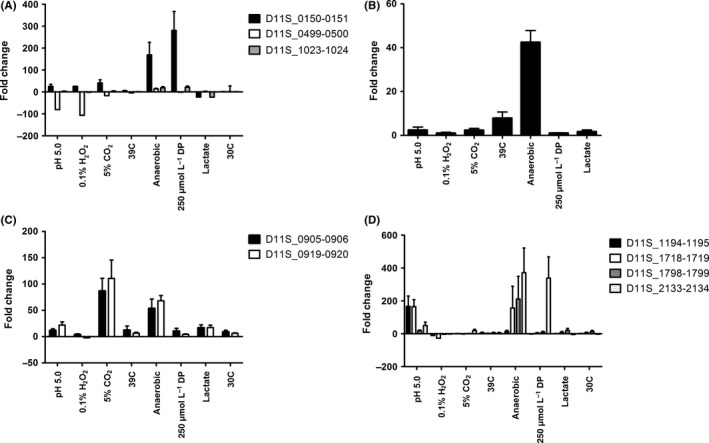
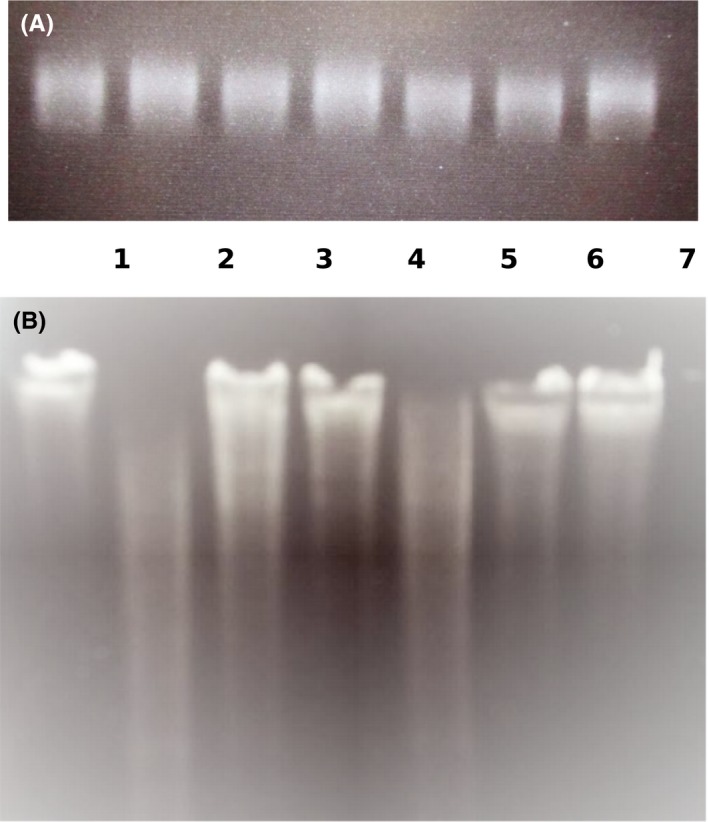
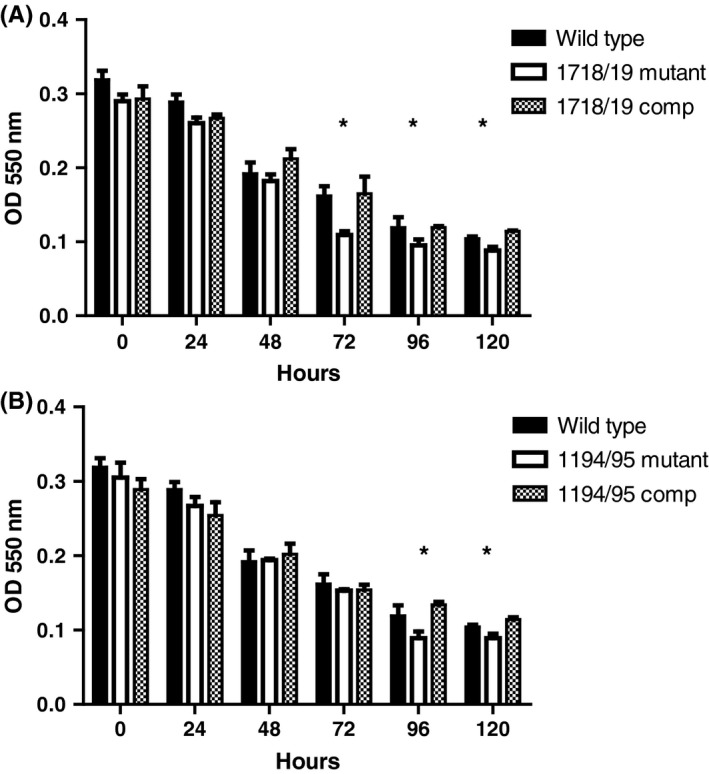
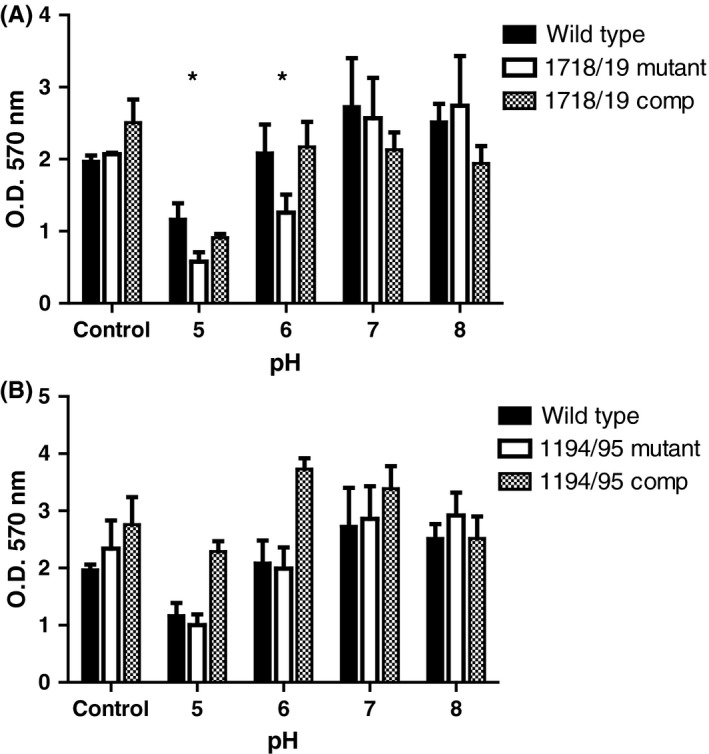
Type II toxin/antitoxin (TA) systems contribute to the formation of persister cells and biofilm formation for many organisms. Aggregatibacter actinomycetemcomitans thrives in the complex oral microbial community subjected to continual environmental flux. Little is known regarding the presence and function of type II TA systems in this organism or their contribution to adaptation and persistence in the biofilm. We identified 11 TA systems that are conserved across all seven serotypes of A. actinomycetemcomitans and represent the RelBE, MazEF and HipAB families of type II TA systems. The systems selectively responded to various environmental conditions that exist in the oral cavity. Two putative RelBE-like TA systems, D11S_1194-1195 and D11S_1718-1719 were induced in response to low pH and deletion of D11S_1718-1719 significantly reduced metabolic activity of stationary phase A. actinomycetemcomitans cells upon prolonged exposure to acidic conditions. The deletion mutant also exhibited reduced biofilm biomass when cultured under acidic conditions. The D11S_1194 and D11S_1718 toxin proteins inhibited in vitro translation of dihydrofolate reductase (DHFR) and degraded ribosome-associated, but not free, MS2 virus RNA. In contrast, the corresponding antitoxins (D11S_1195 and D11S_1719), or equimolar mixtures of toxin and antitoxin, had no effect on DHFR production or RNA degradation. Together, these results suggest that D11S_1194-1195 and D11S_1718-1719 are RelBE-like type II TA systems that are activated under acidic conditions and may function to cleave ribosome-associated mRNA to inhibit translation in A. actinomycetemcomitans. In vivo, these systems may facilitate A. actinomycetemcomitans adaptation and persistence in acidic local environments in the dental biofilm.
II 型毒素/抗毒素(TA)系统有助于许多生物体形成持久细胞和生物膜形成。伴放线放线杆菌在复杂的口腔微生物群落中茁壮成长,不断受到环境变化的影响。目前对于该生物体中 II 型 TA 系统的存在和功能及其对生物膜中适应和持久的贡献知之甚少。我们鉴定了在所有七种 A. actinomycetemcomitans 血清型中保守的 11 个 TA 系统,它们代表了 II 型 TA 系统的 RelBE、MazEF 和 HipAB 家族。这些系统对口腔中存在的各种环境条件有选择性反应。两个假定的 RelBE 样 TA 系统,D11S_1194-1195 和 D11S_1718-1719,响应低 pH 诱导,并且 D11S_1718-1719 的缺失显著降低了在酸性条件下长时间暴露时静止期 A. actinomycetemcomitans 细胞的代谢活性。在酸性条件下培养时,缺失突变体的生物膜生物量也减少。D11S_1194 和 D11S_1718 毒素蛋白抑制二氢叶酸还原酶(DHFR)的体外翻译,并降解核糖体相关但不游离的 MS2 病毒 RNA。相比之下,相应的抗毒素(D11S_1195 和 D11S_1719)或毒素和抗毒素的等摩尔混合物对 DHFR 产生或 RNA 降解没有影响。总之,这些结果表明,D11S_1194-1195 和 D11S_1718-1719 是在酸性条件下激活的 RelBE 样 II 型 TA 系统,可能通过切割核糖体相关的 mRNA 来抑制 A. actinomycetemcomitans 中的翻译。在体内,这些系统可能有助于 A. actinomycetemcomitans 在牙菌斑酸性局部环境中的适应和持久存在。