Department of Microbiology, Immunology & Molecular Genetics, University of California, Los Angeles, California, USA.
Molecular Biology Institute, University of California, Los Angeles, California, USA.
Sci Rep. 2018 Jan 10;8(1):270. doi: 10.1038/s41598-017-18442-3.
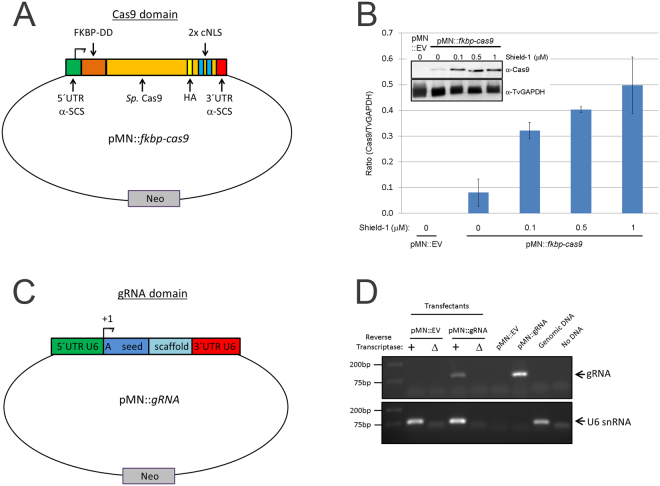
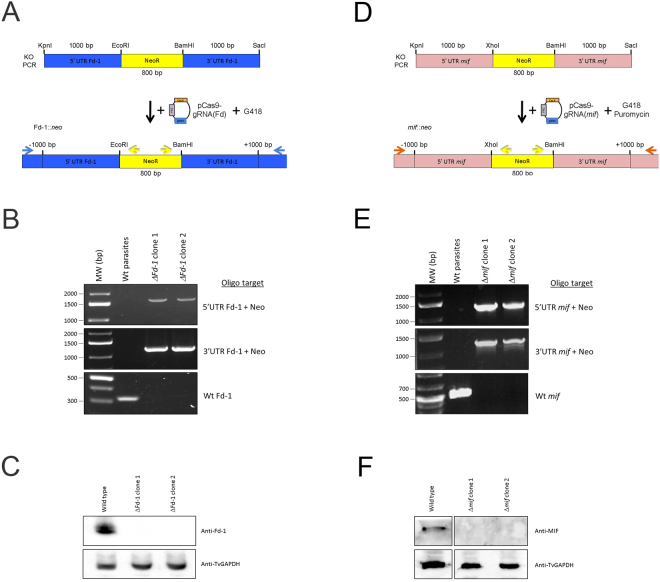
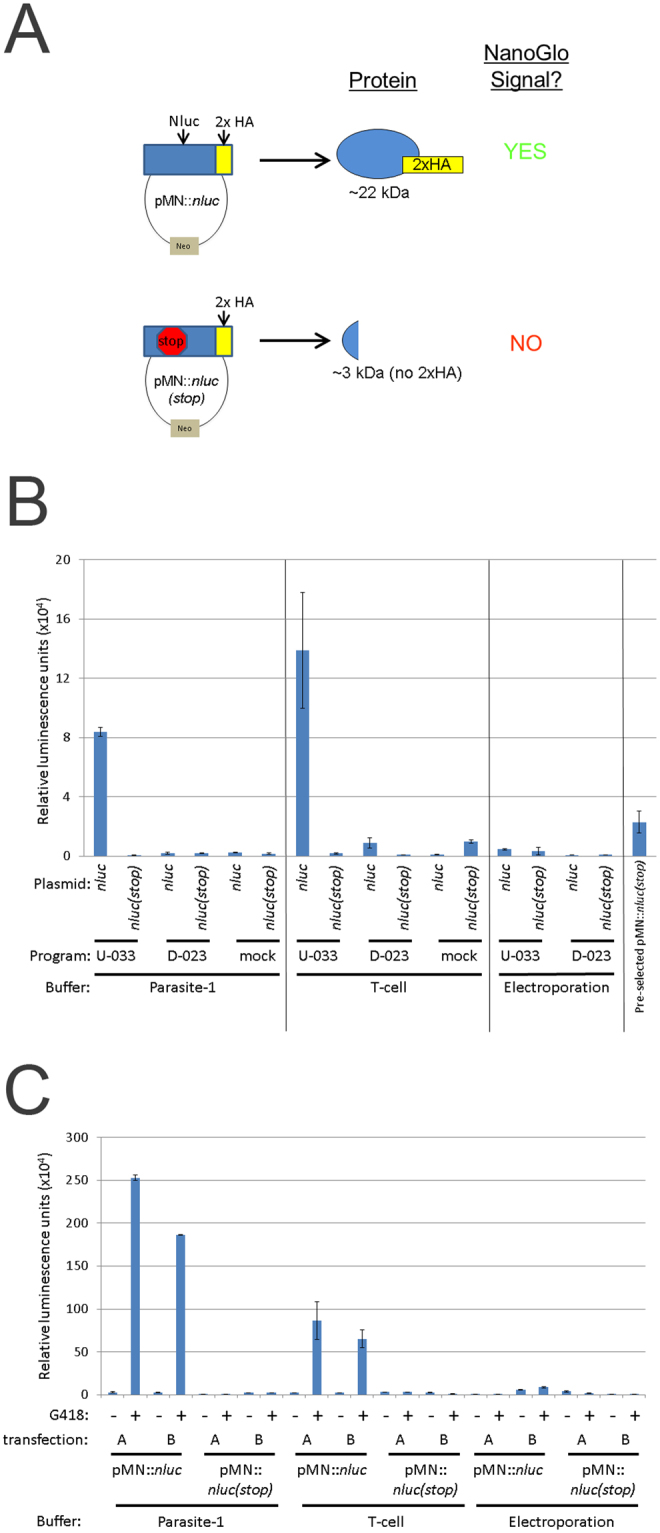
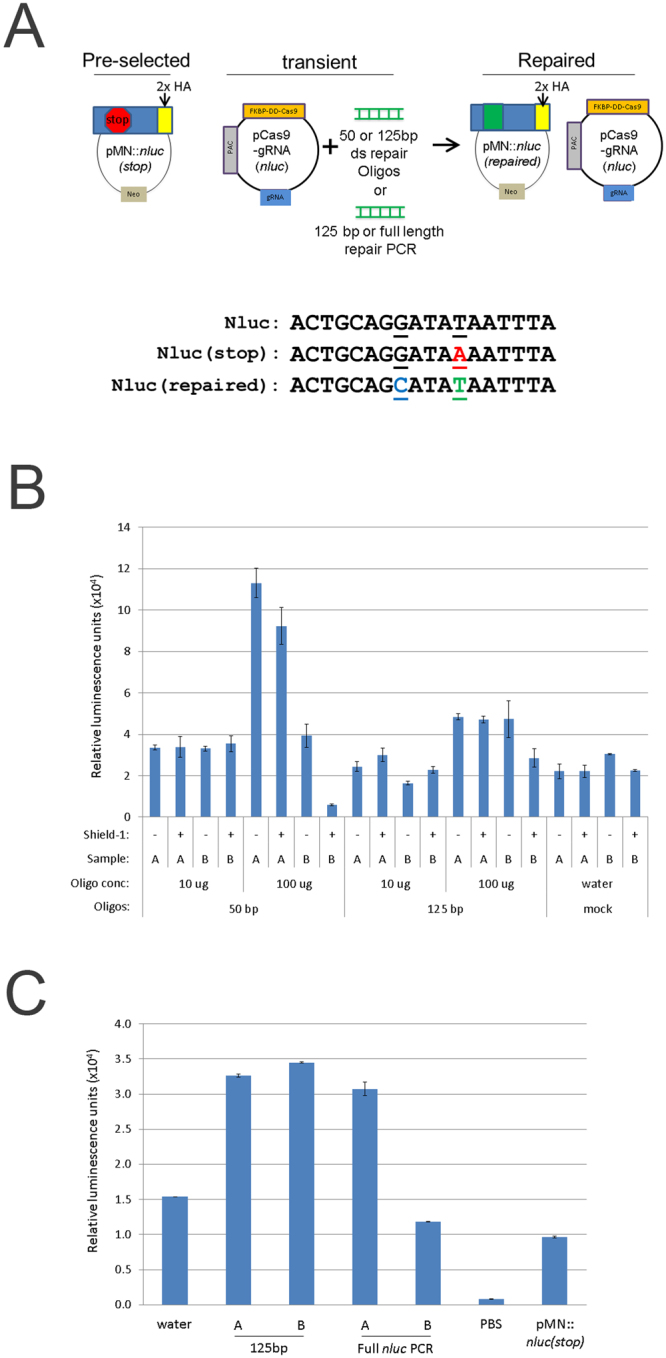
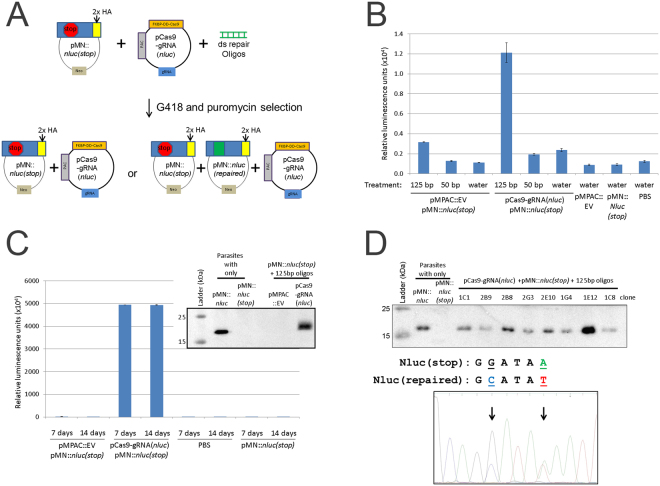
The sexually-transmitted parasite Trichomonas vaginalis infects ~1/4 billion people worldwide. Despite its prevalence and myriad adverse outcomes of infection, the mechanisms underlying T. vaginalis pathogenesis are poorly understood. Genetic manipulation of this single-celled eukaryote has been hindered by challenges presented by its complex, repetitive genome and inefficient methods for introducing DNA (i.e. transfection) into the parasite. Here, we have developed methods to increase transfection efficiency using nucleofection, with the goal of efficiently introducing multiple DNA elements into a single T. vaginalis cell. We then created DNA constructs required to express several components essential to drive CRISPR/Cas9-mediated DNA modification: guide RNA (gRNA), the Cas9 endonuclease, short oligonucleotides and large, linearized DNA templates. Using these technical advances, we have established CRISPR/Cas9-mediated repair of mutations in genes contained on circular DNA plasmids harbored by the parasite. We also engineered CRISPR/Cas9 directed homologous recombination to delete (i.e. knock out) two non-essential genes within the T. vaginalis genome. This first report of the use of the CRISPR/Cas9 system in T. vaginalis greatly expands the ability to manipulate the genome of this pathogen and sets the stage for testing of the role of specific genes in many biological processes.
性传播寄生虫阴道毛滴虫感染全世界约 25 亿人。尽管它的流行和感染的诸多不良后果,但阴道毛滴虫发病机制的机制仍不清楚。由于其复杂的、重复的基因组以及将 DNA(即转染)有效引入寄生虫的低效方法,这种单细胞真核生物的遗传操作受到了阻碍。在这里,我们已经开发了使用电穿孔来提高转染效率的方法,目的是将多个 DNA 元件有效引入单个阴道毛滴虫细胞中。然后,我们创建了表达几个关键组件所需的 DNA 构建体,这些组件对于驱动 CRISPR/Cas9 介导的 DNA 修饰至关重要:引导 RNA(gRNA)、Cas9 内切酶、短寡核苷酸和线性化的大 DNA 模板。利用这些技术进步,我们已经建立了 CRISPR/Cas9 介导的对寄生虫携带的环状 DNA 质粒中基因的突变修复。我们还设计了 CRISPR/Cas9 指导的同源重组来删除阴道毛滴虫基因组中的两个非必需基因。这是首次在阴道毛滴虫中使用 CRISPR/Cas9 系统的报告,极大地扩展了操纵这种病原体基因组的能力,并为测试特定基因在许多生物学过程中的作用奠定了基础。